Carnival Corp. CEO: Demand should be ‘more than adequate’ at the restart

Carnival Corp. CEO Arnold Donald at a Cruise3Sixty event in 2018.

Carnival Corp. expects demand to be “more than adequate to fill ships in a staggered restart,” said CEO Arnold Donald during a business update call with analysts.

Donald said he was not concerned about achieving this without substantial bookings from the new-to-cruise market, because two-thirds of its global guests, 8 million each year, are repeat cruisers. He said Carnival Corp. has an active database of nearly 40 million past guests, and the average frequency of cruisers to repeat is every two to three years.

“Clearly cruise will not come back all at once,” Donald said. “We intend to resume with a small percentage of the fleet, which inherently makes us less reliant on new-to-cruise in the early days.”

As opposed to other down cycles, the limited capacity will help achieve stronger pricing when cruising initially resumes.

“Historically we had only two levers to pull in a down cycle: occupancy and rate,” Donald said. “In this environment, we’ll have a third: capacity.”

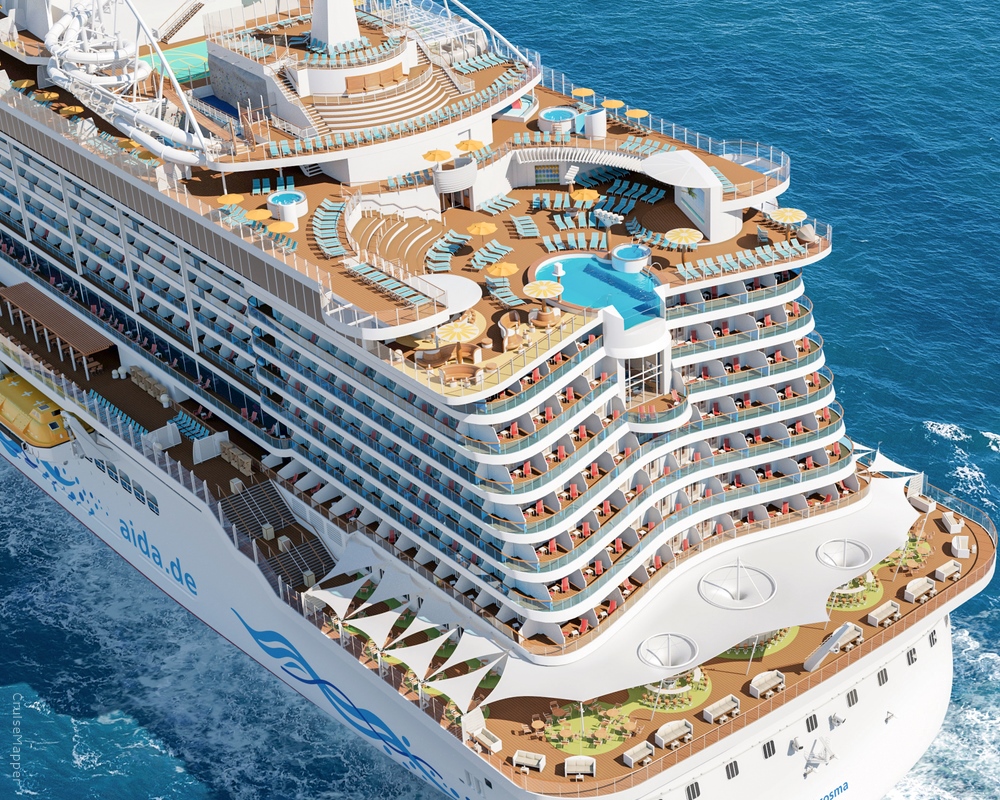
Donald said Carnival is very encouraged by the booking patterns it is seeing. He said that this week, when it announced that Aida Cruises would resume service in Germany in August, it had over 1,000 bookings in one day, “taking up a significant portion of the first sailings and on a very short notice period.”

AIDA Cruises - Ships and Itineraries 2020, 2021, 2022 | CruiseMapper

He said forward bookings include not only a number of future cruise credits (FCCs) but “substantial new bookings and even new-to-cruise bookings, which given the current state of the environment in the world is really a good testament to how strong a vacation experience and value cruising really is.”

When asked if brands that were more badly tarnished by the media attention on cruise ship outbreaks in the early days of the pandemic, such as Princess, were being disproportionately affected in terms of consumers’ preference, Donald said the line is “trending with all the other brands in the industry.”

In fact, he said that none of the brands in the industry had reached what he called “the trough” of 2012 or 2013 when a number of negative, high-profile incidents. such as the engine room fire on the Carnival Triumph and the sinking of the Costa Concordia, rocked the cruise industry and Carnival Corp. specifically.

“None of the brands in the industry, ours or others, have gone to the low levels that we experienced at that time,” he said. “The trough in this period has been higher than the trough in that period.

“So there is a lot of pent-up demand, a lot of latent demand,” he continued. “That doesn’t mean we don’t have work to do once we start cruising with much larger volumes of capacity to attract new to cruise. Of course, we will have work to do, but right now the brands are strong, the bookings are encouraging, and with the staggered start we’re going to have in the resumption of cruising, there should be plenty of pent-up, latent demand with previous cruisegoers to fill the ships.”

Donald also said that having national brands in its portfolio is “clearly an asset” in this situation because as nations reintroduce social gathering and cruising, they are “most likely initially to restrict reactivation to their own residents exclusively.”

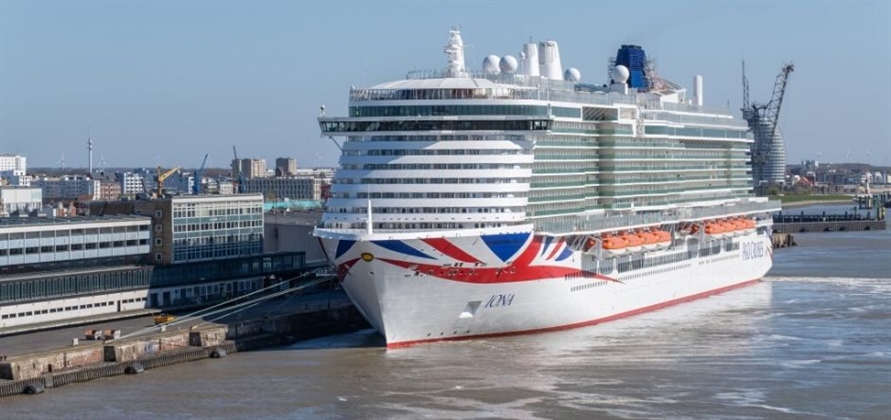
P&O Cruises' Iona arrives in Rotterdam
P&O Iona waiting for delivery.

Carnival’s German brand sources 95% from Germany; P&O UK is 98% British-sourced; Costa Europe is 80% continental Europe-sourced; P&O Australia is more than 99% sourced from Australia and New Zealand, and Carnival Cruise Line is 92% U.S.-sourced, Donald said.

“We are very well positioned,” Donald said. “Additionally, the fact that these brands are characterized by ready access, with the drive-to market and prevalence of shorter duration cruises, strengthens the possibility for success in today’s environment.”

Donald said that in general, longer cruises such as world cruises are not booking as well as shorter ones, which he said makes sense given the uncertainty of whether ports are open or closed in different regions.

For the second quarter, which ended May 31, Carnival reported a loss of $2.4 billion on revenue of $740 million,  compared with $451 million in net income on $4.8 billion in revenue during the same period in 2019.

Carnival Panorama wins the “Best New Cruise Ship of 2019” Award ...

2021 bookings  

As of June 21, Carnival reported that approximately half of the guests on cancelled cruises requested cash refunds. The company also said that despite substantially reduced marketing and selling spend, it continues to see new 2021 bookings.

During the first three weeks in June, almost 60% of 2021 bookings were new bookings, Carnival said, with the remaining booking volumes from guests applying FCCs to specific future cruises.

Advanced 2021 bookings are currently within historical ranges at prices that are down in the low- to the mid-single-digits range, which included the negative yield impact of FCCs and onboard credits applied.

Carnival said the majority of its customer deposits of $2.6 billion are in FCCs, and $121 million in third-quarter sailings and $353 million in fourth-quarter sailings.

Carnival Corp to dispose of 13 ships

P&O Oceana Cruise Ship Review - paulandcarolelovetotravel.com

Carnival Corporation has confirmed it will dispose of 13 ships across its brands as well as delaying the deliveries of new ships.

The cruise giant said the move to reduce its fleet size was in response to an expectation that “future capacity [will] be moderated by the phased re-entry of its ships. The 13 ships represent a 9% reduction in current capacity.

The news comes just days after it was confirmed P&O Cruises had sold one of its oldest vessels, Oceana.

Carnival Corp said it had agreements for the disposal of five ships and preliminary agreements for an additional three ships, all of which are expected to leave the fleet in the next 90 days.

It said these agreements were in addition to the sale of four ships which were announced prior to the current financial year.

On future deliveries, the company said it expects only five of the nine ships originally scheduled for delivery in the 2020 and 2021 to be delivered before the end of the 2021 financial year. It also expects ships that were scheduled to launch in 2022 and 2023 to move to alter delivery dates.

Arnold Donald, Carnival Corporation’s president and chief executive, said the decision meant his brands would emerge “leaner” and “more efficient”.

He said: “We have been transitioning the fleet into a prolonged pause and right-sizing our shoreside operations. We have already reduced operating costs by over $7 billion on an annualized basis and reduced capital expenditures also by more than $5 billion over the next 18 months. We have secured over $10 billion of additional liquidity to sustain another full year with additional flexibility remaining. We have aggressively shed assets while actively deferring new ship deliveries. We are working hard to resume operations while serving the best interests of public health with our way forward informed through consultation with medical experts and scientists from around the world.

LNG-powered newbuild Costa Smeralda gets its funnel | seatrade ...
Carnival cruises’ Mardi Gras in Meyer Turku shipyard.

“We will emerge a leaner, more efficient company to optimize cash generation, pay down debt and position us to return to investment grade credit over time providing strong returns to our shareholders.”

In June, Carnival Corporation said it was speeding up the disposal of ships after a registered $2.4 billion adjusted net loss in the three months to May 31.

Carnival Corporation today said it had raised $10 billion through a series of financial transactions since March, adding that it had “taken significant actions to preserve cash and secure additional financing to maximise its liquidity.

It has also confirmed $8.8 billion of credit facilities to fund ship deliveries originally planned through to 2023.

In a trading update, Carnival Corporation claimed demand remained for 2021 sailings, despite “substantially reduced marketing and selling spend”. It said almost 60% of bookings in the first three weeks of June were new business bookings, with the remaining amount coming from guests using their Future Cruise Credits from a previously cancelled cruise.

Chief financial officer and chief accounting officer David Bernstein said: “Quickly recognising the financial situation, we took swift action to improve our liquidity by reducing expenses and leveraging our strong balance sheet to complete several capital transactions”.

Highlighting the cost of pausing its global operations, Carnival Corporation side its monthly average cash burn rate for the second half of 2020 would be an estimated amount of approximately $650 million, adding that it was looking at ways to reduce that figure.

P&O Cruises sells Oceana

P&O Cruises sells Oceana to 'fit for future growth' | seatrade ...

P&O Cruises ship Oceana has been sold and will not return to service when operations resume following the Covid-19 cancellation of sailings.

The UK line confirmed that Oceana “will leave the fleet from July this year” but the identity of the buyer has not been revealed.

Passengers with bookings on the ship will be offered a 125% future cruise credit or refund, although all the company’s sailings are paused until October 15.

The sale of 1,950-passenger Oceana for an undisclosed sum comes ahead of the arrival of giant new ship Iona, which has been delayed from its original debut in Southampton in May due to the global cancellation of cruises due to the pandemic.

A sister ship to 5,200-passenger Iona is due to join the fleet in 2022.

Parent company Carnival Corporation revealed plans last month to speed up the disposal of ships after registered a $2.4 billion adjusted net loss in the three months to May 31 as the coronavirus pandemic shut down global cruise operations.

The cruise giant said “preliminary agreements” were in place for the disposal of six ships, expected to leave the fleet in 90 days, with others likely to follow.

Oceana originally entered service in 2000 operating for sister brand Princess Cruises as Ocean Princess.

P&O Cruises president Paul Ludlow said: “Whilst we and many of our guests will miss Oceana, her departure will allow us to focus on our remaining ships in the fleet, as capacity expands with the delivery of Iona later this year followed by her sister ship, scheduled for 2022.

“During this pause in our operations, we need to fit the fleet for the future and ensure we have the right mix of ships once we resume sailing.

“I am so sorry to disappoint those guests who were booked on Oceana but I hope they will be able to find a similar alternative holiday, whether that is ex-UK from Southampton or a fly-cruise itinerary.”