Carnival Donates $2 Million to Harvey Victims

Image result for hurricane Harvey
Nobody and Nothing Escapes Mother Nature
Carnival Cruise Line, Carnival Corporation and Carnival Chairman Micky Arison’s family foundation have joined forces to help Texas recover from the first Category 4 hurricane to hit the United States since 2004.
Carnival Cruise Line and its philanthropic arm, Carnival Corporation, are each donating $500,000, for a total of $1 million. Arison and his wife Madeleine are matching that with an additional $1 million donation from their foundation.
“Our hearts go out to all those who have been impacted by the devastation of Hurricane Harvey and its aftermath, and all of us throughout the Carnival Corporation family feel a responsibility to do our part in supporting relief and rebuilding efforts in a region that we call home and where so many of our guests and business partners live and work,” Christine Duffy, Carnival Cruise Line president, said in a statement.
“We are very committed to the Gulf Coast as a vibrant and special part of the North American cruise industry, and our commitment will remain as strong as ever during the region’s recovery process.”
To help drum up even more donations for those impacted by Hurricane Harvey, cruise guests sailing on some Carnival cruises will be given the option to make a donation when they check in for their cruise. The corporation’s brands and employees will be participating as well.
The cruise company said it is working with emergency response officials, community leaders and other key relief and recovery organizations to identify the most urgent needs and immediate allocations for the donation.
In particular, the cruise company wants the money to be used to support on-the-ground teams that are distributing emergency supplies as well as to support rebuilding efforts.
The money will help provide families with access to food, shelter, water, hygiene products, general necessities and medicines.
At least 12 people have died in the Texas flooding. One of them, Houston police Sgt. Steve Perez, drowned while trying to get to work, according to CNN.

Cruise: From $37 Billion to $55 Billion Industry

Image result for miami port terminal
The Biggest port of Miami

The cruise industry, which is forecast to post revenues in excess of $37 billion this year, could reach $55 billion over the next decade, according to the 2017-2018 Cruise Industry News Annual Report.(there is a charge for the report)

The projected growth track would make Carnival Corporation a $22 billion business in 2027, up from $16.3 billion last year, based on estimated passenger capacity, ship deployments and current spend per passenger per cruise of approximately $1,422 across all of its brands.

Royal Caribbean could see its revenues grow to $12.2 billion from $8.5 billion last year based on its current spend per passenger per cruise of $1,476; and Norwegian could reach $7.5 billion, compared to $4.9 billion last year, based on its current spend per passenger per cruise of $2,025 (including Oceania and Regent).

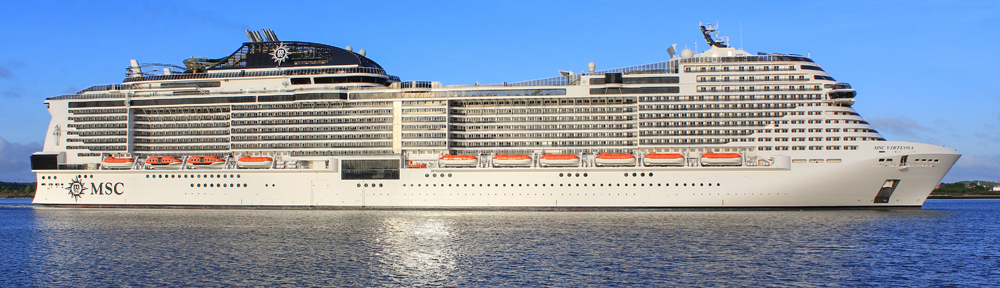
MSC Cruises could reach $6.6 billion from $2.4 billion last year. Being privately-held and not releasing financial results, the revenue for MSC is calculated based on an industry average spend of approximately $1,500 per passenger per cruise,

The average industry-wide spend per passenger per cruise has stayed in the $1,400 to $1,600 range for the past 10 years.

Carnival Releases 2016 Sustainability Report

Image result for carnival cruise sustainability report

Sustainability Report

Carnival Corporation has released its 2016 sustainability report as part of the launch of its new dedicated sustainability website.

The report and complementary site detail the company’s sustainability efforts and the progress made in 2016 toward its 2020 sustainability performance goals. The report was prepared in accordance with the Global Reporting Initiative (GRI) G4 “core” level, and a full copy can be downloaded from Carnival Corporation’s new site, according to a prepared statement.

“We take our commitment to sustainability and the environment very seriously and take proactive measures to ensure that sustainability is ingrained in the core of our business practices,” said Bill Burke, chief maritime officer for Carnival Corporation, whose industry-leading cruise lines sail to more than 760 ports around the world. “Our top priority is to consistently exceed our guests’ expectations for a great cruise vacation – and that includes providing an exceptionally safe, comfortable and enjoyable environment for our guests and crew members, while at the same time maintaining our deep commitment to protecting the oceans, seas and destinations we visit.”

Added Burke: “We have a great team of employees, most of whom work and live at sea, and we all understand a healthy environment is not just an operating necessity, but it is also the right thing to do. We want our guests to be confident that when they book a cruise vacation with one of our brands, they are doing so with a responsible global corporate citizen.”

Among the highlights, according to Carnival:

Being ahead of schedule in achieving a nearly 25 percent reduction in CO2e (equivalent carbon dioxide) relative to the 2005 baseline.

Pioneering the use of LNG (liquefied natural gas), the world’s cleanest burning fossil fuel, and introducing the first cruise ship ever fueled with LNG from trucks while in port.

Continuing to make progress in installing Exhaust Gas Cleaning Systems, which significantly improve air emissions by reducing sulfur compounds and particulate matter from engine exhaust – by the end of 2016, 59 percent of the fleet was equipped with the systems (and a larger percentage is equipped with the systems as of today).

40 percent of the fleet was equipped with cold ironing capabilities by the end of 2016, which allows ships to use an alternative power source while in port.

Expanding its partnership with Wärtsilä to include a long-term diesel engine maintenance agreement with an energy-efficiency component.

Continuing installation of Exhaust Gas Cleaning Systems (EGCS), which significantly reduce sulfur compounds and particulate matter from ship engine exhaust.

Making a significant commitment to its employees in terms of high-quality training by establishing the new Arison Maritime Center, home of the Center for Simulator Maritime Training Academy, also known as the CSMART Academy.

Opening the second of three planned state-of-the-art Fleet Operations Centers (FOC) in Seattle with the most advanced ship-to-shore communications technologies available to assist captains, chief engineers and deck and engineering officers with digital support, control and planning of all nautical and technical operations.