As fleets grow, cruise lines opt to update ships

Royal Caribbean this year spent $50 million renovating the Empress of the Seas for potential use in Cuba. Photo Credit: Tom Stieghorst
 

Cruise lines are increasingly focusing their capital investments on renovating older ships as fleet sizes grow and attitudes evolve about the kinds of returns they get from new ships versus refurbished ones.

In Europe, where most new ships are built, 20.3% of what cruise lines spent at shipyards last year was for refurbishment, up from 5.7% in 2008, according to a new white paper from Seatrade.

Last year, Carnival Corp. spent more on improvement and replacement of its ships than it did building new ones.

For passengers and travel agents, that translates to having a broader selection of up-to-date vessels from which to choose and new features on older ships, not just on newbuilds.

Cunard Line’s Queen Mary 2 provides a recent example.

The QM2 pulled into its pier in Brooklyn in July after a $132 million “remastering,” one of the most expensive refurbishments ever undertaken. In 25 days at the Blohm & Voss shipyard in Hamburg, Cunard added 30 balcony cabins and 15 solo traveler cabins and completely redid a restaurant and lounge.

It also overhauled the King’s Court buffet restaurant, upgraded the Queens and Princess Grill restaurants and expanded the dog kennels, a feature unique to Cunard.

The atrium of the Ruby Princess, a ship that was refurbished last December. Photo Credit: Tom Stieghorst
The atrium of the Ruby Princess, a ship that was refurbished last December. Photo Credit: Tom Stieghorst

The QM2 was one of 40 cruise vessels renovated during the first six months of the year, according to the white paper, which estimated their combined cost of renovation at $1 billion.

That’s more than what the QM2 cost when it was launched in 2004.

There are several reasons why refurbishment is a growing business segment for shipyards.

For one, the fleets keep getting larger. There were 448 ships last year owned by CLIA-member cruise lines. Safety rules dictate that ships go to drydock at least once every five years. Since ships can have a useful life of 30 years or more, each one could get at least six refurbishments.

Some cruise lines are also slowing the pace of new construction. Carnival Corp., with 100 ships already, is sticking to growth of two or three ships a year. So the proportion of its capital spent on refurbishment is growing.

Last year, Carnival spent $981 million on new ships, chiefly the P&O Cruises ship Britannia, and $1 billion on ship improvements and replacements, according to its annual report.

Other cruise lines said the financial returns from refurbishments can equal or surpass those of newbuilds.

Frank Del Rio, CEO of Norwegian Cruise Line Holdings, has roughly doubled the amount budgeted for the drydocking of Norwegian Cruise Line ships, to about $35 million per ship, according to the Seatrade white paper.

In comments to Wall Street analysts last November, Del Rio described it as an alternative strategy to simply churning out new ships to drive revenue.

“We think the return on invested capital on these kinds of choices outpaces the [return] and the payback of new vessels,” he said. “We’ve got billions of dollars invested in these ships. You have to maintain them at the highest standards if you expect to achieve these higher yields.”

As a result, all of Norwegian’s ships except one will undergo refurbishments between 2016 and 2018.

Norwegian and other cruise lines use drydock to add to older vessels features that have proven to be hits on newbuilds. This fall, Norwegian will add Margaritaville restaurants to the Norwegian Breakaway and Getaway after the concept was successful on the Norwegian Escape.

Carnival Cruise Line’s $500 million Fun Ship 2.0 program is largely about adding features to older ships that keep them competitive and consistent with its latest vessels.

“They’re looking to have a homogenous brand,” said Tony Peisley, a cruise industry analyst who authored the Seatrade paper.

Cruise lines also struggle with what to do with their oldest ships, which still have value but are no longer very competitive in North America. Ten years ago, they were often transferred to European lines, but as Europe has struggled economically that trend has been reversed.

Patterned gray carpet was installed throughout the Azamara Journey during its drydock earlier this year. Photo Credit: Tom Stieghorst
Patterned gray carpet was installed throughout the Azamara Journey during its drydock earlier this year. Photo Credit: Tom Stieghorst

Royal Caribbean International this year took back the Empress of the Seas from its Spanish subsidiary, Pullmantur, and spent $50 million renovating it for potential use in Cuba, an emerging market.

Also sailing to Cuba is the Adonia, an aging P&O ship that Carnival Corp. transferred to the Fathom brand following a drydock in March that included both technical work and some redecorating.

The Adonia was refit and made available to Fathom, in part, to find a use for a ship that wasn’t doing well for P&O.

“That’s what they’ve been doing, they’ve been refurbishing, not retiring,” said Vince Ciepiel, an analyst at Cleveland Research who has expressed concern about lines having too much capacity.

Peisley said cruise lines are loath to sell ships to competitors, because, “It’s not so much that they can’t get rid of them as they don’t want to sell them to their rivals. So that kind of limits their options.”

The Seatrade white paper identifies four levels of refurbishment, ranging from adding new paint and carpets at a minimal cost of between $4 million and $5 million to a redo the size of the QM2.

Most fall in the $30 million to $50 million range and involve a combination of technical upgrades, such as new air scrubbers, and retrofits of popular features, such as bars and restaurants.

While new ships are built almost exclusively in Europe, refurbishments are done there as well as in Canada, the U.S., Singapore and the Bahamas. This year, the Grand Bahama Shipyard in Freeport is by far the busiest yard, with 19 cruise ship drydocks on its schedule.

Carnival Corp. and Royal Caribbean Cruises Ltd. both have a 40% ownership stake in the yard, which was founded in 2000, and its location cuts transit times for refurbishment of ships based in the Caribbean.

A checklist of ocean and river cruising trends

I think midsummer, pre-election, is a good time to examine a few major trends we’re seeing in ocean and river cruising, though I’m going to concentrate on the upper ends of these markets.

The cruise market is growing at about 4% a year, despite some nasty weather, Zika concerns and the growing fear of terrorism. CLIA predicts that more than 24.2 million people will take an ocean cruise this year. The biggest one-year projected gains have been in Asia, which is up 24%, and Australia, up 14%.

As recently as 2010, China’s cruise market was still on the drawing board. Cruises in China tend to be sold as complete packages by middlemen who normally charter an entire ship or large portions of an available sailing.

Carnival Cruise Line will have six ships in China this year, and Princess has a new Chinese market subsidiary. Royal Caribbean has taken the biggest risk, placing the 4,905-guest Quantum of the Seas there, and Norwegian Cruise Line is building a ship specifically for the Chinese market.

The big question is how appropriate are these “Chinese-designed” cruises for the American traveler? To what extent will Mr. and Mrs. Mainstreet feel truly comfortable on a cruise designed for Chinese tourists?

In the meantime, I’m betting that luxury adventure cruising is poised to become this year’s industry growth leader. A 2013 report from the World Tourism Organization placed the value of the adventure market at more than $265 billion. If this is accurate, it means that expedition cruising has enjoyed a 24-month growth rate of something like 195%, a staggering figure. Get ready for the advent of the adventure yacht boom. Here are some of the key players in this growth:

Lindblad Expeditions-National Geographic went public last year and promptly ordered two 100-passenger vessels for U.S. coastal voyages. It also bought Via Australis and will place several of its ships in the Galapagos after major refurbishments.

Lindblad, which invented nonscientific expeditions to Antarctica 50 years ago, operates six vessels carrying between 28 and 148 passengers. Instead of casinos and lounge acts, its cruises are likely to include top-tier naturalists, undersea experts, historians and expedition leaders, plus a National Geographic photo instructor or photographer to ensure Pinterest-perfect photos. Lindblad has started including organic food sourcing whenever possible. But, alas, there is no bingo.

Crystal Cruises will be taking delivery of a polar-class, 200-passenger megayacht, the Crystal Endeavor, in August 2018. At 600 feet long and 25,000 gross tons, it will be the world’s “largest and most spacious” megayacht, capable of handling travel within polar regions. In its first season, it will follow migrating whales from the Arctic to Antarctica.

To offer guests the ability to truly explore some of the world’s most remote destinations, the Endeavor will carry equipment not previously seen on a luxury adventure vessel. These will include two helicopters to take guests for flyovers, two seven-person submarines for deep-sea dives to view underwater glaciers and coral reefs, an all-terrain vehicle, a fleet of personal watercraft and even a recompression chamber for serious scuba divers.

Silversea has been credited with leading the growth trajectory of luxury adventure cruising. It began with the Silver Explorer in 2007, and the line is now converting a five-star luxury ship, the 296-guest Silver Cloud, into a polar-class vessel. The goal is to offer guests a chance to explore some of the more extreme destinations on Earth with a one-to-one staff ratio and five restaurants onboard.

In 2017, the line will take delivery of the 596-guest Silver Muse, which is expected to have the industry’s best staff-to-guest ratio. In many ways, the line is redefining the way luxury travelers explore remote corners of the globe, with the assurance that a well-stocked wine cellar awaits them when they return to their ship.

Seabourn is approaching five-star adventure cruising with a different emphasis, having designed itineraries that highlight spots in the world high on every adventure traveler’s list, including Patagonia, Antarctica and the Amazon. Seabourn is getting two new ships: the Encore later this year and the Ovation in 2018. With these newbuilds, Seabourn has decided to up the passenger count from 450 on its current Odyssey class ships to 604.

Scenic, the upstart Australian luxury tour and cruise company, is launching what it calls “the world’s first discovery yacht” in August 2018. It will sail to the Mediterranean, Antarctica and the Arctic, which you would expect of a self-described “six-star” vessel whose smallest suites have a butler and a veranda and measure 345 square feet. Even more spacious will be a two-bedroom penthouse suite, at 1,775 square feet.

While it might sound like the routes through the ice in Antarctica will get rather crowded in the next several years, Scenic is also placing its “most technologically advanced yacht in the world” closer to home, with a series of cruises in the Americas that include two 14-day circumnavigations of Cuba from Miami.

River cruising on the Mekong River is increasingly seen as a sexy alternative to traditional river cruising.

The Amazon has the world’s greatest biodiversity, but the Mekong River is second, with more than 1,300 known species of fish along its 3,050-mile path through Southeast Asia. The Mekong is the next hot destination, and travelers will discover that the vessels deployed on this route are built locally and represent the highest levels of shipbuilding craft, with dark wood floors and original furnishing. AmaWaterways, Abercrombie & Kent and Aqua Expeditions are leaders in this market.


It has been said that if you want to vacation in style with good food, just figure out where the French are going these days. But Americans have another option. They can sail with the French to all seven continents on the laid-back, luxury French line Ponant.

The original Le Ponant still sails as a 64-guest cruise ship. But its four sisters, Le Boreal, Le Soleal, L’Austral and Le Lyrial, now form the bulk of the fleet. Ranging from 224 to 264 guests, they feature not only French style but ice-hardened hulls for polar exploration. Each of the vessels has several lounges, a theater, library and a pool. Ponant’s ships are heavily utilized by Tauck Tours’ escorted sailing itineraries.

In the meantime, river vessels have evolved to embrace luxury. There was a time when a ship sailing any of Europe’s major rivers was filled with 120-square-foot cabins, close to the mandated size of a prison cell in many states. But things are changing.

Since river ships must be less than 443 feet long to fit through locks and there are strict limitations on height because of low bridges, cruise lines have to get creative with cabin design.

Uniworld has a simple little switch that raises window glass to form an open-air solarium. Scenic Cruises has a “sun lounge,” a balcony surrounded by glass that can be easily opened to the river.

AmaWaterways has one-upped its competitors by designing twin balcony suites consisting of both a French balcony and a true balcony.

But perhaps the smartest and simplest innovation is that of Avalon’s panoramic suites, which constitute a majority of its cabins. Avalon has managed to turn the beds around so they face the window. A glass wall opens so guests get a sense of floating on the river from the comfort of their beds.

Seabourn added Penthouse Spa Suites on the Quest, and they will be added to the line’s other ships this year. Just one deck above the ship’s spa facilities, each of the suites is a bedroom with a sitting area, and they are decorated to match the spa below. They will feature specially designed, oversize showers, spa bath amenities and a soundtrack of soothing spa-influenced music.

Crystal is taking a different approach to health and wellness. The Serenity came out of drydock with 70 remodeled cabins that are cleaned using hypoallergenic products. Each cabin is also equipped with special air filters. The hotel industry has flirted with this “cleaned more proactively than our regular rooms” concept and decided to abandon it. It remains to be seen if Crystal will find an audience for environmentally treated cabins.

Booming Cruise Industry Reports Better-Than-Expected Passenger Numbers in 2015

Booming Cruise Industry Reports Better-Than-Expected Passenger Numbers in 2015

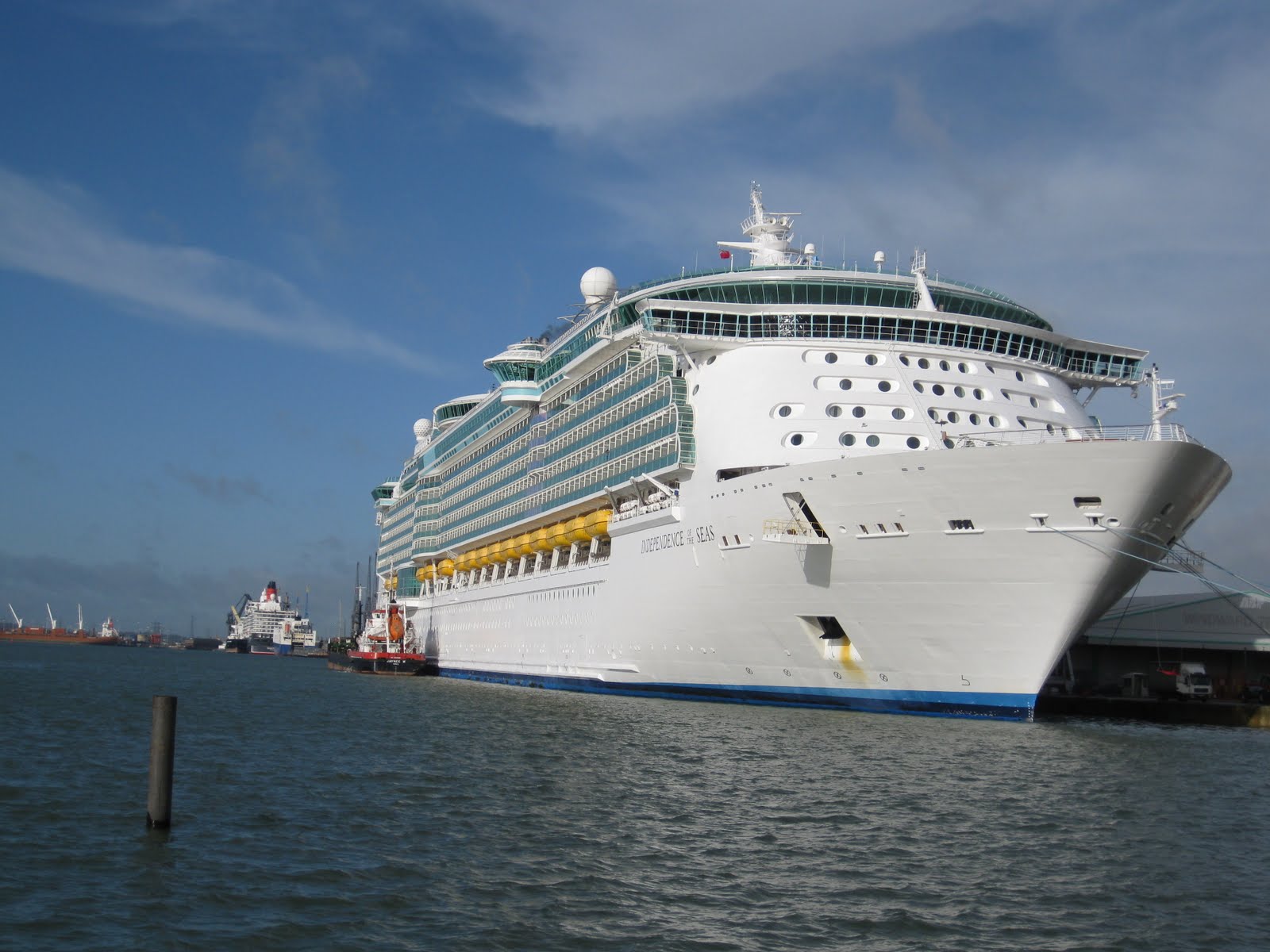
Independence of the Seas in Southampton, photo by Dave Jones

The Cruise Lines International Association has bumped up its passenger predictions for 2016 after numbers showed that the industry surpassed its 2015 passenger projections.

According to CLIA, the industry reported a total of 23.2 million passengers on ocean cruises globally in 2015, up from a projection of 23 million, and a 4-percent increase over 2014. As a result of steady year-over-year increases, CLIA has modified 2016 expectations and is now predicting 24.2 million travelers will set sail on ocean cruises around the world.

A statement from CLIA says the numbers show that the industry is stronger than ever, coming during a period where pretty much every other maritime sector is struggling.

“The success in 2015 demonstrates the cruise industry’s continued strength in the overall travel sector,” said Cindy D’Aoust, president and CEO, CLIA. “This is a direct result of the amazing work and commitment of our community of Cruise Lines, Executive Partners and Travel Agencies and Agents. Plus, with the highest satisfaction rates among all leisure travel segments, it reflects that a cruise vacation is the vacation of choice for travelers around the world.”

CLIA says that Much of the industry’s growth can be attributed to emerging regions of the world, particularly in Asia and Australia.

In 2015, Asia experienced the most growth year over year in ocean cruise passengers with another impressive 24% increase from 2014 to 2015, with a total of more than 2 million ocean cruise passengers in 2015. While Asia continues to see record growth in the cruise industry, Australia is not far behind. The region, which includes Australia, New Zealand and the Pacific, experienced an incredible 14% increase in ocean cruise passengers from 2014 to 2015. Last year, a total of more than 1.1 million ocean cruise travelers originated in Australia.

“When looking at the travel industry, cruise travel has astonishing long-term growth potential since it represents only two percent of the total leisure travel market, has the highest satisfaction rates among global travelers and is growing in popularity,” CLIA said in a statement. “In fact, according to the United Nations World Tourism Organization, in the decade between 2004 and 2014, global cruise vacations have grown faster in popularity than land-based vacations by a 20-percent margin.”

Of course this growth has not gone unnoticed by cruise lines, with new ship orders from just about every major cruise company such as Carnival and Royal Caribbean. In 2016, a total of 27 new ocean, river, and specialty cruise ships are scheduled for delivery, according to CLIA figures.