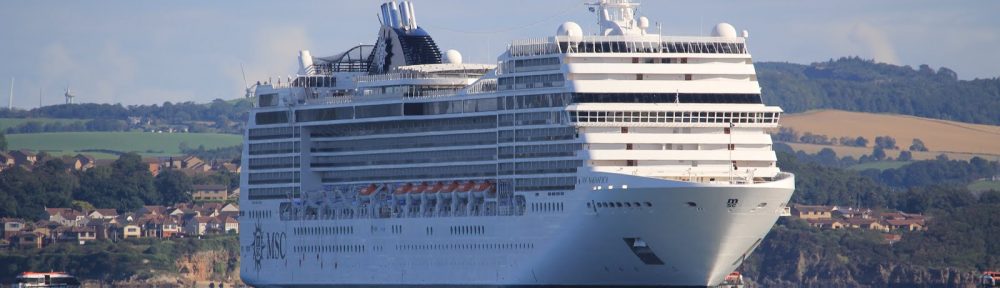
Newbuilds to be delivered in 2016

Newbuilds to be delivered in 2016:

Finesse, AIDAprima, River Voyager, AmaViola, AmaStella, AmaDessa, America, Samatha, Princess Panhwar, Avalon Passion, Avalon Imagery II, Carnival Vista, Elbe Princesse, Origin, Emerald Belle, Koningsdam, Seven Seas Explorer , Ovation of the Seas, Harmony of the Seas, Scenic Amber, Scenic Spirit, Scenic Azure, Scenic Aura, Seabourn Encore, Dream Cruises’ unnamed ship , Grace, Joy, Mein Schiff 5, Ganges Voyager II, Amadeus Silver III, Viking Sea and Viking River Cruises’ six Longship class river cruise vessels. 

AIDA Cruises 

  • AIDAprima (3,250 – March 2016) Mitsubishi Heavy Industries (See image)
  • Unnamed new class ship (3,250 – Unknown: previously announced March 2016) Mitsubishi Heavy Industries
    New ship design (6,600 – ) Meyer Werft
    New ship design (6,600 – ) Meyer Werft

    AMA Waterways 

  • AmaViola (158 – 2016) (“Certo-class” ship) Vahali Shipyard
  • AmaStella (164 – 2016) (River cruises in Europe)
  • AmaDessa ( – 2016) (“Certo-class” ship) Gendt Shipyard
    (March 2015: AmaWaterways’ Executive Vice President and Co-owner Kristin Karst has confirmed the line will build two more ships in 2017 for river cruises in Europe)

    American Cruise Lines 

  • America (185 – Early 2016) Chesapeake Shipbuilding Corp.
  • Queen of the Mississippi ( – 2017) Chesapeake Shipbuilding Corp.
    Unnamed coastal cruise ship (170 – Spring 2017) Chesapeake Shipbuilding

    APT, Travelmarvel and Maing Fong Company 

  • Samatha (30 suites – January 2016) Shipyard in Yangon (River cruises on the Burma River in Myanmar)
  • Princess Panhwar (36 suite – January 2016) Shipyard in Yangon (River cruises on the Burma River in Myanmar)

    Avalon Waterways 

  • Avalon Passion (2016)
  • Avalon Imagery II (2016)
  • Avalon Myanmar (36 – September 2015)

    Blue Star Line

  • Titanic II Project (2,435 – Delayed to 2018) CSC shipyard

    Carnival Cruise Lines

  • Carnival Vista (3,954 – Spring 2016) Fincantieri
  • Unnamed Vista class ship (3,954 – March 2018) Fincantieri

    Carnival Corp & Plc
    March 2015: Carnival Corp & plc is ordering a total of nine cruise ships, five from Fincantieri and four from Meyer Werft. The new ships would be delivered over a four-year period between 2019 and 2022. Fincantieri will build five of the new vessels at its shipyards in Monfalcone and Marghera in Italy while Meyer Werft will construct the remaining four at both its German yard at Papenburg and its new and larger capacity Finnish yard at Turku. June 2015: it was announced that the two at Meyer Werft will be for AIDA Cruises. July 2015: the two at Meyer Turku will be for Costa Cruises.

    Celebrity Cruises

  • Project Edge class ship (2,900 – Fall 2018) STX France (Letter of intent)
  • Project Edge class ship (2,900 – Early 2020) STX France (Letter of intent)

    Costa Cruises Asia

  • Unnamed ship (4,200 – 2019) Fincantieri
  • Unnamed ship (4,200 – 2020) Fincantieri

    Costa Cruises 
    New ship design (6,600 – 2019) Meyer Turku (See image below at right)
    New ship design (6,600 – 2020) Meyer Turku

    Croisieurope 

  • Princesse Elbe (80 – Spring 2016) Saint-Nazaire shipyard (Paddlewheel river cruise ship)
  • Princesse Apsara (60 – ) (Cruises on the Mekong)
  • Daniele (24 – ) (Barge)
  • Deborah (24 – ) (Barge)

    Crystal Cruises
    The Crystal Exclusive (Artist concepts courtesy of Crystal Cruises)

  • New Crystal Exclusive class ship (1,000 – 2018) Lloyd Werft (Letter of Intent) (See image at left)
  • New Crystal Exclusive class ship (1,000 – ) Lloyd Werft (Letter of Intent)
  • New Crystal Exclusive class ship (1,000 – ) Lloyd Werft (Letter of Intent)

    Crystal River Cruises
    The Crystal river yacht vessels (Artist concepts courtesy of Crystal Cruises)

  • Crystal Bach (110 – March 2017) Lloyd Werft (See image at right)
  • Crystal Mahler (110 – March 2017) Lloyd Werft
  • Crystal Ravel (84 – March 2017) Lloyd Werft
  • Crystal Debussy (84 suites – March 2017) Lloyd Werft

    Dream Cruises – Genting Hong Kong
    (November 2015: Genting Hong Kong announced the launch of Dream Cruises with the two new ships under construction at Meyer Werft for Star Cruises)
    The Genting Dream (Rendering courtesy Dream Cruises)

  • Unnamed ship (3,364 – October 2016) Meyer Werft
  • Unnamed ship (1,682 cabins – Fall 2017) Meyer Werft

    Ecoventura

  • Origin (20 – January 2016) Shipyard in Guayaquil, Ecuador

    Emerald Waterways

  • Emerald Belle (182 – Early 2016) (Den Breejen Shipyard)
  • Unnamed sister ship (182 – 2017)
  • Unnamed sister ship (182 – 2017)
  • Unnamed sister ship (182 – 2017)

    European Waterwayas 
    Finesse (8 – May 2016) Hotel barge

    Four Seasons Hotels and Resorts 

  • Four Seasons Ocean Residence (48,600 grt – ) Kvaerner Masa (Aker Yards) (Conditional contract)

    General Maritime Transportation Company (GNMTC) 

  • Unnamed ship (1,739 – December 2012) STX Europe St Nazaire
    (June 2011: STX France has rescinded the contract and is looking for a new buyer. March 2012: sold to MSC Cruises)

    Holland America Line

  • Koningsdam (“Pinnacle” class ship) (2,650 – March 2016) Fincantieri (See image)
  • Second “Pinnacle” class ship (2,650 – November 2018) Fincantieri

    Knud E Hansen (Naval architects)

  • New green-design expedition ship (300 – )(See image)

    Lindblad Expeditions

  • Unnamed coastal vessel (100 – Second quarter of 2017) Nichols Brothers Boat Builders
  • Unnamed coastal vessel (100 – Second quarter of 2018) Nichols Brothers Boat Builders

    Lüftner Cruises – Amras Cruises – Amadeus Cruises

  • Amadeus Silver III (168 – 2016) De Hoop, Holland

    MSC Cruises 

  • MSC Meraviglia (4,500 – May 2017) (Vista project ship ) STX France
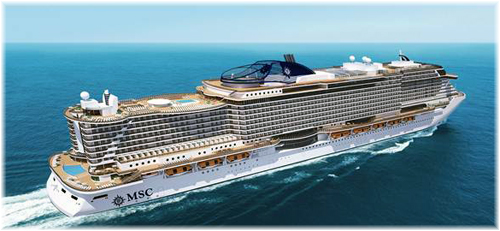
  • MSC Meraviglia sister ship (4,500 – 2019) (Vista project ship ) STX France (See image at right)
    (MSC Cruises has options for two further Vista project ships to be delivered by 2022)
  • MSC Seaside (5,300 – November 2017) Fincantieri
  • Second Seaside class ship (5,300 – May 2018) Fincantieri
    (See image below

    Norwegian Cruise Line 

  • Norwegian Bliss (4,200 – Spring 2017) Meyer Werft
  • Breakaway-Plus class cruise ship (4,200 – Spring 2018) Meyer Werft
  • Breakaway-Plus class cruise ship (4,200 – Autumn 2019) Meyer Werft

    OVDS – Hurtigruten – Norwegian Coastal Voyage 

  • Fram’s sister ship (2008) Fincantieri (Option to be confirmed)

    Peace Boat

  • New Ecoship (1,700 – 2020) (Subject to financing by donations or investors) (See image at right)

    Pearl Seas Cruises 

  • Unnamed sister ship of the Pearl Mist (214 -) (Originally the ship would be built at the Irving Shipbuilding, in Halifax, Nova Scotia but in March 2008 Pearl Seas decided to built the second ship in a different shipyard)

    P&O Cruises Australia

  • Unnamed ship (2,400 – 2019/2020) Fincantieri

    Polar Cruise Enterprises

  • Ursus Maritimus – Ice breaking cruise liner (240 – ) Rauma yard of STX Finland

    Princess Cruises

  • Majestic Princess (3,560 – Summer 2017) Fincantieri
  • Fourth “Royal Princess” class vessel (3,560 – 2019 / 2020) Fincantieri

    Residential Cruise Line Ltd.

  • Magellan (residential cruise ship) – Aker Yards (Memorandum of Understanding)

    Riva Waterways – Evergreen Tours

  • Riva Royale (180 – April 2014) Shipyard De Hoop (River ship)
  • Riva Princess (180 – April 2014) Shipyard De Hoop (River ship)

    Regent Seven Seas Cruises
    Seven Seas Explorer (Rendering courtesy of Regent Seven Seas Cruises)

  • Seven Seas Explorer (738 – Summer 2016) Fincantieri Sestri Ponente (See image at right)

    Royal Caribbean International

  • Ovation of the Seas (4,100 – Mid 2016) Meyer Werf
  • Harmony of the Seas (5,400 – Mid 2016) STX France
  • Third ship of the Oasis class (5,400 – Mid 2018) STX France
  • Fourth Quantum-class ship (4,100 – Spring 2019) Meyer Werf
  • Fifth Quantum-class ship (4,100 – Fall 2020) Meyer Werf

    Saga Shipping – Saga Cruises
    The new Saga's cruise vessel (Artist impression, courtesy Saga / Meyer Werft)
    Unnamed new class ship (540 suites and cabins – 2019) Meyer Werft (There is an option for a second ship with delivery in 2021) (See image at left)

    Scenic – Luxury Cruises & Tours

  • Scenic Amber (169 – March 2016) River ‘Space-Ships’ class (Den Breejen shipyard)
  • Scenic Spirit (68 – January 2016) Cruises on the Mekong River in Asia
  • Scenic Azure (48 cabins – March / April 2016) (Portugal’s Douro River cruises)
  • Scenic Aura (24 balcony suites – September 2016) (Myanmar’s Irrawaddy River cruises)

    Seabourn Cruises

  • Seabourn Encore (604 – Second half of 2016) Fincantieri (See image)Seabourn Encore (Rendering courtesy of Seabourn Cruises)
  • Seabourn Ovation (604 – Spring 2018) Fincantieri (See image)

    Sea Cloud Cruises

  • Sea Cloud Hussar (136 – November 2010) Factoria Naval de Marin, Spain (She is a three-mast sailing vessel)

    Silversea Cruises 

  • Silver Muse (596 – April 2017) Fincantieri
  • Unnamed vessel (-) Fincantieri
  • Unnamed vessel (-) Fincantieri
    (October 2014: Shanghai-based ICBC Leasing announced that it had signed with Monte Carlo-based Silversea Cruises for the financing of three cruise ships to be built by Fincantieri in Italy)

    Star Clippers 
    Star Clippers' new ship (Illustration courtesy of Brodosplit Shipyard)

  • New five-masted sailing vessel (300 – Late 2017) (Brodosplit shipyard in Split, Croatia) (See image at right)

    Sunstone Ships

  • Project Unlimited (240 – ) (Expedition ship) Meyer Werft (Letter of intent)(See image)

    Tauck – Scylla AG
    MS Grace arriving in Hardinxveld The Netherlands

  • Grace (Inspiration Class ship) (130 – 2016) (See image at left))
  • Joy (Inspiration Class ship) (130 – 2016)

    TUI Cruises

  • Mein Schiff 5 (2500 – 2016) Meyer TurkuMein Schiff 3(See image sister ship Mein Schiff 3)
  • Mein Schiff 6 (2500 – 2017) Meyer Turku
  • Mein Schiff 7 (2500 – 2018) Meyer Turku Oy
  • Mein Schiff 8 (2500 – 2019) Meyer Turku Oy

    Uniworld River Cruises

  • Ganges Voyager II (56 – January 2016) (Ganges River Cruises. Haimark Travel is building the ship for Uniworld)

    Unknown cruise operator

  • New Expedition Vessel for Extreme Conditions (60 – December 2014) Kleven Maritime AS (Norway)

    Utopia Residences 

  • Utopia – private residential vessel (105,000 ton – ) (June 2011: the letter of intent for the Utopia is expected to become a firm contract) Samsung Heavy Industries

    Vantage Deluxe World Travel

  • River Voyager (176 – March 2016)
    (Ship for European river cruises)

    Victoria Cruises

  • Victoria Emperor (Over 200 – planning stage) (River cruises in China)

    Viking Ocean Cruises

  • Viking Sky (944 – February 2017) Fincantieri (See image sister ship Viking Star – Photo Neven Jerkovic at Shipspotting.com)
  • Viking Sea (944 – Mid 2016) Fincantieri
  • New luxury ocean ship (944 – Early 2017) Fincantieri
  • New luxury ocean ship (944 – Mid 2018) Fincantieri
  • New luxury ocean ship (944 – End 2020) Fincantieri

    Viking River Cruises
    October 2014: Viking has placed an order for six Longship class river cruise vessels with Neptun Werft in Rostock. The now ordered ships will be delivered in the Spring of 2016.

    Virgin Cruises
    Unnamed new class ship (2,800 – 2020) Fincantieri
    Unnamed new class ship (2,800 – 2021) Fincantieri
    Unnamed new class ship (2,800 – 2022) Fincantieri

    Xiamen International Cruise Co Ltd

  • China Xiamen (2,000 – planning for October 2018) Xiamen Shipbuilding Industry
    (August 2015: Cruise Industry News has reported that Xiamen Shipbuilding has dropped plans to build the ship) 


Cruise Outlook by industry sector

Tracking where cruise ships will go in a given year increasingly means looking at global growth. Cruise fleets have become so large and cruise companies so adept at sourcing globally that the game has become one of matching assets to the regional economies where they can reap the most benefit.

Or suffer the least damage.

There’s no better example than China, where cruise companies are determined to take advantage of relatively strong economic growth and an underdeveloped market.

The International Monetary Fund forecasts growth in China of 6.3% in 2016, down from 6.8% this year but still more than double the expected rate of growth in the U.S.

Responding to that growth, Royal Caribbean International will send a second newbuild, the Ovation of the Seas, which will sail from Tianjin, joins the Quantum of the Seas, which will sail its first full year from Shanghai in 2016, and the Legend of the Seas, which will sail from Tianjin and Quingdao.


Legend of the Seas

Carnival Corp.’s China deployment will grow from four ships to six, as the Costa Fortuna joins the Costa Serena, the Costa Atlantica and the Costa Victoria, while Princess Cruises will deploy the Golden Princess to join the Sapphire Princess. In all, Carnival expects to carry close to 1 million passengers in China next year.

Closer to home, the IMF expects economic growth in the U.S. of 2.8% in 2016, enough to support North Americans buying cruises in the Caribbean and Alaska.

Economic growth in Europe is forecast at 1.6% next year, while Latin America and the Caribbean will grow at a 0.8% rate, up from negative growth this year.

The weak showing in Latin America is reflected in the decision by Royal Caribbean Cruises Ltd. to pull the Pullmantur Empress back to the Royal fleet next year, where it will sail as the Empress of the Seas starting in the spring. Royal also canceled the scheduled transfer of the Majesty of the Seas to Pullmantur.

In 2016, Pullmantur will be a two-ship line focused on Spain instead of Latin America.

Across their markets, cruise executives are optimistic about pricing in 2016, having laid the groundwork by filling ships in 2015 to minimize the need for last-minute discounts. Both Carnival Corp. and RCCL say the booking curve has lengthened.

In a Sept. 22 conference call, CFO David Bernstein said that despite an almost 3% capacity increase in the first half of 2016, Carnival had less remaining inventory to sell than it did at the same time a year ago.
Royal executives said in an Oct. 23 call that 2016 load factors were the highest in the company’s history, and average per diems were ahead of the same time a year earlier.

The diplomatic opening with Cuba forged by President Obama this year is poised to pay dividends for cruisers, with several lines saying they will try Miami-Havana routes in 2016.

The most closely watched of those will be Fathom, Carnival’s new social impact brand, which also will be cruising to the Dominican Republic starting in April. Fathom has generated more than 18 billion media impressions since it launched and is drawing more attention to the Caribbean in general, Carnival CEO Arnold Donald said.

In the Dominican Republic, Fathom’s ship will dock at the $85 million Amber Cove private port opened by Carnival in October on the country’s north coast near Puerto Plata.

Another big private port is expected to open in 2016 when Norwegian Cruise Line Holdings inaugurates Harvest Cay, a $50 million island in Belize with sandy beaches, a water sports lagoon, an island-style village and an excursion staging area.

Having just added the Norwegian Escape to its fleet, Norwegian Cruise Line is one of the few big lines that won’t be adding new tonnage next year.

One of the most anticipated ships is the 2,650-passenger Koningsdam, which in April will become the biggest Holland America Line ship and its first new vessel since the Nieuw Amsterdam in 2010.

The Koningsdam’s new features include a circular theater with LED panels surrounding the audience, a large culinary arts center, a wine mixing experience and a two-level pool area.

Also replete with new features will be the 3,936-passenger Carnival Vista. Passengers will be able to ride a recumbent bicycle suspended from an 800-foot-long oval track, watch an IMAX movie or take advantage of a families-only lounge.

Viking Ocean Cruises’ second ship, Viking Sky, is scheduled to be delivered in March. In September, the line’s first ship, the Viking Star, will make its debut in North America, with a cruise to Montreal ahead of its winter season of 11-night Caribbean sailings from San Juan.

The first Oasis-class ship from Royal Caribbean in seven years, the Harmony of the Seas, will sail in Europe after a June delivery before heading for its homeport in Fort Lauderdale, freeing the Oasis of the Seas to sail from Port Canaveral.

In the luxury segment, Regent Seven Seas Cruises will get its first new capacity in 13 years with the July debut of the 750-passenger Seven Seas Explorer.

The ship is on track to be christened in Monaco and sail in the Mediterranean for the summer before moving to Miami in December for its winter season.

Also new in 2016 will be the Seabourn Encore, a cousin to the line’s three Odyssey-class ships. The Encore, due out in December, will have an extra deck, giving it a passenger capacity of 604, up from the 450 carried by the other Odyssey-class ships.

Senior editor Tom Stieghorst covers the cruise industry for Travel Weekly.

2015 Year in review

By Johanna Jainchill

Cuba. Terrorism. Mergers. Lufthansa’s GDS fee. Crystal Cruises. Fathom. The sharing economy. The open skies feud. The strong dollar.

For travelers, 2015 was bookended by news about borders. The year began with the nudging open of borders that had been closed to U.S. tourists for a half century but ended with calls to tighten borders worldwide.

In January, the historical thaw between the U.S. and Cuba began a process that makes travel to the long-forbidden island much easier, but by December, there was a very real possibility that the U.S. and Europe might tighten their borders in the face of terrorism, raising new barriers to travel.

The industry can only hope to reclaim the optimism that ushered in 2015. But given the recent terror attacks and the coming election campaign, that’s anyone’s guess.

Here, in no particular order, are the topics we think made the year most memorable:

Cuba

The extent to which Cuba managed to dominate travel talk for much of 2015 was dizzying.

It’s hard to believe that just one year ago this month, President Obama announced that the U.S. would restore diplomatic ties with the Caribbean’s largest island nation. Since then, every few months, Washington and Havana have taken steps that seemed to inch the two nations closer to normalized relations, from the U.S. removing Cuba from its list of state sponsors of terrorism to both reopening embassies in each other’s capitals for the first time since 1961.

On the travel front, the pace of change was even more frenetic. The administration eased travel restrictions to Cuba in January so U.S. citizens no longer had to apply for individual licenses from the Treasury Department to travel there but could instead self-report that they were visiting under one of 12 categories of allowable travel, ranging from educational to humanitarian to religious reasons.

The industry pounced.

Several major tour operators have since debuted their first Cuba tours, including Apple Vacations, Abercrombie & Kent and Travel Impressions.

In February, CheapAir.com became the first OTA to enable U.S. travelers to book flights between the U.S. and Cuba, albeit through third countries, a capability it expanded to direct charter flights later in the year. Several commercial airlines began increasing charter flight schedules to Cuba, and the GDSs said they had readied or were in the process of readying their systems to accept regularly scheduled commercial flights to the island.

All of that took place well before the U.S. State Department said last week that the U.S. and Cuba had reached an agreement to resume direct commercial flights between the countries.

With hotel development in Cuba still decades behind, it seemed natural that a cruise line would be among the first suppliers to introduce products for the island. Carnival Corp.’s new social impact brand, Fathom, said it would become that line, obtaining a license from the U.S. government to sail to Cuba in the spring of 2016.

The only thing that could stand in Fathom’s way of marking that milestone is the pace at which Cuba has been opening to Americans; it’s very possible that by then, all travel restrictions will have been lifted, making Cuban ports regular stops on Caribbean itineraries.

Terrorism

Since the 9/11 terrorist attacks 14 years ago, travelers in general have become more inured to threats of violence. But this year, their resilience has been tested by an increasing number of violent incidents.

It started in January with the Paris attacks on the offices of the satirical magazine Charlie Hebdo. Though tourists weren’t targeted, the attacks took place in the most visited city in the world.

Then in two separate incidents in Tunisia, cruise passengers visiting a Tunis museum were among the victims of a terrorist attack that left 23 dead, and 38 tourists, primarily from Britain, were gunned down at the seaside resort of Sousse.

Yet there were no serious ripples to the U.S. travel industry at large until November’s twin attacks by ISIS. The first brought down a Russian MetroJet airliner taking tourists home from Egypt’s Sinai peninsula, killing all 224 people onboard. The second was the terrorist attacks on Nov. 13 that killed 130 people in Paris cafes, a concert hall and a soccer stadium.

The Paris attacks brought tourism in France to a near standstill, as did raids tied to the resulting investigation in nearby Brussels. The events sparked discussions about securing borders in both the U.S. and Europe.

For the tourism industry, the fallout could have serious implications. Talks of reintroducing border controls among Europe’s 26 open-border countries would significantly change how travelers move through the Continent.

In the U.S., the attacks prompted the White House to make immediate changes to the Visa Waiver Program (VWP), which allows citizens of 38 member countries to enter the U.S. and stay of up to 90 days without a visa. The concern was that most of the Paris attackers were citizens of France or Belgium, both VWP countries. And shortly thereafter, lawmakers introduced legislation that would add even more restrictions to the program. Members of the travel industry worry that further restrictions could deter the many millions of international travelers who peacefully visit the U.S. every year and add billions to the economy.

Terrorism has damaged tourism industries in places like Egypt and Tunisia, where it represents a crucial part of the gross domestic spending. It remains to be seen if the U.S. and Europe can devise policies to protect their citizens while also enabling them to move freely around the world.

Merger mania

In recent years, travel industry merger and acquisition news has been dominated by airlines. But in 2015 our attention was grabbed by Marriott International’s acquisition of Starwood Hotels & Resorts Worldwide, creating the biggest hotel company in the world by far, and before that by Expedia’s triple play: Travelocity, Orbitz and HomeAway.

Analysts quickly predicted that Marriott’s $12.2 billion acquisition would necessitate the shedding of some of the combined company’s 30 brands. Granted, Marriott CEO Arne Sorenson said shortly after the deal was announced that he expected Starwood’s 11 brands to “remain in place.” But he also noted that some of those brands compete — for example, Marriott’s Renaissance with Starwood’s Le Meridien — making the future unclear.

Travel advisers undoubtedly hope that Starwood’s trade relations approach is the one the company hangs on to. As ASTA CEO Zane Kerby told Travel Weekly last month, Starwood has a track record of being “supporters of the trade industry,” while Marriott has been “kind of on and off,” a not-so-opaque reference to the hotelier’s “Book Direct” campaign.

Top online news stories of 2015

We took a look at the articles on TravelWeekly.com this year and ranked them by page views. Here are the 10 most popular:

1.Celebrity Cruises to go mainly with bundle pricing (June 30)

2.Report: Baha Mar resort ‘unlikely’ to open this year (May 12)

3.The same old story: Baha Mar opening delayed (May 6)

4.Caribbean and Mexico resorts plagued by sargassum outbreak (Aug. 30)

5.Low water levels plague Europe river cruises (Sept. 2)

6.Dominican Republic tops in Caribbean tourism, and growing (May 21)

7.Margaritaville’s presence grows from song to eateries to resorts (Jan. 4)

8.Harmony of the Seas to sail from Barcelona in 2016 (March 13)

9.Drug violence occurs near Puerto Vallarta but not in tourist areas (May 4)

10.RCCL stops discounting close-in bookings for most cruises (April 20)

For OTAs, the Marriott/Starwood merger is not good news because the combined company will have more than 1.1 million rooms globally, giving it substantial distribution leverage.

But OTAs have been busy consolidating, as well. Expedia acquired Travelocity for $280 million in January, Orbitz Worldwide for $1.34 billion in September and HomeAway for $3.9 billion last month. HomeAway and its brands, including VRBO.com, accelerate Expedia’s efforts to gain share in the private-accommodations sector, while Orbitz and Travelocity help it compete against Priceline, which itself acquired a $60 million stake in Brazil-based OTA Hotel Urbano.

And just as OTAs can’t be thrilled about the Marriott/Starwood combo, the same goes for hotels being wary about Expedia’s buying spree. In an objection to the Orbitz deal filed with the U.S. Justice Department, the American Hotel & Lodging Association asserted the deal would raise consumer costs and hurt small hotel operators.

Lufthansa’s GDS fee

When the airlines of the Lufthansa Group (Lufthansa, Austrian Airlines, Brussels Airlines and Swiss International Air Lines) in September added a fee of 16 euros to every booking made via a GDS, they were not the first airlines to attempt to circumvent the GDSs and persuade travel agents to book direct.

But considering the way Lufthansa has dug in its heels on the issue, it apparently plans to be the first carrier to make the strategy stick. Lufthansa Chief Commercial Officer Jens Bischof said shortly after implementing the surcharge that it was intended to “disrupt” the travel distribution landscape and was about much more than the fee itself.

“We are very aware that our new distribution strategy is disruptive, and it will change the future way of distribution,” Bischof told the Association of Corporate Travel Executives.

Bischof’s words only further inflamed travel sellers who had been steering business away from Lufthansa since the surcharge went into effect, attempting to send a message to the rest of the airline industry that it should not follow suit.

Rather than reverse direction under the pressure of what at least one GDS reported were depressed Lufthansa sales after the surcharge went into effect, Lufthansa inked an enhanced distribution agreement with Google Flights, signaling that the German carrier was resolute in its trajectory away from GDSs.

Crystal Cruises

In 2015, Crystal Cruises was the mouse that roared. For years, the luxury cruise line’s loyal clientele enjoyed a high-quality product on two beautiful but aging ships. Each year travel sellers would ask if the line planned to expand, but for more than a decade, it did not.

Then along came Edie.

Upon taking the helm as Crystal’s CEO two years ago, Edie Rodriguez famously said that her plan was to grow the line to “seven ships for seven seas.” What she didn’t say then was that the boast was just a start.

Rodriguez later said that she only took the job because she had been promised the line would find a buyer willing to grow it. Genting Hong Kong became that buyer, and last summer Crystal announced the most ambitious expansion plan in recent cruise history: three new 1,000-passenger ships, plus an expansion into river cruising, yacht sailings and luxury private-jet tours.

Crystal not only ordered the ships, but to avoid any delays in delivery, Genting bought Lloyd Werft, the European shipyard that had been contracted to build them. Last month, Crystal acquired a Boeing 777-200LR for its Crystal Luxury Air startup, and Crystal Yacht Cruises was scheduled to debut just before Christmas with the Crystal Esprit, an extensively refurbished, 62-passenger yacht.

While some industry watchers might be skeptical that Crystal can deliver all that it says it will, so far it has.

Baha Mar

Bahamas’ star-crossed mega-resort was also among the industry’s most talked-about projects this year, though for all the wrong reasons.

The $3.5 billion project, the most expensive development in Bahamas’ history, was originally slated to open in Nassau by the end of 2014 and fly the flags of luxury brands Grand Hyatt, SLS and Rosewood in addition to an eponymous casino-hotel and the pre-existing Melia Nassau Beach.

Beset by delays, that date was pushed to spring, and by the time spring came and went, the question became not when but if the resort would ever open.

The Chinese-backed project filed for Chapter 11 bankruptcy protection in June under the auspices of wanting to complete construction and open as soon as possible. But instead of moving the project along, bankruptcy only made things messier: Talks among the developer, lender, contractor and the Bahamian government became contentious; Rosewood begged out of its licensing agreement with the development; the U.S. Bankruptcy Court threw out the case in September; Baha Mar laid off thousands of workers in the fall; and Bahamas court officials prepared to start a potential liquidation process in November.

All this, even as Baha Mar officials declared the project 97% finished.

With no imminent resolution likely, it appears Baha Mar has very little chance to capture any of this year’s Caribbean high-season dollars, which it sorely needs. The question for 2016 is: Will it ever

The sharing economy

As peer-to-peer travel businesses become ever more mainstream and take a larger piece of the lodging pie, it would make sense for hotels to double down in opposition to home-rental services like Airbnb, which hoteliers insist depress their revenue.

Instead, a surprising trend that emerged in 2015 was of traditional hotel brands doing the exact opposite: cutting deals with the upstarts.

Both Hyatt Hotels and Wyndham Worldwide put their money in home-sharing websites; Hyatt invested an undisclosed sum in London-based Onefinestay, which rents out luxury homes in cities such as New York and Paris, and Wyndham entered into a partnership with London-based home-exchange operator Love Home Swap.

Beyond hoteliers, other traditional travel sellers also moved into the segment. Signature Travel Network entered into an agreement for its travel adviser members to sell Onefinestay’s upscale inventory, and Expedia bought HomeAway for $3.9 billion last month, along with its brands, including VRBO.com and VacationRentals.com.

Both deals offered strong indications that the travel distribution side recognizes the value of the home-rental model.

Fathom

Fathom, Carnival Corp.’s new for-profit, social-impact cruise brand, made waves this year for many reasons, one of which was that it was so unusual for Carnival.

Then again, the launch underscored how much Carnival has changed in the last few years under its new CEO, Arnold Donald. Last year, that change was manifested in the line’s renewed outreach to the trade. This year, it was the launch of the first do-good cruise line by any major brand.

Fathom will take guests to foreign countries to participate in cooperative social projects, starting in the Dominican Republic in April, followed by Cuba in May.

The launch also pointed to the power of the millennial generation, which seems to have firmly overtaken boomers as the go-to market in almost every business segment. When Carnival launched Fathom, it was clear that millennials were on its mind, primarily ones who would not have otherwise cruised, and even more specifically, the “purpose-driven millennial,” according to the brand’s founding director, Tara Russell.

Research supports this line of thinking. The results of a comprehensive survey by Tourism Cares on the philanthropic traveler, released in September, found that millennials are particularly tuned in to social-impact travel: On average, they volunteer more than double the hours and donate nearly three times the money that travelers 55 and older do. Further, 81% volunteered during their travels in the past two years, and 50% said they intended to plan more trips around giving back.

Open skies

Few areas of travel regulation seem to divide the industry more than airline policies, and this year, the open skies debate was the most divisive issue of all.

The fight over whether or not Persian Gulf carriers Emirates, Etihad and Qatar should be investigated by the U.S. government for violating open skies agreements has divided the airline industry itself as well as travel marketing organizations and politicians.

At issue is the assertion by the Big Three U.S. airlines — Delta, American and United — that the Gulf carriers have received $42 billion in subsidies from their governments since 2004, violating open skies agreements by giving them an unfair advantage in the international aviation market. The Gulf carriers deny this charge.

U.S. cargo carriers and smaller airlines like JetBlue as well as the U.S. Travel Association oppose any restrictions on the expansion of the Gulf carriers’ U.S. routes, arguing that open competition is best for all and promote travel.

The battles escalated this fall when Delta and United said they would suspend Dubai routes from Atlanta and Washington, respectively. Delta said it would redeploy resources to “where it can compete on a level playing field that’s not distorted by subsidized, state-owned airlines.”

While many city and state politicians have voiced support for the Big Three U.S. airlines, who warn the subsidies will mean fewer jobs in their cities and states, the Obama administration has made no move so far on the issue. And if the airlines continue to enjoy record profits in 2016, it is doubtful there would be any public support for changes that could lead to higher airfares and fewer consumer choices.

Strong dollar, weak yuan

For China and the U.S., 2015 has been a tale of two currencies. The dollar surged for most of 2015, while the yuan suffered a serious slump. The impact has been a mixed bag for the industry.

The yuan’s weakness threatens to erode outbound Chinese travel, which is the fastest-growing overseas source market for U.S. travel spending. The yuan’s downturn has already affected U.S.-based hotel-casino operators in Macau, the Hong Kong-area destination where travelers from mainland China account for about two-thirds of visitors.

The strong dollar, meanwhile, has helped what agents in the spring said had been a 20% jump in international travel, according to Travel Weekly’s annual Consumer Trends report. And some tour operators, including Tauck and Trafalgar, said the strong dollar enabled them to drop prices for 2016.


On the downside, the U.S. Commerce Department reported that the tourism trade balance had dropped 17% for the first eight months of 2015, meaning that American were spending more money overseas than in-bound tourists were spending on U.S. soil.

Starwood’s CFO said in October that New York faced “pressure” from fewer international travelers “due to the strong dollar,” and Royal Caribbean Cruises Ltd. in April reported that with the majority of its onboard prices in U.S. dollars, international passengers were buying less while sailing.

The party may be over, or just beginning, depending on where you stand. After surging for most of the year against other world currencies, the dollar’s value began to drop in October.