MSC Obtains Clearance To Build and Operate Terminal in Barcelona

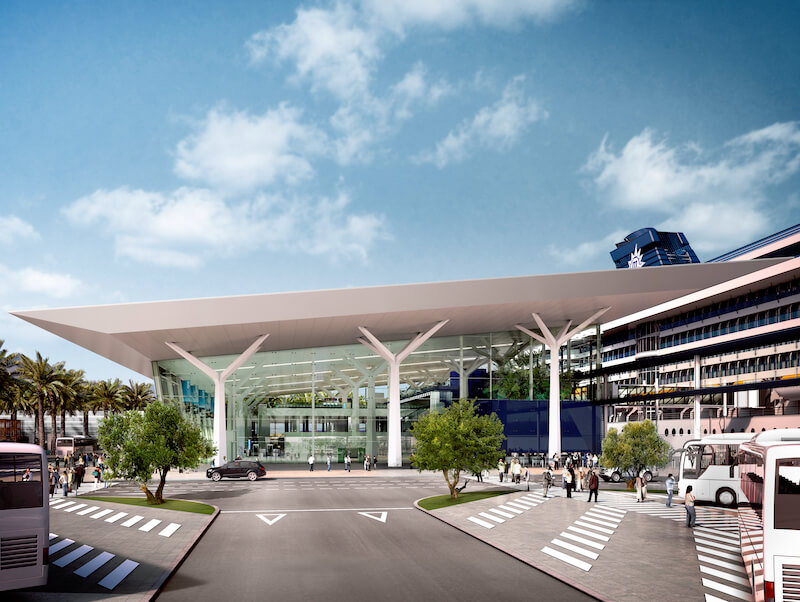
MSC Cruises has announced that it obtained the final approval by the Port of Barcelona’s Board of Directors to build and operate an exclusive cruise terminal. This multi-year concession will see the construction of an innovative terminal of 11,670 square meters that MSC Cruises will operate and manage for a 31-year period.

The project is estimated to represent a 33-million-euro investment by MSC Cruises. With construction work set to start shortly, the new terminal is expected to enter service in 2024.

“We are particularly pleased with the award of this multi-year new terminal concession. Barcelona is not only an important homeport for the cruises division, but also for the entire group and its shipping business. As such, the new terminal is further proof of MSC Group’s longstanding commitment to the city of Barcelona and the entire Catalonia region,” said MSC Cruises’ Executive Chairman Pierfrancesco Vago.

For the project, MSC Cruises is partnering with the renowned Catalan architect Ricardo Bofill.

“I am also honoured that for this project we will able to partner with the impressive Ricardo Bofill and his firm. Together, we will build a state-of-the-art new terminal that is bound to become another landmark for the beautiful city of Barcelona,” Vago said.

According to him, the new terminal will allow MSC to operate “expanded homeport operations, resulting in added direct and indirect economic benefit for the city and the overall region.”

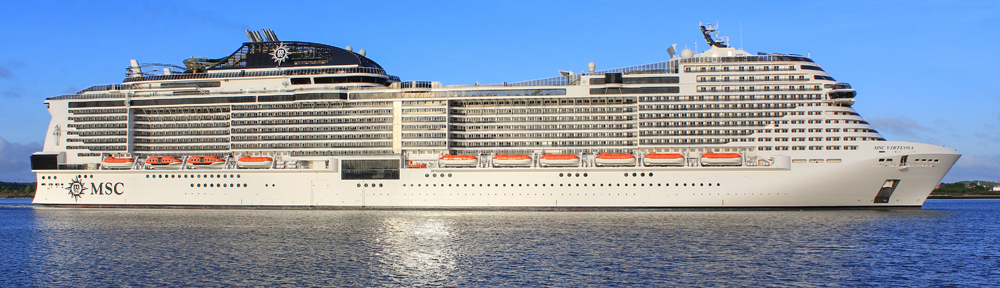
“This will come from higher spent locally by our international guests either flying into or out of Barcelona airport and likely to spend additional days in the city and its hotels together with their travelling parties. Homeport operations will also allow us to dedicate to Barcelona more of our new ships – including the LNG-powered MSC World Europa which is currently under construction and is shaping up to become one of the most environmentally friendly ships at sea when she comes into service,” noted Vago.

“Finally, the new terminal allows us to further demonstrate our commitment to environmental sustainability as it will feature both shore power facilities as well as LNG bunkering operations,” he concluded.
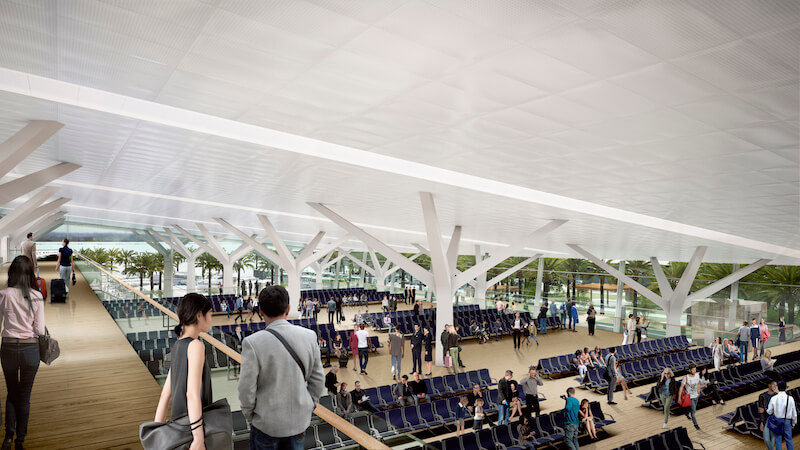
According to a press release, this project will allow MSC Cruises to “consolidate its presence in Barcelona,” which is one of the brand’s most important ports in the Western Med and to expand its homeporting operations out of the city.

This will result in added direct and indirect economic benefit for the city and region as more international guests will transit through Barcelona, likely spending additional days in the city either before or after their cruise, the cruise line wrote.

The new terminal will feature shore power facilities and be ready for LNG bunkering operations, allowing MSC Cruises to deploy more next-generation, environmentally-friendly ships in Barcelona, including the MSC World Europa. The World Europa is the brand’s first LNG-powered cruise ship, currently under construction and due to enter service in 2022.

Both cargo operator MSC Mediterranean Shipping Company and ferry operator GNV have a solid presence in the Port of Barcelona, the cruise line said.

“As such, the new terminal is a further proof of MSC Group’s longstanding commitment to Barcelona, Catalonia and the whole of Spain,” MSC stated.
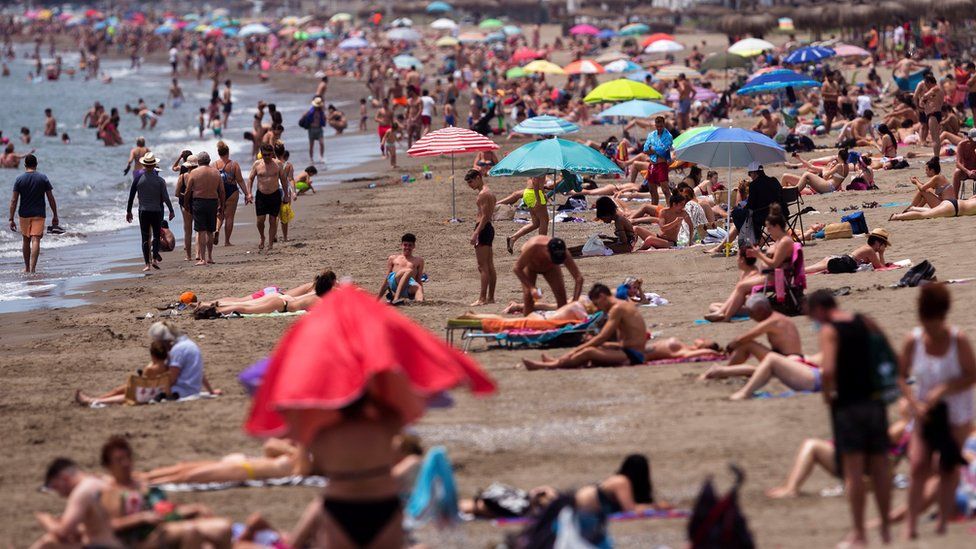
Foreign Office warns against all non-essential travel to the whole of Spain

Coronavirus: UK brings back 14-day quarantine for Spain - BBC News

The Foreign Office has extended its advice against all but essential travel to the whole of Spain.

An update from the FCO on Saturday advised against non-essential travel to mainland Spain but excluded the Balearic Islands and the Canary Islands.

That announcement corresponded with the government’s decision to remove the whole of Spain including the islands from the list of countries from which travellers are exempt from quarantine on arrival in the UK.

Industry leaders had called for air bridges to be set up between the islands and the UK, arguing that they were safer destinations than the mainland. On Monday afternoon, the BBC said a government source had confirmed talks were ongoing.

Major tour operators including Tui and latterly Jet2holidays suspended their programmes to mainland Spain but were continuing to fly to the Canaries and Balearics based on the FCO’s guidance.

The FCO said it has now extended its advice to cover the entire country following an assessment of Covid-19 risks.

Coronavirus: Spain races to save tourism as cases surge - BBC News

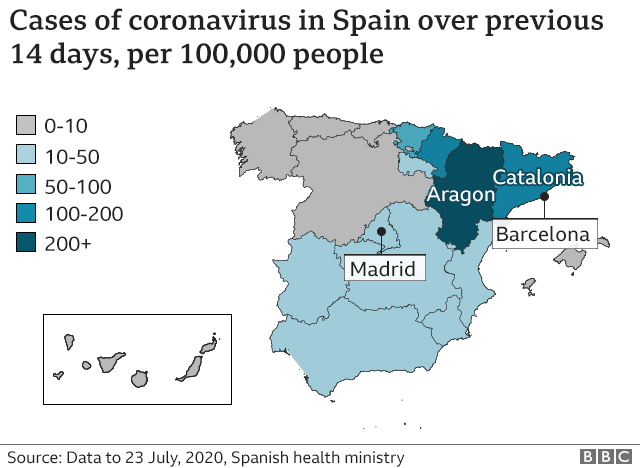
It said the advice was based on evidence of an increased number of cases of Covid-19 in several regions including Aragon, Navarra and Catalonia, which includes the cities of Zaragoza, Pamplona and Barcelona.

Holidaymakers in Spain are not being advised to leave at this time.

The updated advice says: “The FCO is not advising those already travelling in Spain to leave at this time. Travellers should follow the advice of the local authorities on how best to protect themselves and others, including any measures that they bring in to control the virus.

“If you are returning from Spain you will be required to self-isolate on your return to the UK, but the FCO is not advising you to cut short your visit. You should contact your tour operator or airline if you have any questions about your return journey.”

Barcelona to Cruisers: We Love You. Now Please Get Back on Board

Getty

Last weekend, a record-breaking 60,000 cruise ship passengers disembarked into the popular Spanish city. But despite generating investment and jobs, these staggering numbers are at odds with Barcelona mayor Ada Colau’s vow to cap the amount of tourists who inundate the city each year.

Last weekend, a staggering 60,000 tourists entered Barcelona by sea, shattering the city’s previous record. This is a number that the president of Barcelona Port, Sixte Cambra, wants to see increase. It was reported that last year cruise ship passengers alone spent about $900 million, creating an estimated 7,000 permanent jobs in the city. “The report shows that the cruise sector generates investment and jobs and is an activity that creates growth and stability,” says Cambra. This is why, despite the opposition from the mayor, Barcelona Port hopes to expand in order to accommodate even more of these ships.

However, not everyone is as excited about these numbers as Cambra is, specifically newly-elected mayor Ada Colau, who got attention during her campaign by proposing to impose a tourism cap on the city. Colau and many others feel that the city’s beaches, streets, and popular neighborhoods like the Gothic Quarter are at risk of being oversaturated by tourists, many of whom disgorge from the massive cruise ships that make Barcelona a popular port of call. “If we don’t want to end up like Venice, we will have to put some kind of limit in Barcelona,” she says. However, those benefiting from the surge in tourism (the city’s tourism numbers doubled in the last decade) do not share in Colau’s concerns and would like to see these numbers grow even more. One advantage of welcoming cruise passengers is that most are embarking in the city for a day before returning to their ships at night, meaning that the city’s already-packed hotels won’t have to take on any additional guests.

At a time when Europe’s economy is still struggling to get going, it’s hard to turn away easy money and jobs, but at what point does the impact on the local way of life become too much? This is a question that both sides of the argument in Europe’s third most-visited city will have to address as they try to find a manageable balance.