
Costa Cruises has added various new features to its cruise offerings, as well as renewed its visual identity.
According to a press release, Costa’s new concept is based on “enabling guests to explore destinations through unique experiences, both onboard and ashore.” To build these experiences, the company has focused on three key areas – cuisine, tours, sustainability – with a new visual identity to communicate them.
The concept is in line with the principles of its “Manifesto for value-driven, sustainable and inclusive tourism,” the decalogue that outlines the company’s commitment to “grow together with local communities.”
“Now our ships are sailing again, we decided to completely renew our offer. The innovations are so significant that we can talk about a whole new way of travelling with Costa. We want everyone who holidays with us to enjoy unique, enriching experiences, discovering destinations in the most authentic, insightful, sustainable way possible,” explains Mario Zanetti, president of Costa Cruises. “For more than 70 years Costa has been synonymous with cruise travel. At this very important time for the recovery of tourism, we wanted to rewrite the future of cruises in a way that is more responsible and mindful of people and the planet, with the aim of steering the sector back to the constant growth it saw before 2020.”
When it comes to cuisine, Costa worked with chefs Bruno Barbieri, Hélène Darrozeand Ángel León. The chefs have explored authentic local recipes from the destinations visited by Costa ships, reworking them with their own personal know-how.
In that way, Costa Cruises has created two new features: the Archipelago restaurant and Destination Dishes. Destination Dishes are individual recipes designed by the three chefs, interpreting the traditions and flavors of the places guests will be visiting the following day. They are available at main restaurants on all Costa ships, included in the price of the cruise.
The new Archipelago restaurant, available on the Costa Smeralda and coming soon to other ships in the fleet, gives guests three menus to choose from, one by each chef. The menus offer five dishes created to explore each part of the sea route through its cuisine. Archipelago features “island” tables for a more intimate experience, framed by a copper sculpture enclosing pieces of driftwood, installations made using wood salvaged from the shore.
The chefs’ menus were designed “with the greatest attention for the ingredients,” according to the press release. Most of them are being sourced from local producers, and the way the dishes are prepared allows to prevent food waste, Costa said.
The driftwood decorating the “islands” was salvaged as part of “Guardians of the Coast”, the environmental education program for the protection of the Italian coastline run by the Costa Crociere Foundation. For every dinner eaten at the Archipelago, Costa said it will donate part of the proceeds to Costa Crociere Foundation to support environmental and social projects.
The company has rethought its entire range of tours, too. The itineraries have been redesigned to accommodate longer stopovers in ports, giving guests whole days to explore their destinations and make the most of their whole cruise.
“Costa tours become genuine experiences discovering the essence of each place, allowing guests to enjoy the most genuine traditions, flavours and colours, and creating value for local communities,” the cruise line wrote.
As part of its transformation, Costa Cruises has decided to transform its logo too, with a new visual identity. The letter “C” in the logo, which has been accompanying Costa on seas worldwide for over 70 years, has been given a new look, which brings “two different motifs” together in a “sinuous, enveloping embrace,” The two motifs are the earth, seen in yellow in the lower part of the logo, and the sea, in blue in the upper part, joined in the same experience thanks to cruises with Costa.
Costa’s latest innovations are already available on ships currently in service: the Costa Smeralda, the flagship powered by LNG, and the Costa Firenze, offering week-long cruises around the western Mediterranean; the Costa Luminosa and Costa Deliziosa, with week-long cruises around the eastern Mediterranean; the Costa Diadema, now running 10-day cruises to Spain and Portugal.
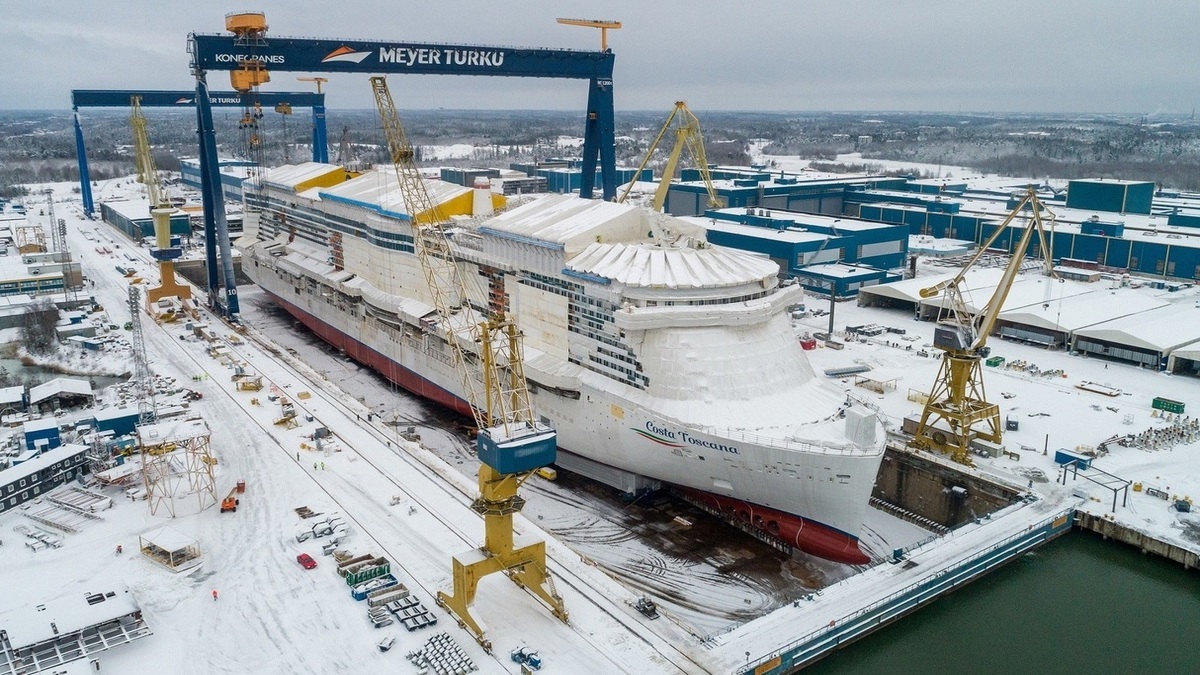
Innovations will then be extended to the next ships gradually returning to operate, including the new flagship Costa Toscana, the second LNG-powered ship in the fleet, in service from March 2022.
 Wetravel2u's Weblog