President Donald Trump may have announced that he will be pulling the US out of the Paris climate accord, but the worldwide cruise industry remains committed to environmental protection.
Cruise Lines International Association (CLIA) recently outlined the many ways conservation is promoted within.
“The cruise industry recognizes the importance of taking active measures to preserve our environment and we are constantly striving to develop more eco-friendly practices that enable travelers to stay green’ while traveling,” said Cindy D’Aoust, president and CEO, CLIA, in a press release. “Cruise lines have continued to offer new incentives for earth-friendly travel and know that this attention to our own environmental impact is not only beneficial, it is vital.”
The following are among the many eco-friendly programs and incentives:
Green Policies
Lots of cruise ships partake in recycling and waste treatment at sea as well as on land. Seabourn, for example, specifically utilizes advanced waste water treatment systems and environmentally-friendly cleaning supplies. It also recycles and donates reusable items.
It continues to increase fuel efficiency every year with new ships including low-flow passenger toilets, sinks and showers.
Dedicated Officers
Many CLIA Members employ dedicated officers charged with daily environmental program oversight. Each Disney Cruise Line ship stations Environmental Officers to check water quality and supply. It trains these officers and crew on waste minimization and environmental safety while supervising initiatives such as recycling.
Sustainable Practices
Cruise lines frequently collaborate with eco-friendly vendors and destinations that seek to reduce their carbon footprint. For one, Uniworld Boutique River Cruise Collection works with environmentally-conscious businesses like organic wineries.
Smart Ships
Smart technologies allow modern ships to conserve energy, water and fuel. Examples include Carnival Cruise Line’s partnership with the South Coast Air Quality Management District, the City of Long Beach, California, and Southern California Edison on shore power.
Similarly, Royal Caribbean International’s Quantum-class and Harmony of the Seas smart HVAC have dropped cooling energy consumption by a quarter.
Waste Minimization & Creative Composting
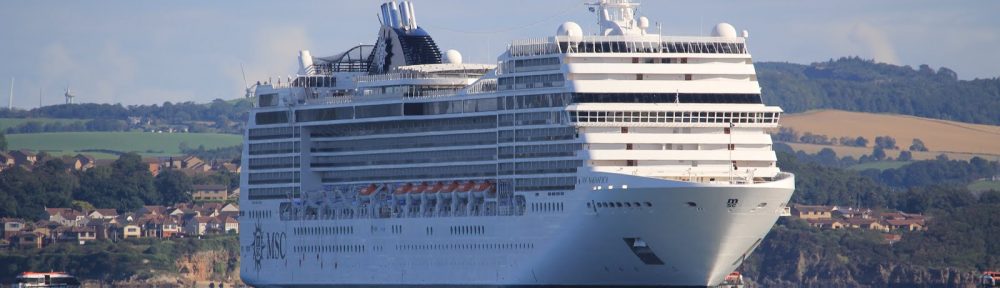
Up front, cruise lines work to reduce supply packaging and then compost food waste. In fact, MSC Cruises uses incinerators, food pulpers, grinders and compactors for garbage processing while Costa Cruises was the first travel company to sign the Milan Protocol.
Solar Sailing
For ships that can, energy waste is reduced by utilizing renewable battery power and solar energy for some systems. AmaWaterways’ Zambezi Queen employs low-emission generators by day and batteries by night, using solar heating for its hot water supply.
Cruise for the Earth
Green voluntourism is available to guests who want to travel and better the world. Azamara Club Cruises has partnered with World Wildlife Fund, and WWF guest speakers are featured on some sailings.
Corporate cousin Celebrity Cruises also encourages Celebrity Xpedition guests to plant trees in Galapagos National Park in support of the Scalescia reforestation effort.
Wildlife Conservation
The environment’s inhabitants are just as important to cruise lines, and Holland America Line has an “Avoiding Whale Strikes” training program in cooperation with National Oceanic and Atmospheric Administration’s (NOAA) and the National Parks Service.
All the company’s deck officers have gone through the course, which is also being shared broadly with the cruise and maritime community.
Proper Disposal
Another crucial element of environmental protection is for crew members and guests to remove garbage responsibly. Crystal Cruises, for instance, promotes its “Crystal Clean” initiatives to communicate environmental education. Of course, it’s important to properly recycle and reuse not only paper and plastic but also glass, aluminum, scrap metal, cooking oil, petroleum oil, toner cartridges, electronics and certain chemicals.
Smarter Sewage
Lastly, technology can also assist in lessening the impact of sewage and water waste, as Avalon Waterways has found with its multi-step procedure and specialized onboard sewage treatment system.


 Wetravel2u's Weblog