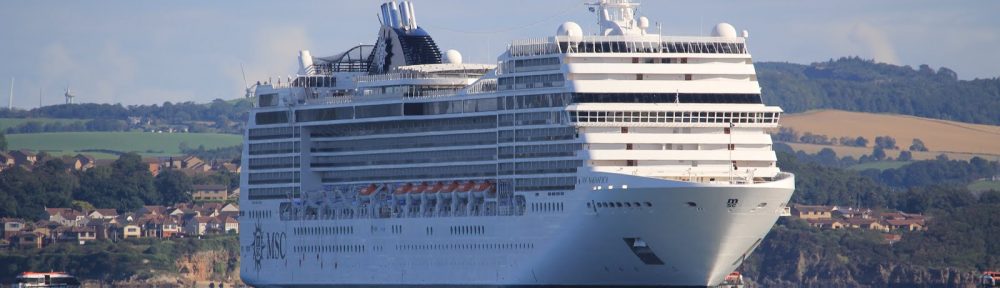
Why Falkland Islands’ cruise ship tourism is booming, with 60,000 visitors expected to arrive this year.


By MICHAEL GADD FOR MAILONLINE

  • The return of Norwegian Cruise Lines’ visits provides a massive boost
  • Falkland Islands expecting 60,000 arrivals by cruise ship this season
  • Last year’s arrival figures rose to 43,437 after a low of 29,000 in 2012-13
  • Nature tourism is the main draw with many marine bird species and seals 

Falkland Islands tourism has made a remarkable comeback in the past few years with the number of cruise ship visitors rising from less than 30,000 in 2012-13 to potentially double that this year.

The boost comes thanks in no small way to the return of the Norwegian Cruise Line’s services to South America this season from October to March, including stops at Falklands’ capital Stanley.

Their Sun vessel, which has a maximum passenger capacity of 1,900 and spends the Northern Hemisphere summer around Alaska, is planning nine stops at Stanley as part of its cruise around Cape Horn this season.

Stanley-based vessel agent Sulivan Shipping estimates 60,000 arrivals by cruise ship this year, following last year’s official figure of 43,437 passengers, despite six trips cancelled by poor weather.

Should Mother Nature be kind and the estimate ring true, the Falklands could be nudging their heights of 2007-08 and 2008-09 when they welcomed more than 62,000 visitors before the global economic crisis hit and numbers slumped to 29,000 three years ago.

‘Of course we are very much at the mercy of the weather here in the Falkland Islands,’ Samantha Marsh, Tourism Coordinator for Sulivan Shipping, tells MailOnline.


The Norwegian Sun cruise ship, which holds 1,900 passengers, is planning nine stops at Stanley this year

‘Large ships need to tender their passengers into Stanley harbour so high winds which are a characteristic of summer in the Southern Hemisphere can cause issues.

‘On average we will have six cancellations a season due to unfavourable weather. So the anticipated estimate seems very high in comparison to last year’s actual landed figures, but when we take into account some cancellations due to bad weather, we are probably looking at a conservative estimate of 50,000 landed.’ Even so, it remains a substantial period of growth for the archipelago with a resident population of less than 3,000

And with a Falklands’ Tourism Board office opening in London this year, further building a bond with the UK after an overwhelming 98 per cent majority voted to remain under the Union Jack amid continued tensions with Argentina, that figure appears only set to rise. They are also pushing to attract more visitors from the US and other untapped markets.

Marsh adds that the growing capacity of expedition and research ships has also boosted numbers.

‘When I first started working here, many years ago, the average expedition vessel had an average 50-80 passenger capacity. These ships are now around 150 in average capacity,’ she says.

‘The increase in numbers can only be a positive for the local economy, but as a small Island, we do quite often find it difficult to meet the demand in the way of excursions.

‘With practically zero unemployment, many people will take the day off to drive a coach, or to take guests to visit the penguins in order to cater for a large ship visit.’

The first passenger boat this season will be the Russian research and tourist vessel Akademik Sergey Vavilov on October 17, one of eight smaller ships in the first month also including the Sea Adventurer and the Akademik Ioffe.

In November come the big cruise ships, starting with the 1400-berth Zaandam and followed by the return of Norwegian Cruise Lines’ to Stanley when the Norwegian Sun makes its first visit on December 10.

It returns for a bumper day on December 28 when it will arrive with Star Princess and MS Marina whose potential 5,600 passengers almost double the Falklands’ entire population.

So what do visitors see when they arrive? By far the greatest attractions of the Falklands is its abundance of unspoiled wildlife, the marine bird species in particular.

Tourists walk by the Falkland Islands' visitor information centre found near the jetty on arrival

After arriving in Stanley, a town with a mostly English feel and British food the predominate offering, visitors usually seek out the five species of penguin, four species of seal and many other creatures who call the islands home.

Albatross, petrels, the Falkland Flightless Steamer duck geese, and birds of prey including hawks, falcons and the Striated Caracara (Johnny Rook), which is found only on the Falklands and on small islands off Cape Horn at the bottom of South America. Porpoises and dolphins can also be seen in playing in the waves.

Another draw for the more than 3,000 UK visitors expected this year are the memorials marking the 1982 Falklands War with Argentina as interest in military history is boosted by the 100th anniversary of the First World War.

Tours of the battlefields of Goose Green and Mount Tumbledown are available while a recently-opened museum at Port Stanley has a section focussed on the conflict in the South Atlantic, also recalling the islands’ long maritime history.

Don’t shake hands with the captain!

Cruise ships said to have banned greeting because of fears contagious stomach viruses could be passed on

  • Cruise ship captains have been warned against shaking hands on deck
  • It is feared that shaking hands can pass on the infectious Norovirus
  • Crystal Cruises admitted the new rule was designed to prevent disease
  • The company said two of their boats were hit by Norovirus since 2008

Dining at the captain’s table is, for the lucky few, perhaps the glamorous highlight of a luxury cruise.

But having donned your dickie bow for the big night, don’t be surprised if he doesn’t stretch out a gold-braided arm in greeting.

For some cruise ships have banned passengers from shaking hands with the captain amid fears over highly contagious stomach viruses being passed on.

On-board outbreaks of norovirus have turned many a cruise into a nightmare for holidaymakers, leaving them suffering chronic vomiting and diarrhoea.

The bid to prevent it being passed to captains at dinners, cocktail parties and receptions was noted by Margaret Thatcher’s official biographer Charles Moore when he went on his first cruise recently.

Writing in The Spectator magazine about his time on board the £225 million, 1,070-passenger Crystal Serenity on a 12 day, £3,700 per person cruise from Lisbon to London via the west coast of France, he said: ‘Every effort was made to look after us courteously. Modern standards, however, put things under some strain. ‘As our voyage neared its end, the daily ship newspaper, Reflections, delivered to the door of our cabin (‘stateroom’) said: ‘All guests are cordially invited to join Captain Birger J Vorland and Crystal Society Hostess Isabell Wagner in the Palm Court at 7.45pm.

‘While the captain is pleased to meet you, he and the other staff receiving you refrain from shaking hands in order to provide the most effective preventative sanitary measures’.’

Yesterday a Crystal Cruises spokesman said: ‘It used to be, back in the day, that the captain would shake everyone’s hand. But because norovirus is spread so easily it’s just standard now that when the captains are greeting lots of people they don’t shake hands.

‘They are not being rude, it’s a preventative measure. It’s been the case on our two ships since at least 2008.’

Whether or not passengers can shake hands with the captain is down to individual cruise lines, say the Cruise Line International Association (CLIA).

A Cunard spokesman said: ‘While I was on Queen Mary 2 last week the captain shook hands with passengers attending the many cocktail parties that were held.’

A CLIA spokesman insisted norovirus outbreaks on cruise ships are uncommon, affecting ‘just 1 out of every 12,000 cruise passengers’.

He said: ‘You are 750 times more likely to get norovirus on land than on a cruise ship.’

Standard procedures for CLIA cruise lines to follow when a guest on board is suspected of contracting the gastrointestinal illness include regularly sanitizing door handles, railings and elevator buttons, providing hand sanitizers to passengers during their cruise, and sending public health specialists as well as additional medical personnel to ships as required.

The CLIA spokesman said: ‘Norovirus can remain viable on hands for hours thereby giving hands the potential to spread the infection both directly and indirectly. ‘Hand washing is therefore the single most important procedure for preventing the spread of infection.’

Holidaymakers forced to abandon their cruise ship after it collides with oil tanker off the coast of Turkey leaving huge dent in hull.

  • Celestyal Crystal cruise liner collided with tanker STI Pimlico on Saturday 
  • More than 850 passengers on board evacuated by sea boat to Gallipoli
  • Two crew members and a passenger suffered minor injuries in incident
  • Emergency services moved quickly to stop a fire from the oil tanker 

More than 850 passengers had to be evacuated after their Mediterranean cruise ship collided with an oil tanker off the coast of Turkey, leaving a huge dent in its hull.

Authorities said a huge disaster was averted after emergency service quickly responded to reports that the Celestyal Crystal and the tanker STI Pimlico had crashed at 1.30am on Saturday morning in the Dardanelles Strait.

Cruise operators said two crew members and a passenger suffered minor injuries in the accident as the vessel, registered to Malta, made its way from Greece to Istanbul.

All of its 853 passengers and 382 staff were taken to safety by a sea bus to Gallipoil, and the rest of their journey was cancelled while structural damage to the front of the ship is being fixed.


Damage: The hull of the Celestyal Crystal was badly damaged after the incident at 1.30am on Saturday

Emergency services moved quickly to douse the tanker in water to prevent a fire or explosion after fuel spilled out of the 182-metre long tanker, which had been travelling from Russia to Malta carrying flammable naptha fuel.

It has not yet been established how the collision took place.

A statement from the cruise line published on travel website www.cruisecritic.co.uk said Celestyal Cruises, which operates the ship, will arrange for passengers to continue their holidays on other boats.

It has also offered full refunds for holidaymakers’ cruise fares as well as second, complimentary seven-night cruises

Spill: Emergency services working quickly to stop a fire or explosion when oil poured out of the tanker 

‘With the safety and care of our passengers as our utmost priority, we will ensure the smoothest possible disembarkation for those on board since the current cruise will have to be cancelled’, it said.

‘We apologize for the inconvenience and would like to assure that we will spare no effort in ensuring that our passengers are provided with the best hospitality under the circumstances.’

Mayor of Çanakkale, Ahmet Çınar, told Turkish television channel NTV a huge disaster was prevented just in time and potential danger has been minimized thanks to ‘intensive’ work by emergency crews, the Daily Sabah reported.

Ferry services along the Strait were cancelled for several hours during the clean-up operation.