Is a shipbuilding duopoly good for the cruise industry?

In the modern facilities, the most technologically sophisticated cruise ships are being built.
 
Before the end of 2017, it looks like there will be a worldwide duopoly in the business of building cruise ships. Can this be good for cruise lines, their customers or travel agents?
It would come about if Italy’s Fincantieri buys the French shipyard in Saint-Nazaire where Royal Caribbean International’s Harmony of the Seas, and a string of other ships, have been built. (Fincantieri won’t buy all of the Saint-Nazaire yard. The French government will hold onto a one-third stake.)
The yard is currently operating under the name STX France, but the STX parent company, based in Korea, has been trying to sell it to consolidate its way out of financial trouble.
A South Korean court recently approved Fincantieri as the approved bidder.
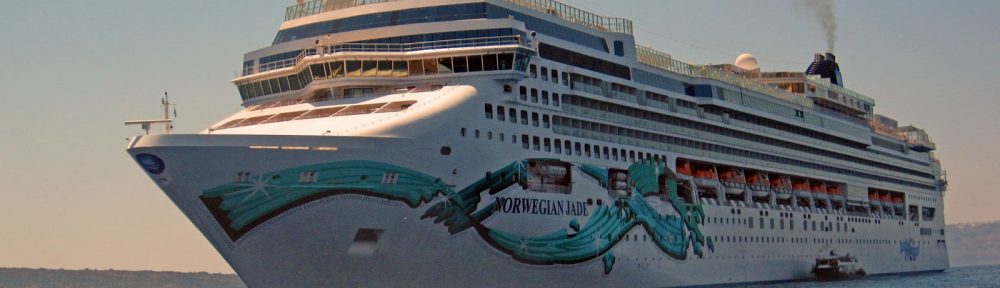
STX already sold its yard in Turku, Finland, to Germany’s Meyer Werft, the other big name in cruise ship building. Together, Fincantieri and Meyer Werft would dominate cruise shipbuilding the way Boeing and Airbus control the world’s output of commercial jetliners. (Fincantieri has built almost all of the recent Carnival Corp. brand vessels while Meyer Werft has delivered most of Norwegian Cruise Line’s latest ships, among others).
The business of building jets and cruise ships is similar. Both are capital intensive businesses, with a need for specialized labor and a network of subcontractors. Both are subject to wicked swings in the business cycle that can leave them with either more work than they can handle or none at all.
Big cruise lines spend billions of dollars annually on new ships. Yet it is telling that there were no bidders other than Fincantieri for the French yard. It is a very specialized and risky business.
Does it matter to the cruise lines that there are only two suppliers left to do business with?  It doesn’t seem to matter much to the airlines, who haven’t been cornered by the Airbus-Boeing duopoly. One difference may be that there are dozens of customers for the plane makers, but less than a dozen for cruise yards.
Image result for fincantieri
Fincantieri’s yard in Trieste. Credit: Fincantieri
One well-informed source in the industry rated Fincantieri’s takeover of STX France as “neutral to slightly negative” for cruise operators. The reduction in negotiating partners is a negative, while the stability of having the yard in the hands of a familiar, known entity somewhat offsets that.
There are some other players in the shipbuilding game. Genting Hong Kong bought several German yards, which will build the future ocean and river ships for Crystal Cruises, the line Genting acquired in 2015, and the Chinese government, which has partnered with Fincantieri to begin building ships in China.
Neither poses much of a current threat to the duopoly. So for the foreseeable future, if you want to build a big cruise ship, the choices are Meyer Werft or Fincantieri.
Let’s hope it doesn’t mean anything negative for the cruise lines or their travel partners.

Fincantieri Finalizes Shipbuilding Contracts with Virgin Worth 2 Billion Euros

File Photo: Sir Richard Branson with Virgin Voyages' President and CEO Tom McAlpin as he arrives by helicopter for a news conference at the Perez Art Museum in Miami, Florida June 23, 2015. REUTERS/Joe Skipper
File Photo: Sir Richard Branson with Virgin Voyages’ President and CEO Tom McAlpin as he arrives by helicopter for a news conference at the Perez Art Museum in Miami, Florida June 23, 2015. REUTERS/Joe Skipper

By gCaptain.com

Italian shipbuilder Fincantieri says it has finalized construction contracts for three new cruise ships worth a combined 2 billion euros with Virgin Voyages, the new cruise ship arm of Virgin Group.

The three ships will be built at the Fincantieri shipyard in Sestri Ponente (Genoa), Italy with delivery scheduled for 2020, 2021 and 2022 respectively.

Each ship will weigh about 110,000 gross tons, be 278 meters long and 38 wide. The ships will feature over 1,400 guest cabins that can host more than 2,800 passengers, accompanied by 1,100 crew members on board to deliver the famed Virgin service.

Based in South Florida, Virgin Voyages, formerly Virgin Cruises, is backed by lead investors Bain Capital Private Equity and London-based Virgin Group, whose founder and CEO is billionaire Sir Richard Branson. The shipbuilding contracts were first signed October but depended on closing of the multi-billion dollar financing package.

Steel cutting on the first of the three new ships is scheduled for early 2017, followed by keel laying in Genoa in the fourth quarter of 2017.

“These ships will stand out for original design and craftsmanship,” Fincantieri said in a statement Tuesday. “They will include some highly innovative ideas and design solutions, notably for energy recovery, reducing the overall environmental impact. For example, they will be equipped with an energy production system of approximately 1 MW, which uses the diesel engine’s waste heat. The result is, therefore, a project which distinguishes Virgin Voyages in the worldwide cruise scenery.”

Virgin Voyages’ first ship is expected to arrive at PortMiami in 2020 for a range of Caribbean itineraries.

MSC Cruises names second Seaside-generation smart ship MSC Seaview

Image result for msc seaside

MSC Cruises’ second Seaside-generation smart ship, set to launch in June 2018, will be named MSC Seaview.

Spending its inaugural season in the western Mediterranean, MSC Seaview will homeport in Genoa, Marseille and Barcelona.

MSC’s Seaside-generation offers a high ratio of outdoor space per guest, as well as an increased number of balcony cabins and public areas.

Built by Fincantieri, MSC Seaview will feature a 360-degree promenade with glass balustrades that runs around the entire ship.

As well as Genoa, Marseille and Barcelona, MSC Seaview will call at destinations such as Naples and Messina in Italy, and Malta.

The vessel will also include the latest at sea technology, as part of a partnership with Samsung. The technology covers everything from the latest displays and mobile solution to products to help enhance the customer retail experience.

Sales for the ship are now open to MSC Voyagers members, with all other guests able to book from 18 July.

MSC Seaview’s sister ship, MSC Seaside, is entering into service in December 2017, and sailing year round from Miami, US, to a range of Caribbean and Central American destinations.