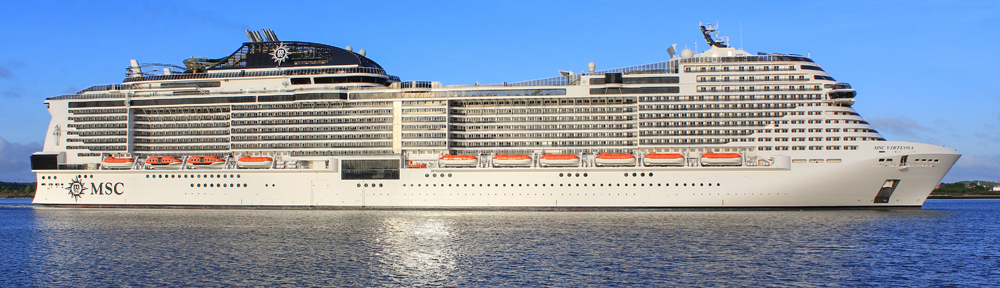
Virgin Cruises to launch from Miami with mid-size cruise ship

Virgin Cruises has agreed a deal to have three ships built to start sailing from 2020 and “redefine” the cruise experience.

The 2,800-passenger vessels are due to be delivered between 2020 and 2022. Each will be 110,000 tons and also carry 1,150 crew.

The first vessel will be based in Miami offering seven-day Caribbean itineraries.

Virgin Cruises revealed today that it has signed a binding letter of intent with Italian shipbuilding company Fincantieri for the trio of new mid-size ships.

Potential customers are being invited to visit the Virgin Cruises website to share their ideas on what the new cruise line can do to deliver an “incredible experience at sea”.

Virgin Cruises’ binding letter of intent with Fincantieri is the first part of a two-step process with both companies committed to signing a contract at the end of 2015.

Virgin Group founder, Sir Richard Branson, said: This is a very exciting day for Virgin and travellers around the globe.

“We now have the right partners in place to build a world-class cruise line that will redefine the cruising experience for good.

“The Virgin Cruises approach will appeal to cruisers and non-cruisers alike, and we look forward to being in Miami and delivering an experience for people who want a new way to cruise.”

The line’s chief executive, Tom McAlpine, said: “We are committed to making waves in the cruise industry, and partnering with Fincantieri and PortMiami sets Virgin Cruises up to do just that.

“Today’s announcement brings together important ingredients in our future success – Miami’s vibrant culture paired with the excellent port infrastructure and port team; and Fincantieri’s expertise in prototyping, their creativity and understanding of our vision.”

Viking looks to ocean vessels for new growth opportunities

AMSTERDAM — As it prepares to launch its first ocean vessel, the 930-passenger Viking Star, in April, Viking Cruises has embraced a new strategy intended to split its growth more evenly between river and ocean cruising.

At a news conference aboard the Viking Skirnir, one of 12 new river vessels that Viking dedicated here and in Rostock, Germany, on March 24, the company’s chairman, Torstein Hagen, said Viking planned to build six new river cruise ships for 2016.

That’s half the total delivered this year and a third of the record 18 ships dedicated en masse in 2013.

Hagen acknowledged that growth in the river cruise business has been slowing slightly, but he said the company’s total growth would not slow, because the new ocean cruise ships will be coming on line.

“We’re making space for some of our ocean cruisers,” Hagen said. “We want to make sure that’s at least as great a success as the rivers.”

The shift comes against a backdrop of weaker-than-expected sales of European river cruises in 2015. Hagen said river cruise bookings to date this year have been running about 10% ahead of last year, which he termed “a little bit slower than we had expected.”

Alluding to the impact on U.S. vacationers of the viral outbreak in West Africa and a terrorist incident in the French capital, Hagen said, “I think [slower growth] relates to Ebola, Paris, stuff like that.”

Another factor more specific to Viking is reduced demand for its cruises in Russia. Tony Hofmann, Viking’s senior vice president of operations, said that bookings were off about 50% for the line’s five Russian ships and one Ukrainian vessel.

“We’re now in an extremely solid financial position. We have money coming out of our ears.” — Viking CEO Tor Hagen

As a result, two Russian ships and the Ukrainian ship have been laid up, although Hagen said the staff remains on payroll.

“It will come back, I’m sure,” he said of Russian river cruising.

Until the slowdown began, Hagen said, Viking had posted overall growth of more than 30% a year for the past five years. Turnover, a European term for gross revenue, will be about $2 billion this year, he said.

Part of that will be derived from the new ocean cruise side of the business. Hagen said Viking planned to take delivery of Viking Star by March 29 and run a 10-day shakedown cruise in early April.

Hagen said that within three months of its 2013 announcement, the ship was 80% booked for the inventory that was put on sale, and it is now 85% booked for 2015. He said that in 2016, when at least one and possibly two more ocean ships will be delivered, the Viking Ocean is 49% booked.

The river cruise expansion, Hagen said, has left Viking in a good position to finance its entry into the ocean segment, which is considered to have high barriers to entry by many analysts.

“We’ve been very fortunate,” Hagen said. “We’ve had tough times along the way. We’re now in an extremely solid financial position. We have money coming out of our ears.”

The 47,000-gross-ton Viking Star, being built by Italy’s Fincantieri, has been estimated to cost about $300 million, although Viking hasn’t publicized the price. Hagen said other aspects of getting into the ocean side of the business have been easier for Viking because it already has a purchasing department, a sales operation, food and beverage and other functions.

“It’s a piece of cake,” Hagen said.

So far this year, Viking has hired about 1,200 ship employees, including 650 for the 12 new river ships and 550 for the Viking Star. They all go through a three-week training program before starting work on the ships.

At a celebration banquet after dedicating the newest river vessels in Amsterdam, Hagen suggested that his dream for the ocean cruise side of the business included at least 10 ships.

He was given a commemorative game board by Bernard Meyer, managing partner of Germany’s Meyer Werft shipyards, where Viking builds its river cruise vessels, that included slots for 100 ships, a number Hagen had laid out several years ago as a “nice” goal for his river fleet.

In accepting the board, Hagen said he had a vision for the ocean cruise business with a number that “ends with a zero, but not two zeros. It wouldn’t be surprising if we see 10 of these someday,” he said.

As Viking eases into the ocean business, its strategy calls for continued rapid growth but spread over a larger base than its river cruise business, which is largely concentrated in Europe.

“Our rate of growth is running at 35% per year, and you don’t have very many companies that accomplish that,” Hagen said at the banquet.

Viking recently announced it plans to enter the river cruise market in the U.S. with six ships built for the Mississippi River. He said he did not yet have a contract for the construction of the ships, which will be built in a yard in the U.S., but hoped to start operations toward the end of 2017.

Viking has already started running ads on TV and elsewhere promoting its ocean cruise business, and one question is how much the river cruise market will feel the effects of Viking’s switch in emphasis.

Hagen said the company has spent upwards of $600 million since 2001, when it began marketing in the U.S., all of it on river cruise promotion.

“We are not surprised river cruising is growing so fast,” Hagen said at the Viking Skirnir press conference. “With normal modesty, we are causing it to grow.”

Viking’s brand awareness is high, he said, fed by a successful sponsorship of the PBS hit series “Downton Abbey.”

Now it may be ocean cruising’s turn in the spotlight. Hagen said the mayor of Bergen, Norway, has invited 20,000 people to the Viking Star naming ceremony in May.

The decision to build only six river ships next year, he said, “is a little bit related to our entry into ocean ships. We’re now giving people a choice. And we want to make sure we have excess demand.”

But Hagen also noted that Viking retains options with Meyer’s shipyard to build an additional 18 European river ships.

“There comes a time when it will ease off. No doubt about it,” Hagen said. “But we won’t lead the ease-off, I can assure you.”

Carnival Corp. orders 9 ships to be built from 2019 to 2022

T0330CARNIVALCORP.JPG

By Johanna Jainchill
Carnival Corp. said Thursday that it would add nine ships to its fleet between 2019 and 2022.

Carnival offered almost no details about the ship order. It did not specify which of its nine brands would get the new vessels or offer any information about their size, design or cost.

In a statement, Carnival said the new ships were expected to serve the North American, European and Chinese cruise markets, would be specifically designed and developed for their particular brands and would be the most efficient ships in Carnival history.

“We’re excited to take this next step in our fleet-enhancement plan with these two new agreements that are consistent with our long-term strategy of measured capacity growth over time,” Carnival Corp. President and CEO Arnold Donald said in a statement.

The order is in line with Donald’s previous statements indicating that the company would restrict its growth to two to three ships per year across its fleet.

Carnival said it had signed memorandums of agreement with Italy’s Fincantieri shipyard to build five of the vessels and with Germany’s Meyer Werft to build four.

Additional information about the ships, such as their design and which brands they will be built for, will be revealed at a later date, Carnival said.

In announcing the new builds, the company indicated that Donald would be offering additional details about the new vessels during Carnival Corp.’s earnings call on Friday.

Carnival Corp. is the parent company of Carnival Cruise Line, Holland America Line, Princess Cruises, Seabourn, Aida Cruises, Costa Cruises, Cunard, P&O Cruises (Australia) and P&O Cruises (U.K.).

Late last year it ordered one ship each from Fincantieri for Carnival Cruise Line and Holland America Line for delivery in 2018.

The company has added more than 30 ships to its combined fleets since 2007, and it has another nine scheduled to be delivered between 2015 and 2018, which Donald pointed out in December was about one vessel for each of its brands over the next four years.

This year, Carnival is adding two ships to its global fleet and removing four. The new vessels are P&O’s Britannia, which launched earlier this month, and the Aida Prima, set to debut later this year.