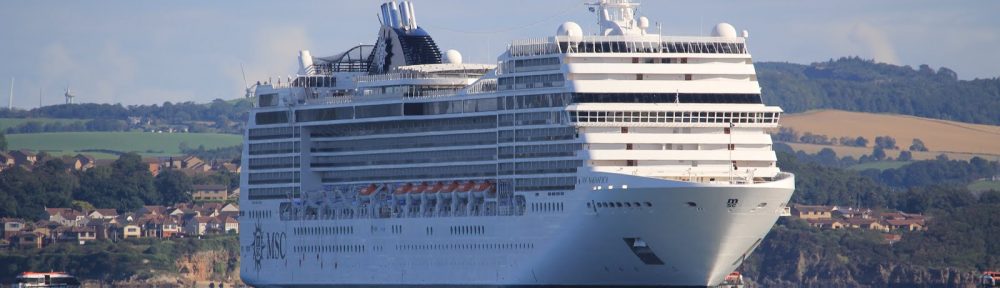

Virgin Cruise Concept Drawing.
Virgin Cruises’ decision to order ships that are smaller than those commissioned recently by its future competitors has prompted questions about whether it will have enough room to fashion a distinctive onboard experience.
The line, part of Richard Branson’s Virgin Group business empire, in June ordered three ships from the Fincantieri shipyard for delivery after 2020, when it plans to launch weekly Caribbean cruises.
The ships will each be about 110,000 gross tons and carry 2,860 passengers at double capacity, Branson revealed at an appearance in Miami last month along with Virgin executives.
That capacity is far less than recent orders, for example, for as much as 6,000 passengers for Carnival Corp.’s Aida Cruises brand in Germany, 5,400 for Royal Caribbean International, 4,500 for MSC Cruises, 4,200 for Norwegian Cruise Line and 3,954 for Carnival Cruise Line.
All those lines sail at least one ship from Miami, the homeport where Branson said Virgin will launch its line.
When it comes to setting prices, larger ships provide economies of scale that can help reduce fares while still generating profits.
“Virgin is in a very difficult position to differentiate themselves from everybody else. The key for their success is how they differentiate their onboard product.” — Art Rodney, Crystal Cruises founder
Tom McAlpin, president and CEO of Virgin Cruises, said that while pricing has not been disclosed, it will likely be above the cheapest fares advertised for seven-day itineraries.
“We’re not going to be a budget brand,” McAlpin said in an interview. “What Virgin has done in the past has been to give you a better experience at the same price point.”
To do that, it helps to have a generous amount of public space to work with. Virgin has not disclosed its onboard activities or designs yet but has emphasized that it will stand apart from the pack.
A key measure for new ships is the space ratio, which divides gross tonnage into the number of passengers carried. The higher the ratio, the more room for larger cabins and public spaces.

Mark Conroy, who helped design several ships as president of Regent Seven Seas Cruises in the 1990s, said the key question is how big the cabins will be on Virgin Cruises.
“There is only so much square footage, particularly outside space, that needs to be divided between technical space, public spaces and staterooms,” Conroy said. “The technical space is pretty standardized, so then it becomes a balancing act between public space and suites and cabins. The larger you make the suites/cabins, the less space you have for public room.”
Art Rodney, one of the founders of Crystal Cruises, said that at 38.5, the Virgin ship’s space ratio is “no better than and in some cases worse than other large ships,” such as the MSC Divina or Royal Princess, both of which have space ratios of 40.
“Virgin is in a very difficult position to differentiate themselves from everybody else,” Rodney said. “The key for their success is how they differentiate their onboard product.”
McAlpin agreed, saying the “different programmatic elements” will set Virgin apart.
He said the ships are still in the design phase and urged potential passengers to weigh in on Virgin’s website to say what they would want to see and do on a Virgin vessel.
But McAlpin also said that if the ship is smaller than its competitors, that will make it different too.
“If everyone out there is building ships of one size and you have a different size, it does provide a level of differentiation,” he said.
McAlpin cited consumer research as the main factor in deciding how big to build. He said those surveyed expressed concerns about being on a mega ship with thousands of fellow passengers.
“We believe a slightly smaller ship gives us a good platform,” McAlpin said. “It’s big enough to provide us with a variety of experiences but small enough to provide a more intimate atmosphere.”


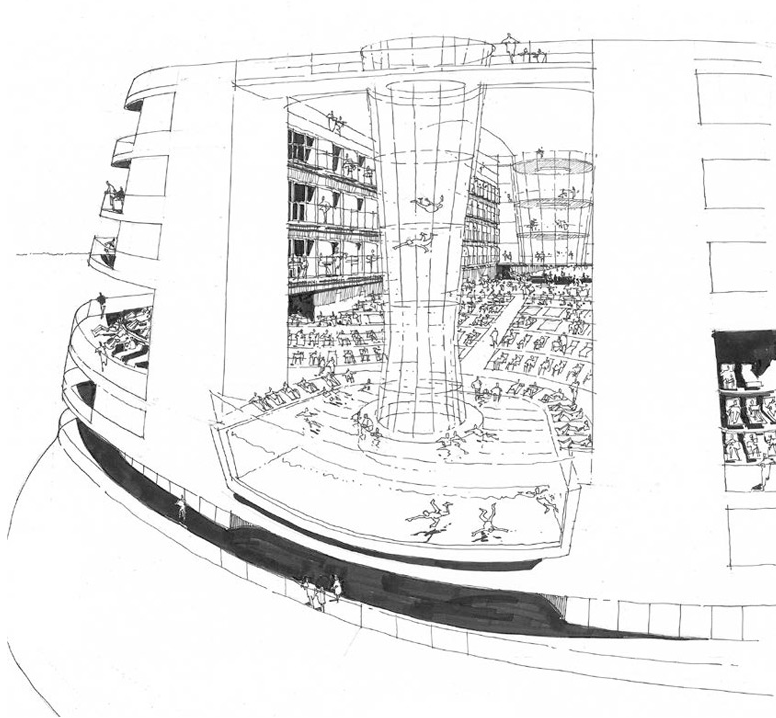 The renderings, while undated, would appear to share similarities with many modern cruise ships sailing today, notably with the Royal Caribbean ships mentioned prior.
 Wetravel2u's Weblog