Tom Cruise & Mission Impossible Crew Rent Two Hurtigruten Cruise Ships

The Hollywood star and his production crew are reportedly anchored off the coast of Norway.

There’s no mission impossible for Tom Cruise and his crew, even filming a blockbuster movie during a pandemic…

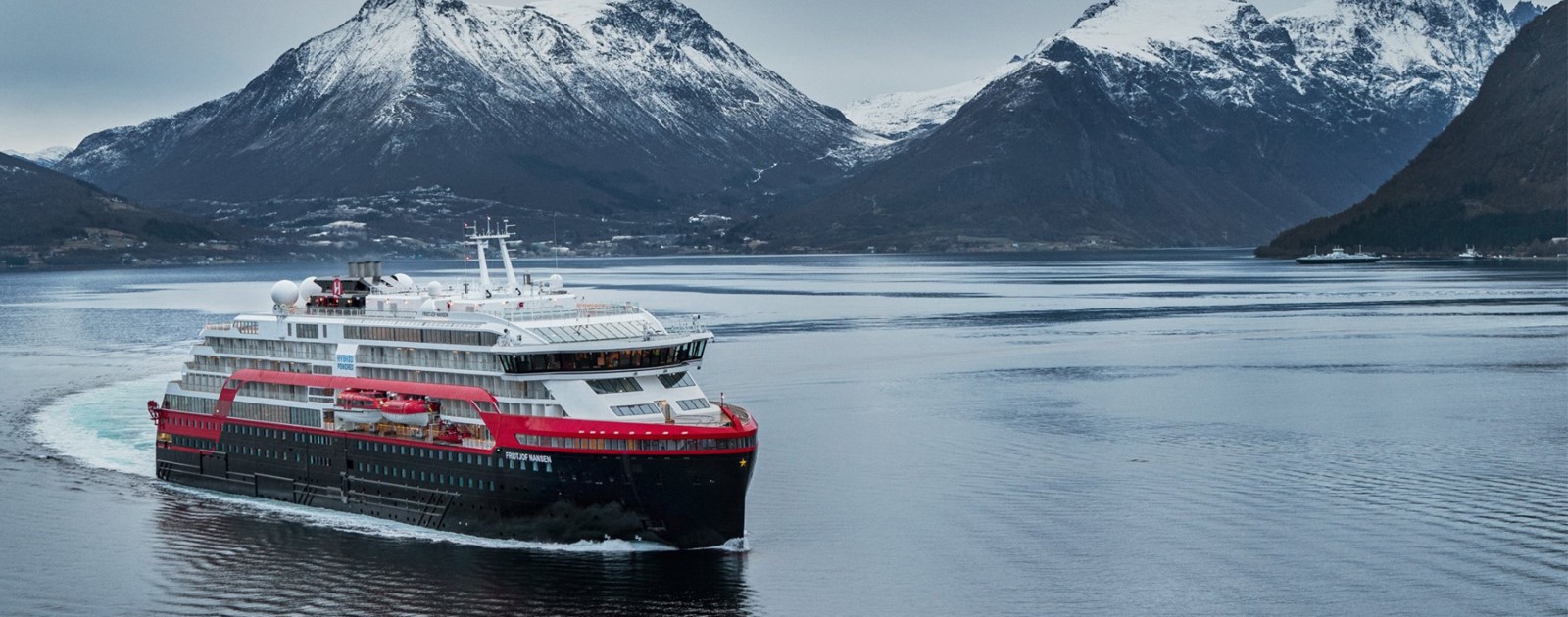
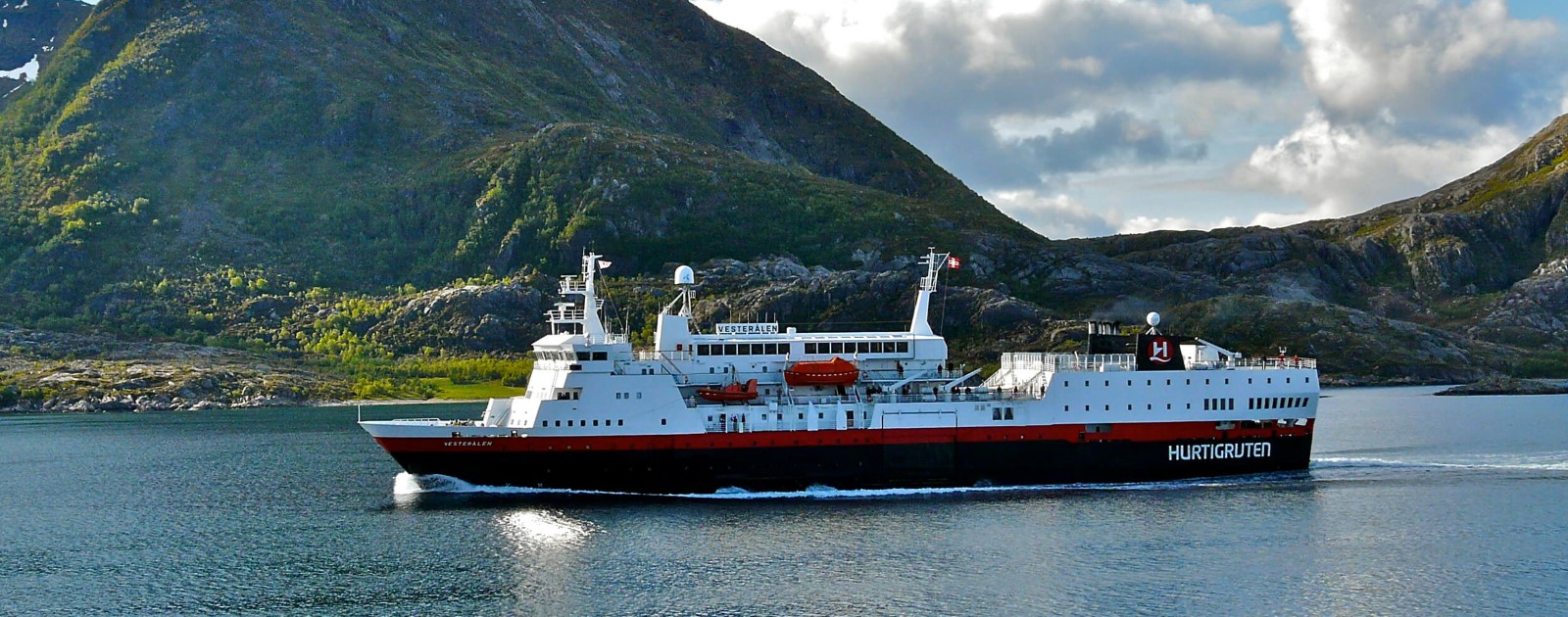
Helping to get filming safely wrapped up, Hollywood star Cruise and the Mission Impossible production crew have reportedly hired two Hurtugrten cruise ships, MS Vesterålen and MS Fridtjof Nansen.

According to Norway Today, Hurtigruten’s new ship MS Fridtjof Nansen is acting as a hotel ship for the 400 crew members, who have been housed on the ships during filming in August and September.

The ship is said to be anchored off the coast of Hellesylt, a small village in Norway, allowing the crew to get on with filming and avoid any further delays to production. Production on the new Mission Impossible 7 movie was put on hold in February due to the pandemic but has now restarted.
MS Vesterålen | Hurtigruten´s ships | Hurtigruten

While they didn’t confirm if Cruise himself was staying on the premium expedition ship, Hurtigruten did confirm the rental to Norway Today, revealing they rented the two ships out to the company Truenorth. Truenorth is currently working on the seventh Mission Impossible movie with Tom Cruise.

According to the Sun newspaper, Cruise himself picked up the bill for the rental for August and September, which came in at an impressive £500,000.

MS Fridtjof Nansen is currently docked at Hellesylt, with its use as a hotel ship confirmed by the Counsellor of Stranda municipality.

It is not known what MS Vesterålen is being used for, but there is speculation that the ship will even appear in the upcoming blockbuster.

Hurtigruten is currently operating a limited amount of cruise sailings due to Covid-19, allowing the ships to be used for private rental and filming.

MS Fridtjof Nansen was due to sail a handful of sailings around Iceland and the European Atlantic coast, but they have since been cancelled by the line.
New cruise line to run Norwegian voyages

Havila - neue norwegische Postschiffe ab 2021

A new cruise line is being formed to run “environmentally responsible” itineraries along the Norwegian coast from spring 2021

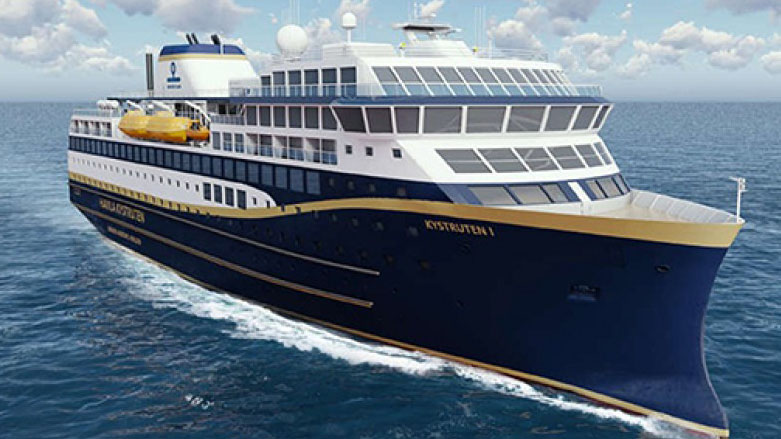
Havila Voyages is a new family-owned Norwegian shipping company which has ordered four ships, designed to be the most environmentally friendly to operate along the coastal route from Bergen to Kirkenes.

This will pitch the company in direct competition with long-established Hurtigruten.

The first two 179-cabin ships – Havila Castor and Havila Capella – will operate from next year with two more – Havila Polaris and Havila Pollux – following in 2022.

The ships are operating as part of a ten-year government-funded contract to sail the historic route, with Havila operating four of the 11 ships departing daily from Bergen.

Each of the new ships will be fitted with what are claimed to be the world’s largest battery packs, meaning they can sail through fjords and other vulnerable areas for up to four hours emission-free. The batteries will then be charged in the numerous ports along the route, using clean hydropower.

Newly-appointed UK country manager Matthew Valentine, who joins from Hurtigruten,  said: “2020 has not been an easy year for the travel industry, especially the cruise sector.

“We clearly didn’t plan to launch a new cruise line during a worldwide pandemic, so it is really heart-warming to have received such a positive response from the UK travel trade.

“We have some exciting plans for the launch of Havila Voyages and I’m delighted to once again be working with operators and agents from across the UK.

“We know that the success of our business will rely on us building strong trade partnerships, so I look forward to catching up with as many industry colleagues as possible in the near future.”

The 12-day Havila Voyage, costing from £829 per person cruise-only in December 2021, takes in 34 ports while passengers can choose to join the round trip, complete just the northern or southern journey or even spend two or three days on board.

Excursions offered to include a whale safari, king crab fishing in a frozen fjord, dog-sledging in the Arctic wilderness or snowmobiling across the North Cape Plateau.

Prices lead-in at £241pp for a two-day trip from Trondheim to Bergen,  cruise-only basis.

The six-day southbound voyage from Kirkenes to Bergen starts at £497pp.

A range of payment options is offered with cheaper, non-refundable rates or a choice of more flexible options.

Agents and tour operators will be able to make a booking via Havila’s B2B booking system once a contract is in place.

Covid cases on ships show how complex the restart can be

MS Paul Gauguin Cruise Ship - YouTube

The global cruise industry took one step forward and two steps back this weekend in its quest to resume sailings after the pandemic grounded fleets worldwide.

One ship, UnCruise Adventures’ Wilderness Adventurer, on Saturday, became the first cruise line to resume overnight cruising in the U.S. since cruise lines halted operations in March. The vessel departed Juneau with 37 passengers and 30 crew for a seven-day cruise on the line’s Glacier Bay Adventure itinerary.

UnCruise celebrated the milestone on social media. “Normally there are 1.1 million cruise ship visitors to Juneau. Today the first 36 depart,” UnCruise said in a Facebook post. In an accompanying video of CEO Dan Blanchard with the ship at the dock, he said, “For all of Juneau, all of Alaska, we celebrate with you.”

But from two other ships, separated by 11 time zones, the news was not good. In Tahiti, a passenger on Paul Gauguin’s first cruise for international visitors tested positive for Covid-19. In Norway, Hurtigruten said that 36 of the 158 crew on the Roald Amundsen had tested positive.

The Paul Gaugin returned to Papeete, Tahiti, and passengers and crew were quarantined onboard. Hurtigruten temporarily suspended all expedition sailings on three of its ships in response to the Covid-19 outbreak on the Roald Amundsen.

So while one cruise line and one state celebrated what they hope to be the beginning of the end of the drought on overnight cruising, the outbreaks are a reminder that the industry faces many hurdles and roadblocks to a widespread resumption of operations.

“We have not been good enough, and we have made mistakes,” Daniel Skjeldam, CEO of Hurtigruten, said in a statement widely quoted in the European press about the outbreak, adding that “a preliminary evaluation shows a breakdown in several of our internal procedures.”

For Dan Blanchard, speaking from Juneau Saturday, the news from Norway was sobering, but he was still certain of his line’s ability to safely carry out the five additional sailings it has on the calendar.

At Least 40 Test Positive from MS Roald Amundsen COVID-19 Outbreak

“Even though the [Roald Amundsen] is a small ship, it’s monumentally bigger than our boats, in both capacity and crew,” he said. He also believes the precautions UnCruise is taking go beyond what other lines have in place. “Not only do we require testing from the state of Alaska, but we’ve had crew for over a month quarantined on the boat getting it ready.”

“If we protect the crew we protect the guests and vice versa,” he said.

What really sets UnCruise apart, he said, is the nature of its itineraries, which the line calls “adventure cruises.”

Blanchard said that the ship isn’t doing any port calls, and passengers are off the vessel for most of the day on excursions. “That’s unique to us as a company, and it just works out that it’s the right thing for today.”

UnCruise vessels, he said, are “more of a floating basecamp. Even with Hurtigruten, they are visiting small towns. It’s hard to compare apples to apples.”

But he acknowledged that nothing is risk-free.

“We realize there is definitely risk involved, and so do our passengers travelling with us,” he said. “But everyone also realizes with 37 guests and 28 crew spaced out and crew not even in crew quarters  they are staying in guest quarters — and being off the boat improves the odds greatly and maybe the new norms in what has to happen until we get a vaccine.”