Report Shows Cruising’s Growing Appeal

Bahamas, cruise, ship

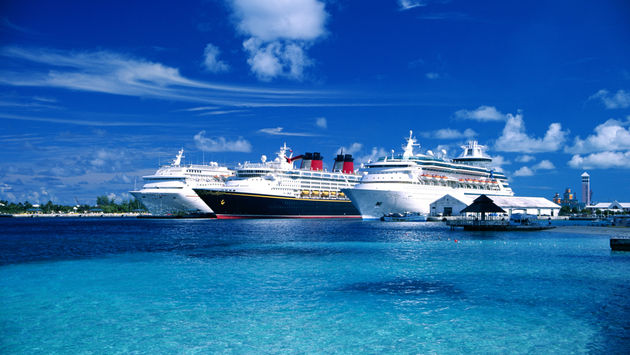
PHOTO: Cruise ships at a port in The Bahamas. (photo via Brand X Pictures / Stockbyte / Getty Images Plus)

Cruising continues to grow in popularity with the American public.

Cruise Lines International Association (CLIA) estimates that by the end of 2019, approximately 30 million people around the world will have set sail on a cruise, and it’s likely that Americans make up a sizable chunk of those choosing to cruise.

In 2017, CLIA found that nearly 12 million cruisers were from the United States, making it one of the leading markets.

New research from YouGov also revealed a strong appetite for cruising among U.S. travellers.

The survey found that three in 10 (31 per cent) of Americans had been on a cruise and one in six (16 per cent) plan on taking a cruise within the next 12 months.

In addition to knowing how many people have cruised, the YouGov analysis reveals travellers’ intent to cruise.

The survey found that 6 per-cent of Americans say that it will be their first time cruising. Twelve per cent indicated that they have been on a cruise before and plan to take another cruise within the next 12 months—market size of 31 million people. There are 46 million Americans who say that they have been on a cruise but do not plan to take one in the next 12 months, and 64 per-cent (approximately 160 million) Americans have not been on a cruise before and don’t plan on going on one within the next 12 months.

Within the never-cruised segment, there are a few important data points. These non-cruisers are likely not taking a vacation in 2019, but many could be considering travel in the coming year.

Among total cruisers, demographics give insight into who is looking to cruise in the future. Seven per-cent of first-timers were millennials, 8 per-cent were Gen-Xers, 4 per-cent were baby-boomers, and 1 per-cent were silent generation.

When it comes to repeat cruisers, 16 per-cent were millennials. Eleven per-cent were Gen-Xers, 10 per-cent were baby boomers, and 12 per-cent were silent generation.

Those who lapsed a year or more between cruises were most likely to be silent generation cruisers at 32 per-cent. Baby boomers made up 23 per cent of this group, Gen-X was 17 per-cent and millennials were 14 per cent.

The YouGov survey also found that first-time cruisers were more likely to be African American, live in cities and more likely to vacation with their children. Two in five are parents with children under the age of 18 and more than one-third have travelled for business and leisure this year.

When targeting this group, go beyond traditional social media. Ads in podcasts, movie theatres and billboards catch the attention of first-timers.
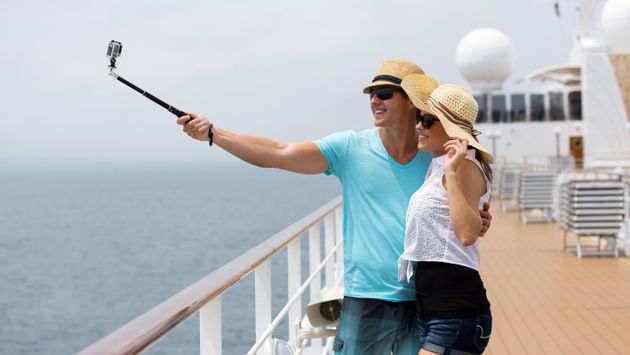
Couple taking a selfie on a cruise ship
PHOTO: Couple taking a selfie on a cruise ship. (photo via michaeljung/iStock/Getty Images Plus)

Like first-timers, a family is a big consideration for repeat cruisers. Many are parents and many more bring family members with them when they cruise.

YouGov found that repeat cruisers were more likely to look to advertisements when choosing which cruises to take and preferred ads tailored to them. Social media advertising was also more appealing to the repeat cruiser and they most frequently use Facebook, Twitter and Instagram.

Cruising is more popular with East Coast and travellers in southern states, likely because the proximity to homeports simplifies travel. Regardless of location, however, cruising’s ability to act as an intersection between experiential travel and innovation and convenience appeals to a wide variety of Americans.

CLIA: Cruise Industry Continues to See ‘Steady Growth’

The worlds largest cruise ship, the 361 metres long, Harmony of the Seas, arrives in port  for her mayden voyage, in Southampton, Britain May 17, 2016.  REUTERS/Peter Nicholls

The worlds largest cruise ship, the 361 metres long, Harmony of the Seas, arrives in port for her maiden voyage, in Southampton, Britain May 17, 2016. REUTERS/Peter Nicholls

The international cruise industry is continuing to see a steady pace of cruise travel interest and significant investment in the industry, according to the Cruise Lines International Association’s 2017 State of the Cruise Industry Outlook report.

In the report, released Friday, the world’s largest cruise industry association says cruise travel is expected to continue to increase in 2017, with an estimated 25.3 million passengers expected to cruise during next year. This represents a strong surge from the 15.8 million passengers who took cruises just ten years ago, in 2007, CLIA says.

More ships are set to set sail in 2017 as well. CLIA reports that cruise lines are scheduled to debut 26 new ocean, river, and specialty cruise ships in 2017 representing a total investment of $6.8 billion. Over the next ten years, the industry is expected to introduce a total of 97 new cruise ships, marking an estimated investment of $53 billion through 2026.

“The cruise industry is responding to global demand and we are highly encouraged by both the short-term and long-term outlook,” said Cindy D’Aoust, president and CEO, CLIA. “From technological advancements and deployment of new ships to new ports and destinations around the world, the industry continues to respond to desires of today’s travelers resulting in steady growth and strong economic impact around the world.”

In 2015, cruise industry expenditures generated $117 billion in total output worldwide, supporting 956,597 full-time equivalent employees collectively earning $38 billion in income, according to new figures released by CLIA.

Along with the new data, CLIA also provided its list of the top eight cruise travel trends to watch next year. The list is provided below:

  1. New Generation Takes to the Water – A recent study found that younger generations—including Millennials and Generation X — will embrace cruise travel more than ever before, rating it as better than land-based vacations, all-inclusive resorts, tours, vacation house rentals, or camping.
  2. Travel Agent Use Increases – According to the American Express Spending & Saving Tracker, consumer use of a travel agent increased nearly eighty percent from 2015 to 2016. Supporting this, CLIA is forecasting that travel agents will continue to be the matchmakers between travelers and cruise lines in 2017. Today, there are more than 25,000 CLIA-member travel agents globally compared to 12,000 in 2010. CLIA also found that cruisers report high levels of satisfaction with their travel experience when assisted by an agent.
  3. River Cruise Demand Increases – River cruises offer travelers a unique and intimate travel experience. Due to demand, CLIA cruise line Members currently deploy 184 river cruise ships with 13 new river cruise ships on order for 2017, an increase of about 7 percent.
  4. More Private Islands on Cruise Itineraries – As more cruise lines introduce private island destinations, travellers are responding and booking these itineraries. In 2017, cruise lines offer ports on a total of seven private islands.
  5. New Cruisers Will Take to the Sea – Interest in ocean cruising is projected to remain strong in 2017. When asked what kind of vacations might be of interest in the next three years nearly half (48 percent) of non-cruisers expressed interest in taking an ocean cruise while a striking 85 percent of cruisers also expressed interest.
  6. Drivable Port Locations in Favor – The cruise industry offers a variety of small and large market port location options across the United States and internationally. Citing the advantages of a myriad of locations seven out of ten (69 percent) non-cruisers believe the greatest benefit is cost savings and three quarters (74 percent) of cruisers like the convenience of driving to a cruise ship.
  7. Lure of Celeb Chefs – Cruise travelers are embracing specialty dining and will continue to consider cruise dining experiences based upon celebrity chefs. This year, several cruise lines feature restaurants and dishes created by famous chefs including Guy Fieri, Nobuyuki “Nobu” Matsuhisa and Geoffrey Zakarian.
  8. Demand for Expedition Cruises – According to the Adventure Travel Trade Association, adventure travel is growing at a record pace and CLIA is reporting that cruise expeditions are seeing the impact. In fact, itineraries for Antarctica regularly sell out.

Royal Caribbean’s ‘Come Seek Live’ an innovative draw for millennials


Come Seek Billboard.

The range of activities passengers can do on a cruise was demonstrated for countless New Yorkers during their daily commute last week, as Royal Caribbean International streamed live images directly to outdoor ad screens on 230 subway kiosks and display spaces on digital newsstands.

Commuters learned they could dance in Martinique, feed a monkey in St. Kitts, go on a sailboat regatta in St. Maarten or go cliff jumping in Barbados.

All were excursions offered on Royal Caribbean’s 4,180-passenger Anthem of the Seas, which recently arrived at its Bayonne, N.J., homeport, as it toured the southern Caribbean.

The images were streamed via Twitter’s new video application called Periscope, a fast-growing social media platform. Royal said New York Transit officials believe it was the first time that its network of digital billboards has been used to show live video via Periscope.

Royal Caribbean’s “Come Seek Live” display at the Union Square subway station in New York. It featured streaming Periscopes and video images from the campaign’s TV ads. Photo Credit: Johanna Jainchill

Royal Caribbean’s “Come Seek Live” display at the Union Square subway station in New York. It featured streaming Periscopes and video images from the campaign’s TV ads. Photo Credit: Johanna Jainchill

Jim Berra, chief marketing officer at Royal Caribbean, said the outdoor effort was part of a larger bid to bust through advertising clutter with Royal’s “Come Seek” marketing message.

“In a world where consumers tune out a message if it is overly produced or directed, we want to show the experience as it is happening in real time,” Berra said before the campaign’s launch.

By streaming video to new-age billboards, Royal sought to target new-to-cruise millennial generation consumers with a type of technology that resonates with them. In addition to the videos, the displays featured running comments sent via Twitter, and a stream of colored hearts, the Periscope equivalent of Facebook “likes.”

New York was picked to pilot the marketing because it has the most advanced outdoor ad market in the country, Berra said.

Berra also said the New York project launches a new, more aggressive regional approach to marketing at Royal that, “given Anthem’s arrival and the fact that New York is a huge fly market into central and south Florida,” will continue throughout the year.

“Come Seek Live” ran from Nov. 13 to 20. During the run, Periscopes streamed three or four times a day on the displays, generally for an hour. They could also be seen via Twitter on mobile or desktop devices.

The rest of the time, the displays showed video images from “Come Seek” television ads.

The larger idea of “Come Seek” is to challenge stereotypes of cruising, tourism and the Caribbean.

To aid that process, Royal Caribbean enlisted several “influencers,” footloose social media nomads with high Twitter numbers. They included a group of 20-something Canadian lads who brand themselves as “High On Life” on YouTube travel videos, and Dan Moore, an Australian travel blogger. Each functioned as makeshift tour guides in the Periscope videos.

Sam McCully, vice president of marketing at Avoya Travel in San Diego, said the approach will engage the younger customers Royal Caribbean has focused on with “Come Seek.”

“Social media allows you to add another dimension in starting a conversation with people,” McCully said. “It’s no longer a one-way (communication); it’s very conversational, very two way.

“Especially the younger type of customer they’re targeting, those people are used to having direct engagement with brand, having a conversation with a brand.”

However, it is the outdoor dimension that really makes it different, McCully said.

“They’re not just shooting the content and putting it out there on their site and via Twitter, but there’s a live component in a key market. So they’re not just pushing the boundaries of social media, social marketing, but it’s also pushing the boundaries of your traditional outdoor advertising,” he said.

In terms of reaching new customers, “I wouldn’t be surprised if it was a major success,” McCully said.