The industry is prepping for a comeback. Where is the CDC?

Cruise industry taps leading health experts for enhanced Covid-19 ...

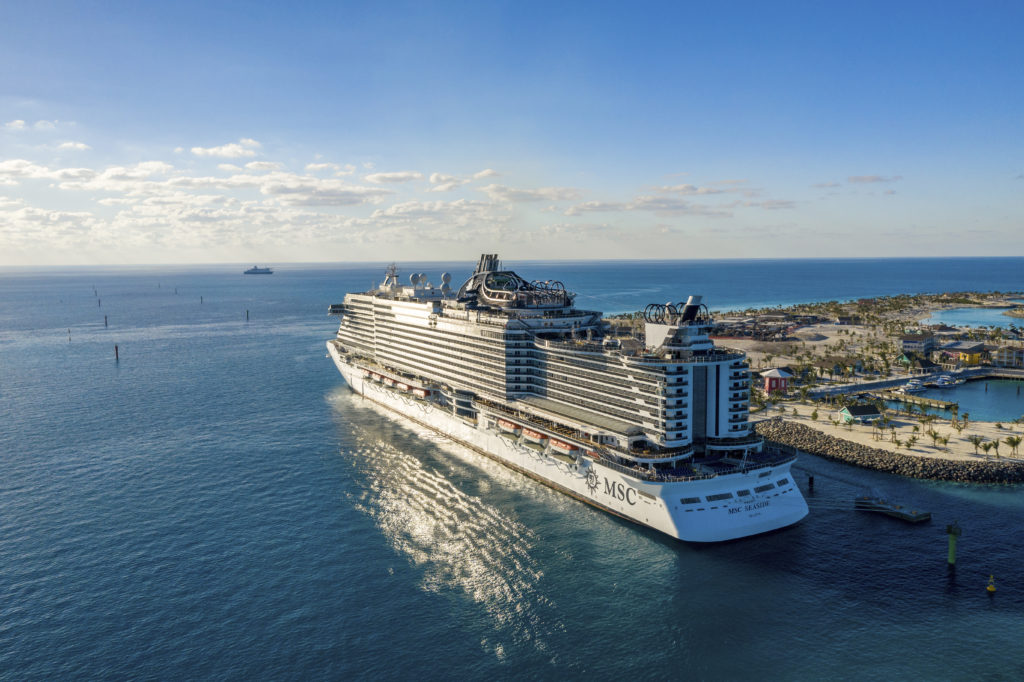
MSC Cruise has put together a Blue ribbonCovid group to put in protocols for safety.

By Johanna Jainchill

The past week has seen major movement in the shaping of protocols around the resumption of cruising. Last week, the European Union released guidelines for the resumption of cruising. Yesterday, Royal Caribbean Group and Norwegian Cruise Line Holdings Ltd. revealed that they had assembled a panel to develop health and safety protocols for the industry to resume operations. MSC Cruises has put together a Blue Ribbon Covid Expert Group that will advise it on sanitation and health protocols.

What’s missing from all of these advancements is any word from the U.S. Centers for Disease Control and Prevention (CDC), which will ultimately determine when large cruise ships can resume sailing from U.S. ports. The agency has said nothing about the cruise industry since updating its No Sail Order on April 9 to expire on July 24.

The cruise industry has not publicly said that the CDC is being uncooperative, but in a conversation with Travel Weekly last month, CLIA CEO Kelly Craighead praised Europe for enabling the industry to “participate in dialogue about thoughtful resumption protocols” but said that with the CDC it was “having some challenges with having that kind of engagement and dialogue with them.”

CLIA said it had been actively engaged in the development of the guidance published last week by the EU.

UBS analyst Robin Farley said in a note to investors in June that according to her sources, the reason CLIA announced a voluntary suspension of cruises through Sept. 15 is “likely so that [the] CDC would not have to extend its No Sail Order while negotiations continue.”

“It sounds like there needs to be an agreement with the CDC in place about 30 days before ships can restart,” Farley said.

However, Farley also said that according to Royal Caribbean Group management, the company “is in constant communication with the CDC in a constructive dialogue, and at this point, they are going back and forth with iterations of an agreement.”  And one of the co-chairs of the Royal/Norwegian panel, Mike Leavitt, a three-term governor of Utah and former secretary of the U.S. Department of Health and Human Services, said that the CDC was “very pleased to know the panel was being proposed. We described the membership and told them how we were going to work and we pledged transparency and they received it warmly.”

But publicly, at least, the CDC has been quiet. And several industry stakeholders have privately said the CDC is being unresponsive and uncooperative with the industry. The CDC did not respond to outreach from a Travel Weekly reporter.

It has been suggested that the CDC has been hamstrung by the Trump administration, such as in a scathing New York Times report in June that detailed the CDC’s failures overall in its response to the Covid-19 pandemic. In one example of its shortcomings, the article cited the CDC’s No Sail order and reported that the CDC wanted the order to be indefinite, but that the White House intervened, and so the agency replaced it with the order the ends in July.

It’s not the only article on the agency’s failures: the Washington Post this week reported that the CDC’s mishandling of the coronavirus is similar to the mistakes it made with the Zika outbreak in 2016.

CLIA and the cruise industry may not want to rock the boat and cause any further delay, but given the fact that so many travel advisors depend on the ability to relaunch operations in the world’s No. 1 cruise market, ASTA CEO Zane Kerby might have spoken for the industry at large when he called the CDC’s communications about travel “uneven at best.” In a letter to its director, Robert Redfield, on June 9, he said that prioritizing of the restart of the cruise industry is one of four main goals the CDC should tackle.

“In the absence of clear communication, the entire population remains essentially in the dark, left to rely on a patchwork of regional, state and local pronouncements to inform their decision-making with respect to travel,” Kerby wrote. “Airlines, hoteliers, cruise lines, tour operators, car rental companies, insurance providers and others are similarly left to their own devices as to when to restart operations in the face of an unprecedented global pandemic.”

Cruise lines are not resorting to rock-bottom pricing

Cruise Lines 2019 Q4 Breakdown: By the Numbers - Cruise Industry ...

By Johanna Jainchill

Cruise lines and Wall Street analysts report that cruise pricing, for the most part, has not gotten to the low levels seen after the fallout of the 9/11 attacks and the 2008 recession.

To be sure, there are deals out there, and some executives have said that Covid-era prices have fallen across the board — but not to the rock-bottom levels seen in prior crises. Execs, analysts and industry watchers have said this is primarily because demand is expected to exceed capacity, at least at first, because lines are likely to relaunch only a few ships at a time at reduced capacity.

“We note that since cruise lines are taking so much capacity out of service and not pricing to fill what is in service, they could potentially eliminate some of the lowest-margin demand that they might normally turn to when filling a ship,” UBS Analyst Robin Farley said in a recent note.

In discussing the strong pricing for 2021, Brad Tolkin, co-CEO of World Travel Holdings, agreed that reduced capacity was a big factor. “There will be a lot less of ships to top off within the last 90 days,” he said. But he also said that future cruise credits (FCC) the cruise lines have been using for cancelled 2020 sailings play a role.

“The cruise lines know they have these supersized FCCs out there; most are at least 25% more than the value of the cruise,” Tolkin said. “They have to keep pricing up to absorb that somehow.”

On top of that, he said that people who have the FCCs are upgrading.

“The people that took these FCCs said, ‘I love cruising, and I’m getting on a cruise; I’m taking the FCC,'” he said. “If they spent $3,000 on a cruise before, now they have $3,500, $3,600 to spend. They’re spending it and buying up.”

Vicki Freed, Royal Caribbean said that another reason why lines are holding the line on pricing is that they know that they will have lower occupancy and they don’t want to compromise quality.

“We know that initially, we’re not sailing at 100% occupancy and we’ll have to have lower load factors  I think all the cruise lines are planning that,” Freed said. “And we’re going to need to have more staff on board and still offer the quality people expect from Royal Caribbean. If suddenly we downgrade the product onboard people will say, ‘they’re not the same brand I thought they were ‘ So you do keep your price integrity up in order to fund what we need to fund.”

Freed also anticipated that people will pay more for experiences that include Royal Caribbean’s Perfect Day at CocoCay private island.

“It’s a safe, enclosed environment; it’s a private island, it’s got all the fun and thrill and chill that people want now,” she said. “I think itineraries with Perfect Day at CocoCay or our private island of Labadee will demand a better price.”

UBS’s Farley also said that, according to an executive from a privately-owned cruise line, he expects “only single-digit price declines” by keeping only the lowest-priced cabins empty.

“He believes that cruise lines will keep ships in various stages of warm and hot and cold layup so that they will be able to add ships into service without delay if there is demand,” Farley said.  “A month of notice is more than enough time to staff a ship and start operations. Airlift is not that much of an issue since the cruise lines can charter flights from the Philippines and Indonesia, for example, when they are ready to bring the crew back to a ship.”

MSC Extends Cruising Halt Through May 29

MSC Seaview

MSC Cruises has decided to further extend the pause of its cruise operation through May 29, according to a statement.

This is due to the COVID-19 pandemic, the company said, extending its operations pause from April 30 for another month.

“As governments across the globe have since further strengthened ashore public health and safety measures to protect local populations and contain the further spread of the virus, today’s decision by MSC Cruises to further extend this extraordinary measure aims to mirror and further support the effectiveness of such efforts,” the company said.

“MSC Cruises is working tirelessly with all guests and their travel agents to address the impact of this necessary decision to their bookings on our ships up to May 29 and it is genuinely sorry for the inconvenience that this will cause them. By announcing this now, the Company intends to provide travel agents and guests who are booked on affected sailings with as much time as possible to move their booking to a future cruise.”