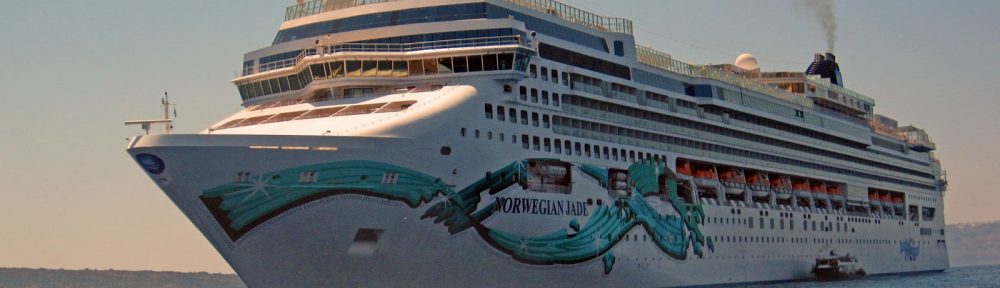
MSC Cruises: MSC Armonia extension of in full swing

Extension of the MSC Armonia has begun: The MSC Armonia gets on the Fincantieri shipyard in Palermo a new 24-meter mid-section used.

Yesterday in Palermo, the extension of the MSC Armonia has begun, which is the first of four ships of the Lirica Class as part of the modernization program “Renaissance” rebuilt by MSC Cruises.

Photo: MSC Cruises

Photo: MSC Cruises

On the Fincantieri shipyard of the 14,000-ton bow was separated and 30 meters on rails from the rear. In the space between the walls, the new, 24-meter and 2,200-ton center section is used.

The separation is a milestone in the 200 million-euro Renaissance program of MSC Cruises. As part of this project enlarged and renewed the shipping company, MSC Armonia, MSC Sinfonia, MSC Opera and MSC Lirica and equipping the ships with additional comfort offers from to perfectly respond to the needs of today’s cruise passengers.

Comprehensive and precise preparatory work was needed to prepare the separation of the ship perfectly: The steel cutting work had already started on September 2, with the highlight of the cut line. On September 3, the electrical systems of the MSC Armonia were shut down. On September 8, ended the cutting work before started on 10 SeptemberThe separation.

By converting the MSC Armonia and their environmental impacts are significantly reduced. A special treatment of the hull surface minimizes water resistance and saves considerable amount of fuel one. In addition, is used in the future in all common areas LED technology, which brings a much lower energy consumption.

In addition, a drive with a frequency converter for variable speed control is installed on the MSC Armonia, an energy-saving system that significantly reduces the power consumption of the vessel by flexible adaptation to different operating conditions. Furthermore, MSC can try out a new propeller blade design that will improve energy efficiency even further and thereby reduce fuel consumption also with its propellers suppliers.

Emilio La Scala, Director of the Technical Division of MSC Cruises, explained during the occasion of the ship separation taking place in Palermo press conference: “MSC Cruises have long been planning a modernization program of this magnitude. But we did not start before we had chosen the best partner in the shipbuilding industry. Because we want our ships not only larger, but also provide them with high standards in terms of technology, safety and sustainability. Fincantieri has the know-how and the experience to carry out a so extensive project which will meet our requirements in every respect.The long partnership with Fincantieri has already proven itself in various maintenance and conversion projects in our ships. “

As part of construction work, the MSC Armonia receives 193 additional cabins. In addition, other areas of the ship will be refurbished to enhance the comfort and entertainment and services available on board.

The new ship, for example, to offer a new baby club, which was designed and created jointly with the partner Chicco. There will also be a new kids’ club, a young club, junior club and a teen club. Food lovers can enjoy the rich specialties offer in the buffet restaurant 20 hours a day. As part of modernization also a new lounge area and an extended restaurant area be established.

The MSC Armonia is also equipped with a library and the Aurea Spa is ready with new offers on. As a special highlight of the modernized vessel loads a new water park with water features on deck for a swim.

The MSC Armonia, which has been available since August 31 in dry dock Fincantieri shipyard in Palermo and will remain a total of 11 weeks there, stands on November 19, 2014 from Genoa to its second maiden voyage to the Canary Islands in the lake.

Updated: MSC bundles amenities in the cruise fare

MSC Divina 410MSC Cruises unveiled a new pricing structure that bundles cabin categories, dining choices and onboard amenities in four commissionable packages.

In a Travel Weekly webinar, Ken Muskat, executive vice president of sales, outlined the four options, called Inclusive Experiences, that range from a la carte to all-inclusive. The fare types will be available for sale starting Sept. 23, for cruises departing on or after Oct. 18.

“This is not an add-on package; this is a new pricing that is an all-inclusive or a semi-inclusive experience,” Muskat said.

With the new concept,  Muskat said, agents can direct clients to one of the four options, either by choosing a cabin category, which would identify which experience they’d receive, or, more likely, identifying the client’s desired level of inclusivity, which would then identify the type of cabin.

The Bella Experience, which Muskat said was best for value-conscious clients, is simply the cabin cost, and is available on cabin categories I1, O1 and B1. Cruisers can then add amenities on an a la carte basis.

The Fantastica, which applies to I2, O2 and B2 cabins, includes premium-location cabins, half off fitness classes and personal training, two kids classes and various MSC promotions such as beverage packages (the program will start by offering complimentary sodas, wine, beer and coffee on cruises on Divina cruises through April 11). Muskat said it would cost between $30 and $60 more per person and represent a value of at least $250 per person.

The next-highest category is the Aurea, on cabin categories B3 and S3, which includes unlimited drinks, priority boarding, a spa package and designated areas for My Choice dining. Muskat said it costs about $400 more per person and represents a value of at least $600.

The top package is the Yacht Club package, which is MSC’s ship-within-a-ship luxury experience. Muskat described it as “ultimate, VIP, five-star service.” It includes items like 24-hour butler service and the Yacht Club’s exclusive restaurant, pool, deck and bar.

MSC earlier this summer said it would begin paying 5% commission on cruise add-ons booked prior to the cruise. Muskat emphasized that the policy would remain in place.

“This now allows agents to take it a step further once a client is qualified and suggest an experience that is truly tailored to their vacation desires and their budget,” Muskat said in a follow-up email. “Once an experience is selected, the process is easy, because there are certain stateroom categories assigned to each experience level.

“For instance, a budget-conscious guest will want to choose from interior, ocean view or balcony staterooms within the Bella experience …. the Fantastica experience is designed for the vast majority of cruisers who are willing to pay just slightly more than the intro Bella experience and get the benefit of selecting from the best of the best stateroom locations, priority dining preferences and more.”

Guests who have already booked an interior, oceanview, or B1 or B2 level balcony stateroom will automatically receive the Fantastica experience, excluding the promotional drink package, MSC said.

Guests who have already booked a B3 level balcony stateroom or Aurea suite will automatically receive the Aurea experience.

Venice to reroute biggest ships but will maintain terminal

By Tom Stieghorst

Changes afloat for Venice cruisesTo reduce the impact of big cruise ships in Venice, Italian ministers have decided to route the largest ships away from the center city, while still allowing them to dock there.

Cruise traffic would enter the Venetian lagoon on the southwest end, transiting the Malamocco channel, which is already used by cargo ships.

As a first step, an environmental study has been commissioned to evaluate the dredging of a cut-off canal leading from the cargo channel to the existing Venice cruise ship terminal.

Activists say that the dredging will harm the Venice lagoon by deepening it and creating more wave action, while at the same time disrupting sediments and water life in the area.

But a committee of Italian ministers said the plan mitigates the effects of increasingly large ships on Venice while preserving their positive contribution to the economy.

“It seems to me to be a balanced solution,” Transport Minister Maurizio Lupi said in announcing the decision.

Some parties had pushed for a more radical option, such as relocating the cruise terminal to the industrial port at Marghera, a plan favored by Venetian Mayor Giorgio Orsoni.

Venice hosted more than 1.8 million cruise passengers last year, making it the third-busiest cruise port in Europe, after Barcelona and Civitavecchia, near Rome.

An increasingly vocal group of activists has protested that modern cruise ships have grown out of scale with Venice and are causing damage to the city’s foundations, an assertion disputed by the cruise industry.

As part of the new plan, the committee of Italian ministers reinstated a ban on cruise ships of more than 96,000 gross tons from using the current route through the Lido and down the Giudecca Canal.

That route takes cruise ship passengers through the heart of Venice and past Piazza San Marco, its biggest attraction.

Cruise lines, through CLIA Europe, emphasized the importance of Venice and the Venice Passenger Terminal to the entire cruise industry.

“While we believe that the passage of cruises through the Giudecca Canal is safe, we agree that a sustainable solution for Venice requires a new alternative route for ships, and so we are pleased that the Italian government is working very hard to find a sustainable solution,” a CLIA statement said.

A study last year found that the cruise industry in Venice created an annual economic impact of 345 million euros (about $462 million).

Individual cruise lines have been planning for Venice’s mandated reduction in ship size. Celebrity Cruises, for example, next year will sail a 91,000-gross-ton, Millennium-class ship on Eastern Mediterranean itineraries from Venice, while moving its 122,000-gross-ton, Solstice-class ship to Baltic itineraries.

The Italian government had originally banned cruise ships of more than 96,000 gross tons from the current route effective Jan. 1, but that ban has been stayed by a regional Italian court, pending a decision on an alternative route into the city.

The decision to move forward on the environmental study of the back channel addresses the court’s objection.

The plan calls for deepening the Contorta Sant’ Angelo, a 4-kilometer channel between Marghera and Venice that was cut in the 1960s for fuel barges, from a depth of 1.5 meters to 9 meters.

Authorities estimate the dredging project will take about two years and cost about 115 million euros (about $154 million).