Galveston Set to Break Ground on New Royal Caribbean Terminal

Officials will break ground for the brand new $110 million cruise terminal at Galveston Wharves for Royal Caribbean International on Saturday at 10 a.m. local time. 

Galveston Wharves will be represented by Port Director and CEO Rodger Rees, who will be joined by Royal Caribbean Group Vice President of Destination Development Joshua Carroll and Ceres CEO Craig Mygatt.

Also expected are Craig Brown, Mayor, the City of Galveston and Albert Shannon, Chairperson, Board of Trustees of the Galveston Wharves.

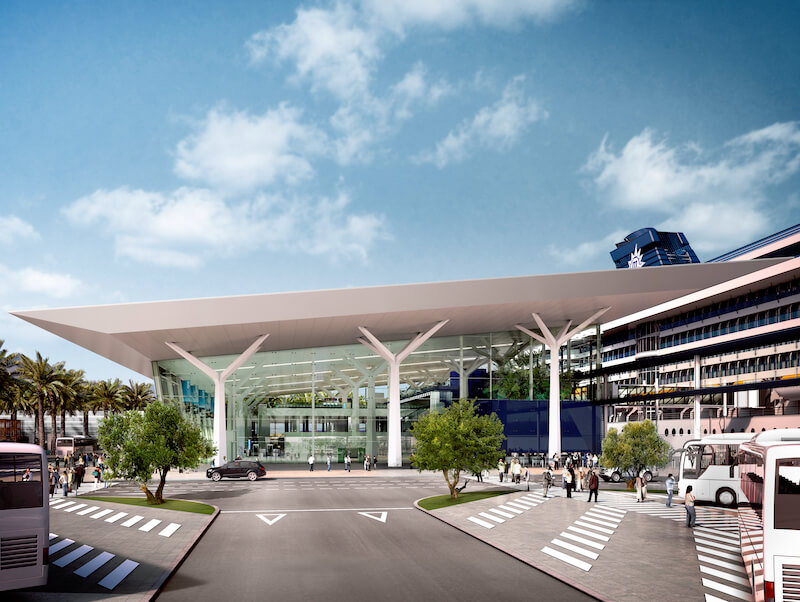
The new cruise terminal will cover approximately 170,000 square feet on ten acres of land in the southeast section of the Port of Galveston known as Pier 10.

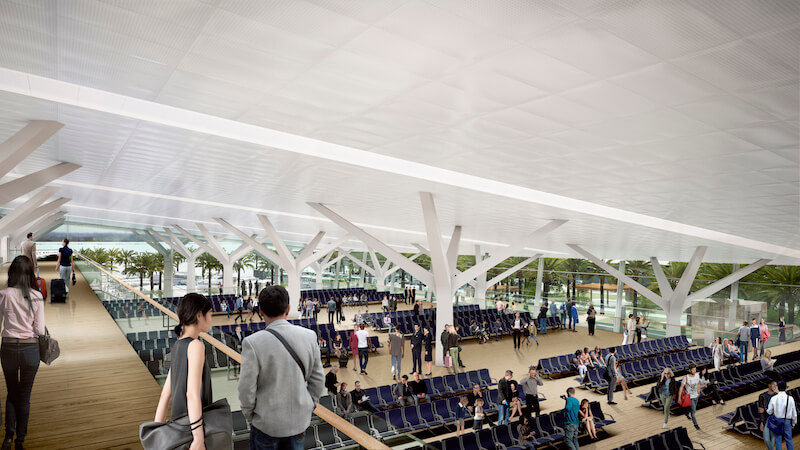
The facility, which is anticipated to open in fall 2022, will feature state-of-the-art technology to enable mobile check-in and facial recognition to create an expedited arrival experience for guests, according to a press release.

The terminal will be designed and developed sustainably to meet LEED certification standards.

MSC Obtains Clearance To Build and Operate Terminal in Barcelona

MSC Cruises has announced that it obtained the final approval by the Port of Barcelona’s Board of Directors to build and operate an exclusive cruise terminal. This multi-year concession will see the construction of an innovative terminal of 11,670 square meters that MSC Cruises will operate and manage for a 31-year period.

The project is estimated to represent a 33-million-euro investment by MSC Cruises. With construction work set to start shortly, the new terminal is expected to enter service in 2024.

“We are particularly pleased with the award of this multi-year new terminal concession. Barcelona is not only an important homeport for the cruises division, but also for the entire group and its shipping business. As such, the new terminal is further proof of MSC Group’s longstanding commitment to the city of Barcelona and the entire Catalonia region,” said MSC Cruises’ Executive Chairman Pierfrancesco Vago.

For the project, MSC Cruises is partnering with the renowned Catalan architect Ricardo Bofill.

“I am also honoured that for this project we will able to partner with the impressive Ricardo Bofill and his firm. Together, we will build a state-of-the-art new terminal that is bound to become another landmark for the beautiful city of Barcelona,” Vago said.

According to him, the new terminal will allow MSC to operate “expanded homeport operations, resulting in added direct and indirect economic benefit for the city and the overall region.”

“This will come from higher spent locally by our international guests either flying into or out of Barcelona airport and likely to spend additional days in the city and its hotels together with their travelling parties. Homeport operations will also allow us to dedicate to Barcelona more of our new ships – including the LNG-powered MSC World Europa which is currently under construction and is shaping up to become one of the most environmentally friendly ships at sea when she comes into service,” noted Vago.

“Finally, the new terminal allows us to further demonstrate our commitment to environmental sustainability as it will feature both shore power facilities as well as LNG bunkering operations,” he concluded.

According to a press release, this project will allow MSC Cruises to “consolidate its presence in Barcelona,” which is one of the brand’s most important ports in the Western Med and to expand its homeporting operations out of the city.

This will result in added direct and indirect economic benefit for the city and region as more international guests will transit through Barcelona, likely spending additional days in the city either before or after their cruise, the cruise line wrote.

The new terminal will feature shore power facilities and be ready for LNG bunkering operations, allowing MSC Cruises to deploy more next-generation, environmentally-friendly ships in Barcelona, including the MSC World Europa. The World Europa is the brand’s first LNG-powered cruise ship, currently under construction and due to enter service in 2022.

Both cargo operator MSC Mediterranean Shipping Company and ferry operator GNV have a solid presence in the Port of Barcelona, the cruise line said.

“As such, the new terminal is a further proof of MSC Group’s longstanding commitment to Barcelona, Catalonia and the whole of Spain,” MSC stated.

Port Canaveral: Diversified Offering

Six Ships, Port Canaveral

A brand-new Terminal 3 is nearing the final stages of construction for Carnival Cruise Line at Port Canaveral, along with a 1,800-spot parking garage, all in preparation for the new Mardi Gras which will become the first LNG-fueled ship in North America.


Projections call for just under five million cruise guests in the fiscal year 2020, and over 5.6 million by 2024.


For port CEO Captain John Murray, the planning started years ago, wanting to be ready for LNG-fueled ships. The effort has paid off as Port Canaveral will host the Mardi Gras year-round and is expected to be home to Disney’s LNG-fueled ships as well.

“We are growing consistently,” Murray said. “All our cruise lines are very strong and over the next few years they plan to add additional ships.


A rendering of the new Cruise Terminal 3

“We are going to become the Florida port that can expand as the tonnage will be on the market and there won’t be as many berthing options in Florida as there have been in the past.”

Other big news at Port Canaveral includes the summer arrival of Marella Cruises in 2021, a deployment move announced late last year that had been in the works since 2017, said Robert “Bobby G” Giangrisostomi, vice president, cruise business development.

“They were looking for an American product,” he said, adding that the port’s proximity to Orlando was key.


Long term, the big homeport customers have major deals with Port Canaveral, including Carnival, Royal Caribbean and Disney, and Murray said in November he was negotiating a new deal with Norwegian.


With options, Carnival’s latest arrangement could extend to 45 years. For the port, terminal infrastructure is about building smart. “Flexible terminals,” commented Giangrisostomi. “A 1,200-foot ship can have up to 7,000 passengers. You have to be flexible. LNG ships, big ships, medium ships and Port Canaveral can handle them all.”

Deals also include more parking infrastructure, which may not be as long term.

“We have to look at what the concept of parking could be in 10 years,” Murray said, noting autonomous vehicles and an 83 per cent jump in Uber and Lyft usage at the port year-over-year.


Shorter cruises? Plan for more drive-in passengers. Estimates suggest that 40 to 60 per cent of guests embarking at Port Canaveral are drive-in customers.

“We are 200 miles closer to the entire Southeast,” explained Giangrisostomi

Another metric that is up is port-of-call business. With an expected 83 transit calls this year, that number jumps to just over 100 next year with more visits from the Oasis of the Seas sailing from Bayonne.


“Our port-of-call business is substantial,” added David German, director, cruise business development. “It’s good for the local community, with 6,000-plus passengers.”

The out-island arms race has paid dividends to all the Florida ports, Murray added. With cruise lines spending big developing their own destinations in the Bahamas, they have a reason to keep ships in nearby homeports.


New facial recognition has sped up clearing ships with U.S. Customs and Border Protection, which can now happen in as little as two hours for 5,000 disembarking guests.

“They clear the ship very quickly. It helps the cruise lines get to zero counts much sooner,” Murray said.


“Being ready and out front for our cruise customers,” Murray answered when asked about how to run a cruise port successfully. “The guests are the most important part of our operation … easy in, easy off, easy on the ship, easy off the ship. We want to be number one in customer service … It boils down to the end-user.”