Strong Growth Prospects for Hamburg

The AIDAblue Makes a Winter Call to Hamburg

Traffic is up 12 percent year-over-year for the port of Hamburg, with 800,000 passengers expected this year.

The widening of the harbor basin adjacent to the Altona terminal has been among the items driving the good news, with additional berth assignment options now available for large ships according to Kathrin Schweppe-May of Cruise Gate Hamburg.

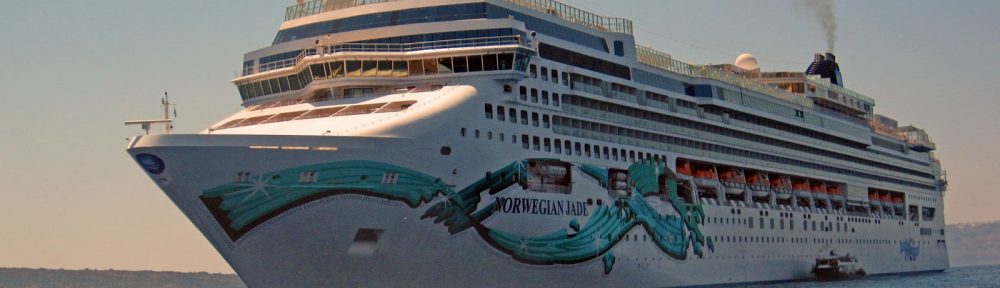
First time callers include the MSC Preziosa, the Norwegian Jade and Independence of the Seas.

“This year’s Hamburg Cruise Days and Blue Port are expected to see record participation of ten cruise ships calling over the weekend. Participating ships will include AIDAprima, MSC Preziosa, Hapag Lloyds’ Europa and the Europa 2, the Mein Schiff 3 from TUI Cruises, Albatros and Amadea of Phoenix Reisen, Silver Wind, as well as Norwegian Jade and Plantours’ Sans Souci – which will be the first appearance of a river vessel at the event,” said Schweppe-May.

The parade takes place on September 9, with six cruise ships leaving the port jointly.

The port has also been able to drive winter business, with the AIDAprima homeporting year-round, but set to take a break this coming winter.

There are also regular calls, as 2017 started with the Queen Elizabeth docking on Jan. 5 and is going to close with the Aurora, which calls on Dec. 31.

December has also been a hit with Hamburg’s Christmas markets and calls from British cruise lines, said Schweppe-May.

“There is a good potential for new partners for regular calls during the weekdays as we have proven with this year’s debut of Norwegian Cruise Line that there is much more to come out of the world’s second largest source market,” noted Schweppe-May . “With the proof that the winter season is able to attract large numbers of passengers we are optimistic that this concept will develop further. Prime locations will with regard to the number of ships on order have to extend its seasons.”

A new cruise terminal is set to open in 2021, and will be integrated into a real estate complex including shopping, hotel, and entertainment options.

Mein Schiff 6 Christened

TUI Cruises welcomed the Mein Schiff 6 into its fleet with a Thursday night ceremony in the German port of Hamburg.

Latvian organist Iveta Apkalna christened the ship.

The Mein Schiff 6 left the Altona cruise terminal around 9 p.m. on Thursday night and slowing sailed up the Elbe to Elbphilharmonie (concert hall), where it positioned itself for the evening’s music programming, including a custom symphony composed just for the christening.

Mein Schiff 6

The music show was complimented by a light show, with the Meyer-Turku-built ship being the center piece.

Wybcke Meier, CEO of TUI Cruises, explained: “The Elbphilharmonie provides extraordinary experiences, and at TUI Cruises we strive to do the same. For us it was important to design an event that reflects these shared values. So even with the Elbe between them, the Elbphilharmonie and the Mein Schiff 6 became one.”

Will AIDA Cruises LNG barge’s hurdles hinder cruise LNG take-up?

Image result for viking grace

Viking Grace Receives 1000th LNG Top-Up

by Rebecca Moore for http://www.passengership.info/ 

The regulatory challenges to launch LNG barge-based electricity supplies to cruise ships – initially to AIDA Cruises’ new ships ‒ at Port of Hamburg have been called a “total disaster”. But on the other side of the coin Viking Lines has proudly announced it has achieved 1,000 bunkerings of its ferry Viking Grace via LNG refuelling vessel Seagas.

The passenger ship industry is keen to implement the use of LNG as fuel or for coldironing, but could the struggles that Becker Marine Systems’ LNG-powered Hummel bunker barge has faced be a barrier to the greater take-up of LNG by this sector, in particular cruise ships?

German shipowner VDR marine director Wolfgang Hintzsche told the CWC LNG fuels summit in Amsterdam a few months ago that Hummel‘s regulatory struggles have proved to be “a total disaster, from the point of view of legislation for LNG bunkering”. He warned: “LNG-fuelled ships simply will not come to Hamburg if we cannot sort out our bunkering problem.”

The project has been dogged by in-port restrictions, the barge’s operating permit requiring it to have an expensive harbour tug on standby, engines running, during loading and for Hummel to return to a night-time berth outside Hafencity after every loading, which requires tug assistance.

And Bomin Linde has long-standing plans to launch a small-scale LNG terminal at Hamburg that could include ship-based LNG bunker supply services. It, too, says it has taken “much longer than expected” to secure approvals for its plans.

But passenger ship operators should take heart from Viking Line’s announcement last week that its trailblazing LNG dual-fuelled Viking Grace has reached a milestone after achieving 1,000 LNG bunkerings in partnership with Swedish company AGA Gas AB since it was launched in January 2013.

Seagas, which was specially built for ship-to-ship refuelling, supplies Viking Grace ‒ the first large passenger vessel to run on LNG ‒ with about 60 tonnes of LNG while the vessel is docked in the morning at Stadsgården in central Stockholm.

Viking Line highlights the smoothness of the bunkering procedure, saying that it met its needs for bunkering to occur as quickly as possible, with no interruptions, with assured deliveries and without affecting cargo handling on the quay.

Indeed, Jan Hanses, president and chief executive of Viking Line said “both the technical solution developed by AGA and the vessel’s operation have outperformed expectations”.

And Jonas Åkermark, who is in charge of the LNG marine market at AGA Gas AB, said: “There is still heavy interest in the Seagas, our ship-to-ship bunkering solution and LNG as marine fuel both in Sweden and internationally. We have a well-functioning infrastructure solution in place in Stockholm and the possibility of bunkering more vessels.”

Obviously the two are very different projects and Hummel and Seagas meet different needs, but they both underline the importance of smooth processes and infrastructure if LNG is to be successfully taken up on a wider scale by ferries and cruise ships, either as fuel or for coldironing. Hopefully the regulatory challenges thatHummel is facing will be ironed out, and passenger ship operators can take heart from the success of Viking Grace and its bunkering vessel Seagas.