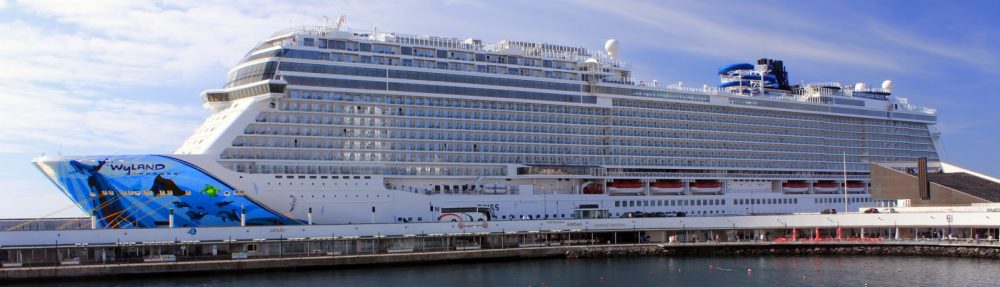
Quantum to use wrist bands instead of key cards

By Tom Stieghorst

Guests on Royal Caribbean International’s Quantum of the Seas will be issued wristbands with radio frequency identification (RFID) chips in place of the standard issue key cards, which will be used for cabin access, payment and other traditional key card functions.

The wristbands can also be used to navigate the ship, said Royal Caribbean Cruises Ltd. Chairman Richard Fain, who hosted a live webcast from the ship’s construction site in Germany to announce the innovation.

The webcast will include a chat with former New York Times technology columnist David Pogue, who now works for Yahoo! Those interested can ask questions via Twitter under the hashtag #QuantumoftheSeas.

It was one of half a dozen technology upgrades on the Quantum that promise to make cruising simpler, easier and more hassle-free, Fain said.

Another eye-catching technology will be a robotic bartender which will tend a new venue, the Bionic Bar. Guests will place orders via tablets and then watch the robotic bartenders mix their cocktails.

Quantum will also use RFID to enable guests to track their baggage in real time after they drop it off before the cruise, and after they deliver it to housekeeping on departing the ship. In addition, guests will be able to generate their boarding documents online and upload a photo ID to get digital boarding credentials that will shorten the check-in process. Fain said the process will go from sidewalk to ship in 10 minutes and eliminate the traditional check-in counter and the associated lines.

Quantum is also scheduled to be the second ship to fully utilize the O3B satellite system for telecommunications access, which is expected to dramatically increase Internet speeds. The extra connectivity will enable the Quantum to offer a live global video gaming suite in its new SeaPlex activities area.

The O3B system has been in testing on the Oasis of the Seas and is expected to be fully deployed first on the Allure of the Seas by October.

Carnival does the Ice Bucket Challenge, fleet wide

By Jerry Limone

Personnel on all 24 of Carnival Cruise Lines’ ships, plus CEO Gerry Cahill, took the “Ice Bucket Challenge,” getting doused with ice water to create awareness for amyotrophic lateral sclerosis (ALS).

John Heald, Carnival’s senior cruise director and well-known blogger, was the star of a three-minute video, getting drenched with a garbage can full of ice and water on the Carnival Miracle, then warbling “Let It Go” from the Disney movie “Frozen.”

Watch Carnival’s Ice Bucket Challenge.

Carnival is making a $100,000 donation to the ALS Association. Click to make a donation.

Ken Muskat of MSC Cruises has plans to take the Ice Bucket Challenge on the MSC Divina while the ship is in port in Miami on Friday.

The Ice Bucket Challenge has gone viral on social media, and several celebrities and politicians have accepted the challenge.

Some personal advice about Facebook

By Laura Del Rosso
InsightTravel agents may feel under pressure to use Facebook to promote themselves, but they should first consider how and why they are doing it and make a plan before spending too much time on Facebook, just as they do with other social media, says Denise Vogel, who operates Click of the Mouse, a travel technology consulting firm.

“You’re bombarded with the newest and the greatest social media all the time,” she said in a recent webinar titled “Sane Social Media Strategies” produced by the Travel Institute.  “Step back and think about what you want to do with social media. This will keep you focused.”

LauraDelRossoVogel discussed Facebook during the presentation, encouraging agents to use their own personal Facebook accounts more effectively. The personal account can be as important as having a Facebook business page, she said. “Use your own personal page. It’s important to share great information that you have” with your Facebook friends.

She recommended changing profile photos often, using travel photos, because when they change they show on your Facebook news feed. Post often to your status updates, but without sales pitches and specific promotions, Vogel said.

“By sharing good travel information on your posts, you have a chance to connect on a genuine level, without mentioning your business,” she said.

Facebook prohibits users from promoting businesses on personal pages. For example, agents cannot use their personal Facebook page to sell a cruise or offer a discounted package. Users’ personal pages can be shut down if Facebook becomes aware of such practices.

Instead, use your Facebook business page for promotions and link such posts to your agency website. However, use caution even on your business page from becoming overly promotional.

“On your business page you can be more casual and friendly than on your website. But don’t bombard people with sales information. It’s something people don’t like.”

Use your personal Facebook account and post regularly with relevant, interesting travel information, she said. And make it short: Studies have shown, she said, that users click away from posts if they don’t find them interesting within eight seconds.

Agents also should actively engage with others on Facebook, commenting on friends’ and clients’ posts within 24 hours, using their name in the comment box and sharing thoughts and information. Again, don’t be too promotional, she said.

“Be genuine, that’s most important. And, be honest and trustworthy.”

Be selective about what you post, using news aggregators that include travel news, the travel trades or travel associations that offer interesting and valuable information, particularly about the benefits of using a travel agent.

“Take time to look at articles and make sure there’s no offensive material,” Vogel said. When you see something interesting, take a quote from an article and use it in your status update as a link.

But check links and make sure you’re not sending people to consumer websites where they can book direct from suppliers.

Vogel also recommended “mixing up” Facebook posts, sometimes using status updates with links, other times posting photos and albums, sometimes using polls or quotes about travel and humor that’s not crude or rude.

Polls should use open-ended questions about travel such as “Would you rather take a Caribbean or Alaska cruise” that are more likely to get responses than questions such as “Where would you like to go on vacation?”

Then, when your clients and friends respond to the poll, engage in a conversation with them about their answer.

“We use all kinds of means to stay connected with our clients,” said Vogel. “Facebook is a connection and a genuine connection if you use it correctly.”