Silversea revamps entertainment

Silversea revamps entertainment

By Donna Tunney
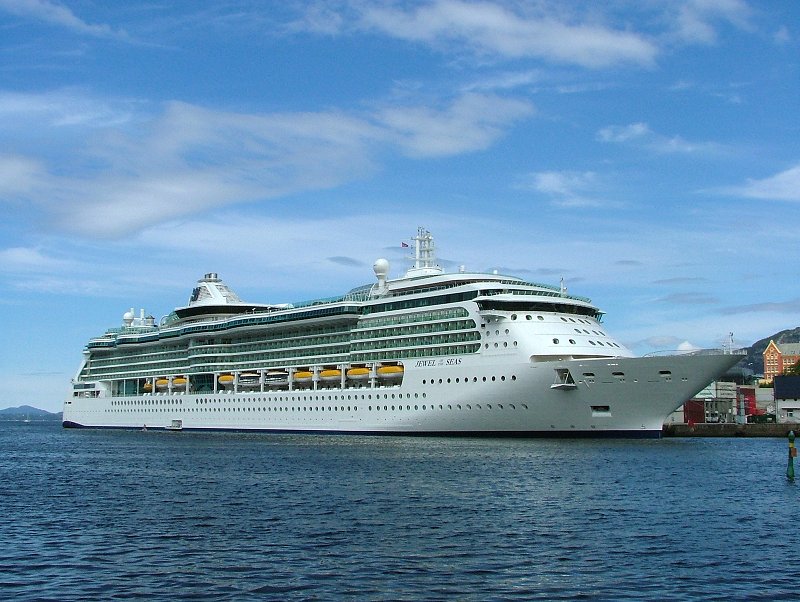
In a partnership with Las Vegas-based Choozi Entertainment, Silversea Cruises is changing its entertainment program from traditional song-and-dance productions to concerts.Concerts will feature Motown, opera, pop and rock. The revamped shows were launched on the Oct. 24 sailing of the Silver Cloud, with additional shows opening this month on the Silver Whisper, the Silver Wind and the Silver Shadow. The program will be rolled out on the Silver Spirit in March.

The show lounges on Silversea ships will feature three productions. “Signed, Sealed, Delivered” is described as a musical journey through Motown. “High C’s” will focus on classical music and well-known arias, from Puccini and Verdi to contemporary songwriters.

“Fabbalicious” features the music of Swedish pop group Abba and is designed to “get the audience on their feet, singing and dancing along with the cast,” said the line.

On the ships’ pool deck, a new music party will showcase pop music from Madonna to Lady Gaga, and almost everyone in between, said Silversea. “Famous stars will come to life as costumes are pulled from a trunk and the performers become one music legend after the next,” Silversea said.

And in the ship’s Panorama lounges, passengers will hear the music of John Lennon, Paul McCartney and Billy Joel along with selections from Broadway musicals.

“Our guests expect world-class amenities and entertainment is a big part of their overall shipboard experience,” said Christian Sauleau, Silversea’s executive vice president of fleet operations. “By partnering with Choozi, we are elevating the caliber of entertainment and creating variety that will delight our guests and enhance their cruise experience.”

Choozi Entertainment’s Christopher and Suzanne Childers are in charge of production of the Silversea shows. Christopher Childers toured with Madonna, Michael Jackson and Cirque du Soleil. He is artistic coordinator for “Le Reve” at Wynn Las Vegas.

Previously, Silversea’s entertainment was handled by Jeanne Ryan Productions.

More than half of RCCL’s cruises are sold outside the U.S.

More than half of RCCL’s cruises are sold outside the U.S.

By Arnie Weissmann

LONDON — On Dec. 31, a “watershed year” will come to a close for Royal Caribbean Cruises Ltd.

“When the clock turns at the end of the year,” said Richard Fain, the company’s chairman, the majority [of passengers aboard RCCL cruises are from) outside of the U.S.”

Fain made the comments during an invitation-only lunch on behalf of the charity “Just a Drop” at the World Travel Market on Monday.

RichardFAIN-capIn response to a question from an audience member, Fain stopped well short of calling the U.S. market of diminishing importance, or even “mature.”

“It’s more mature than many markets. But when I compare my 9-year-old gorgeous grandson to my 5-year-old gorgeous grandson, the former is more mature, but I would still not refer to him as an adult.”

The U.S. is growing at “a smaller rate, but it is still growing. We’ll be adding 1.5 million new cruisers this year.”

Fain said that the East Asian market’s growth rate was the fastest, joking that RCCL had gone “from two passengers to six,” but then, turning serious, said that the company was pursuing China “quite aggressively.”

“Four years ago, one ship there made six stops. Two years later, we dedicated a ship [the Voyager of the Seas], small by our standards, but amazingly successful,” Fain said.

He confessed that “we’re losing money out there,” but that “the potential is so great, and we’re investing, putting a newer, larger ship into China” next spring.

The U.S. is still the largest single market for RCCL, followed by the U.K.

“We’ve dedicated a lot of resources [in the U.K.],” Fain said, noting that it was “structurally growing at 7% per annum.”

In addition to Royal Caribbean International, Celebrity Cruises and Azamara Club Cruises, RCCL owns Pullmantur Cruises, which sells primarily in Spain, and CDF Croisieres de France. RCCL has a 50% stake in TUI Cruises, which is marketed heavily in Germany.

Fain said that response in those markets is higher than he had initially expected.

“I must admit, 10 years ago when we looked at the German market, we thought they would not be interested in any vacation that didn’t start with the words, ‘Mercedes-Benz.'”

Agent economics 

Michael East of MD Eastcastle Management, who conducted an interview with Fain in front of attendees, said he was surprised that cruise lines depend so heavily on travel agents, and asked why.

“The only thing that surprises me is that people are surprised,” Fain said. “We are ruthless and businesslike. The answer is that it’s more profitable. If we were to do it ourselves, it would cost more, or be less effective or, more likely, both. If you look at the cost of distribution of chairs, or suits, it’s much higher than what we pay travel agents.

“Cruises are sold, they’re not bought,” he continued. “I went shopping with my daughter and wife, and the salesperson really helped us. We probably would have done okay, but the salesperson was so efficient, [my daughter] not only got what she came in for, but more: Not only a dress, but an outfit — the scarf, shoes, the belt and the purse. We wouldn’t have done that without that salesperson. And that’s what the travel agent does.”

Last February, Complete Cruise Solution — the U.K. trade arm of Carnival Corp. brands P&O Cruises, Princess Cruises and Cunard — reduced British travel agent commissions to 5% from a base of 12-15% in response to widespread rebating. Fain was asked if he would consider doing the same.

“We don’t talk about those things publicly, but there is a legitimate concern that the distrubution system will end up in self-destructive rebating and discounting. It has been our decision so far [not to lower commissions], but are we reevaluating? We are always reevaluating.”

Cruise line economics

At various points, Fain referred to the economy as “lousy” and said “it stinks,” and said “it’s been a pretty terrible year” for most people, but that “against that background, we can still produce healthy profits.”

“Pricing for RCCL and its competitors today is higher than a year ago,” he said. “Consumers are inundated with offers, so it may look like pricing is lower, but revenues are higher per passenger, per day than a year ago. But we’re still struggling to get back up to a more reasonable level.”

Carnival Corp. in the house

In Fain’s audience were top executives of three Carnival Corp. brands: Holland America CEO Stein Kruse, Seabourn President Rick Meadows and Carnival U.K. CEO David Dingle.

Dingle raised his hand and supported comments Fain made about capacity and growth, noting that future capacity increases are relatively small and that as the lines develop new markets, it takes the pressure off existing markets and helps balance demand.

He also concured that pricing is moving higher.

“The job we have to do is get a better understanding of the booking model, hold our nerve on pricing and believe in all the good things Richard just talked about. There is fundamental growth in cruising,” Dingle said.

In interviews after Fain spoke, both Kruse and Meadows stressed the importance of international distribution, but neither would comment on whether sales outside the U.S. constituted a majority of their cruises sold in 2011.
New TripAdvisor complaint threatens review syndication

New TripAdvisor complaint threatens review syndication

Travel giant TripAdvisor is facing a second and potentially more serious complaint to theAdvertising Standards Authority that threatens to outlaw all third parties using its reviews to market their products.

Travolution can reveal online reputation management crusader Kwikchex has sparked a second probe by the UK advertising watchdog following a first highly publicised complaint.

The first complaint questioned the veracity of TripAdvisor’s reviews but the second claims existing advertising rules mean no reviews can be used to market product if the author’s identity cannot be verified.

An increasing number of hotel, travel agency and tour operator websites pull in TripAdvisor content, or link to it to help promote their product and improve their search engine ranking.

The Kwikchex case cites rules in the Committee of Advertising Practice (CAP) non-broadcast code that states marketers must be able to show a review’s authenticity by proving it was made by an identifiable and potentially contactable person.

An ASA spokesman could not confirm the second complaint had been lodged, although this is understood to have been purely a procedural issue, a detailed submission having been sent on November 2 but not yet logged.

Kwikchex co-founder Chris Emmins said: “This is potentially much bigger than our first complaint. It’s absolutely apparent that reviews are not being verified and that they are being used for promotional purposes. We think that verifying testimonials is key to fulfilling the requirements of the CAP code.”

An extract from the code on testimonials and endorsements states: “Marketers must hold documentary evidence that a testimonial or endorsement used in a marketing communication is genuine, unless it is obviously fictitious, and hold contact details for the person who, or organisation that, gives it.”

The code does allow testimonials to be used by third parties from a “published source” without permission of the author, however this places the onus back on the originator of the review to authenticate it and Kwikchex believes TripAdvisor’s current procedures fail to do this.

In the submission Kwikchex makes reference to a number of cases in which it believes the CAP code is being breached. These include use of TripAdvisor content on hotel website Accor, Thomson’s tour operator site and tourism body VisitLondon.

Separately to the challenges to TripAdvisor, the UK government is working with a number of companies on a charter for online reviews to promote best practice led by Ed Davey MP, minister for consumer affairs for the Department for Business, Skills and Innovation.

Andrew Mabbutt, managing director of Feefo, an online review service and one of the firms working with the government on the charter, said:

“The ASA’s view on use of reviews that can’t be authenticated will be awaited with particular interest in the travel sector where TripAdvisor reviews are widely used for marketing purposes.

“We feel it is vitally important that any reviews used are at the very least checkable in terms of the person who posted them and if they are not then they either be flagged up as such or not made public until they are.

“This issue is becoming more and more high profile and it is important companies, review sites and regulators alike get to grips with it before there is widespread loss of public confidence in what can, and should be, a powerful marketing tool.”

Tripadvisor said it could not comment on the second Kwikchex complaint as the ASA had not confirmed it was investigating it.

The ASA confirmed to Travolution that the investigation into the first complaint was nearing a close although the recommendations had not yet been put to council and it could be a few weeks before any decision is made public.