
A year after MSC Cruises introduced its MSC Divina into the Caribbean, U.S. travel agents remain unusually divided about whether to sell the Italian-run brand.
MSC has made a vigorous effort to woo agents and change views of the line, which until recently was perceived as having rock-bottom pricing, a European focus and mediocre product quality.
Efforts to change that image include doubling the North American sales force, mounting a 20-city road show for travel agents, paying a 5% commission on amenities not matched by other cruise lines, and introducing a new pricing structure that gives agents more ways to upsell MSC.
Ken Muskat, executive vice president of sales, public relations and guest services for MSC Cruises USA, said that because of its single-ship presence in North America, MSC depends vitally on agents to deliver its marketing message.
Still, while he said MSC has clearly gained ground in the past year, he also acknowledged that agents were still struggling with how to sell the Divina.
That impression was confirmed in interviews with a half-dozen travel agents.
Shelley Carey, president of Windswept Travel in Plantation, Fla., said she just had a group come off the Divina and the reviews were mixed.
“Half of them said, ‘I’d never go again.’ Half of them said, ‘I got what I paid for,’” she said.
Carey said clients don’t generally ask for MSC because it isn’t as recognized as brands with large fleets, long service records in North America and big advertising budgets.
“We have a hard time here in Fort Lauderdale selling MSC,” Carey said. “It’s a hard sell.”
Some agents are resolved not to sell the line.
“Their service stinks,” said Karin Arden, an agent at MCC Sea Freed Travel in Tampa, who sailed on an MSC ship from Fort Lauderdale two years ago. “The cabins are tiny. The drinks are watered down. The check-in was long. It’s not a line I could ever recommend unless someone asks for it.”
Others back MSC.
“I wouldn’t hesitate to sell them,” said Lena Marroletti, master cruise counselor at Circle Travel in Laurel Springs, N.J., who said she had sailed the Divina within the last year. “It was wonderful. Great service.”
Other cruise lines also trigger mixed responses from travel agents, notably Carnival Cruise Lines. But agents who don’t sell Carnival have typically criticized its low prices or agent polices rather than the product itself.
Price can be an issue with MSC. Al Ferguson, owner of Legendary Journeys in Sarasota Fla., said that to earn a profit on a recent MSC sale, he bundled the cruise with motorcoach transportation to the port and sold it strictly online to minimize agent contact.
“MSC continues to have challenges based on the brand awareness in North America,” Ferguson said.
Still, he counts himself a supporter, calling MSC “a very viable, independent cruise line,” that provides an important competitive check on big, publicly owned rivals. “It’s good for consumers, but it’s especially good for retailers,” he said.
An example of that is MSC’s decision last week to offer 18% commission on groups for the Divina’s 2015-16 season in the Caribbean. No other cruise line pays such a high commission.
In June, MSC launched a short-term promotion that paid 25% on Divina balcony cabins. Measures like that gain goodwill with agents.
Janet Goldman, managing member of Cruise and Travel Partners in Vero Beach, Fla., said she makes an effort to persuade clients to try MSC, inviting those who voice objections to join her for lunch on Divina to see it firsthand.
“They’re trying,” Goldman said of MSC. “They have a good product, but the mistakes of the past are hard to overcome.”
Prior to the Divina, MSC’s tonnage in North America was seasonal and tailored for Europeans. It also had a reputation for being run from its Italian headquarters in Naples, a view that was reinforced in April when it was announced that the Divina would be pulled back to Europe for the summer next year.
Muskat said that despite that decision, the American-style product will remain in place, including menus, smoking restrictions and fewer multi-language public announcements.
He said the line has just hired a manager who is responsible for keeping those changes in place, and the parent company has recently set up a training school for crew hires, a big step in addressing service complaints. Previously MSC trained new crew onboard.
MSC seems to be making some headway on its perceived quality, as judged by a Vacations to Go post-cruise survey of its clients, which found that those who rated their satisfaction with MSC as either excellent or very good had improved from 34.4% in 2012 to 43.4% today.
Muskat said the holdover perceptions of MSC are increasingly outdated and urged agents to give it a try, even if only with a small portion of their business, as a test of the new product.
“The people who are not in our corner are predominantly the ones that sailed with us five or six years ago and have not seen the new things we’ve done with Divina,” he said. “There’s still a lot of consortia that think of us as a one-ship brand or a seasonal brand. We’re really trying to get away from that.”
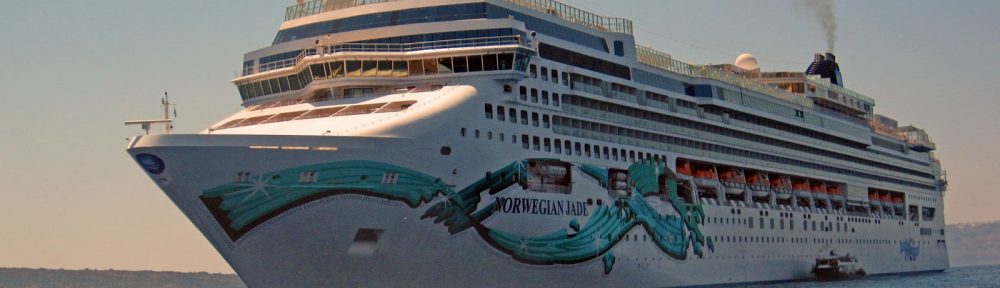


 Given the sheer scope of the market, it is no surprise that the cruise industry is embracing onboard meetings by designing vessels with state-of-the-art meeting space and high tech audio/visual capabilities that rival — or exceed — what is available at land-based resorts.
 Wetravel2u's Weblog