Coast Guard bill expands cruise crime reporting

Rockefeller seeks to tie cruise reforms to Coast Guard bill

By Tom Stieghorst
Sen. Jay Rockefeller (D.-W.Va.) signaled his intent to attach his cruise industry consumer protection legislation to a bill to reauthorize the U.S. Coast Guard, strengthening its chances of consideration.

Rockefeller introduced his Cruise Passenger Protection Act last year, but despite co-sponsorship by several Democratic senators it has not been passed out of committee.

At a hearing of the U.S. Commerce Committee, Sen. Roger Wicker (R-Miss.) said in his opening remarks that he thought it would be best as a stand-alone bill and not in connection with the Coast Guard authorization act.

Later in the hearing, Rockefeller disagreed, saying, “Everybody knows that the Coast Guard reauthorization is a bill Congress has to pass. If you separate this, the Coast Guard bill will pass and the cruise ship bill will get flushed down the toilet.

“My job as chairman is to make sure we don’t play the game that way,” Rockefeller said.

The Coast Guard bill sets funding for the agency for the next two years and has numerous other provisions supported by various constituencies. It passed the House in April without the consumer measures, but a conference committee could adopt the Rockefeller provisions if they are included in the Senate’s bill.

The measures would make it easier for consumers to report crimes and make complaints about problems on cruise ships, according to Rockefeller, while simplifying ticket contracts and publishing more information about crimes and other problems on cruise ships.

“These aren’t crazy ideas,” Rockefeller said. “They are common-sense protections that consumers already have if they travel in airplanes or by rail.”

Cruise industry representatives who testified at hearings last year said the provisions were regulatory over-reach or problematic for other reasons.

No industry representatives appeared at this year’s hearings. Witnesses included passengers or their relatives who experienced crimes, medical emergencies or mechanical breakdowns on ships, plus a Miami lawyer who has sued cruise lines over such issues.

Coast Guard to propose cruise ship video surveillance rules

By Tom Stieghorst

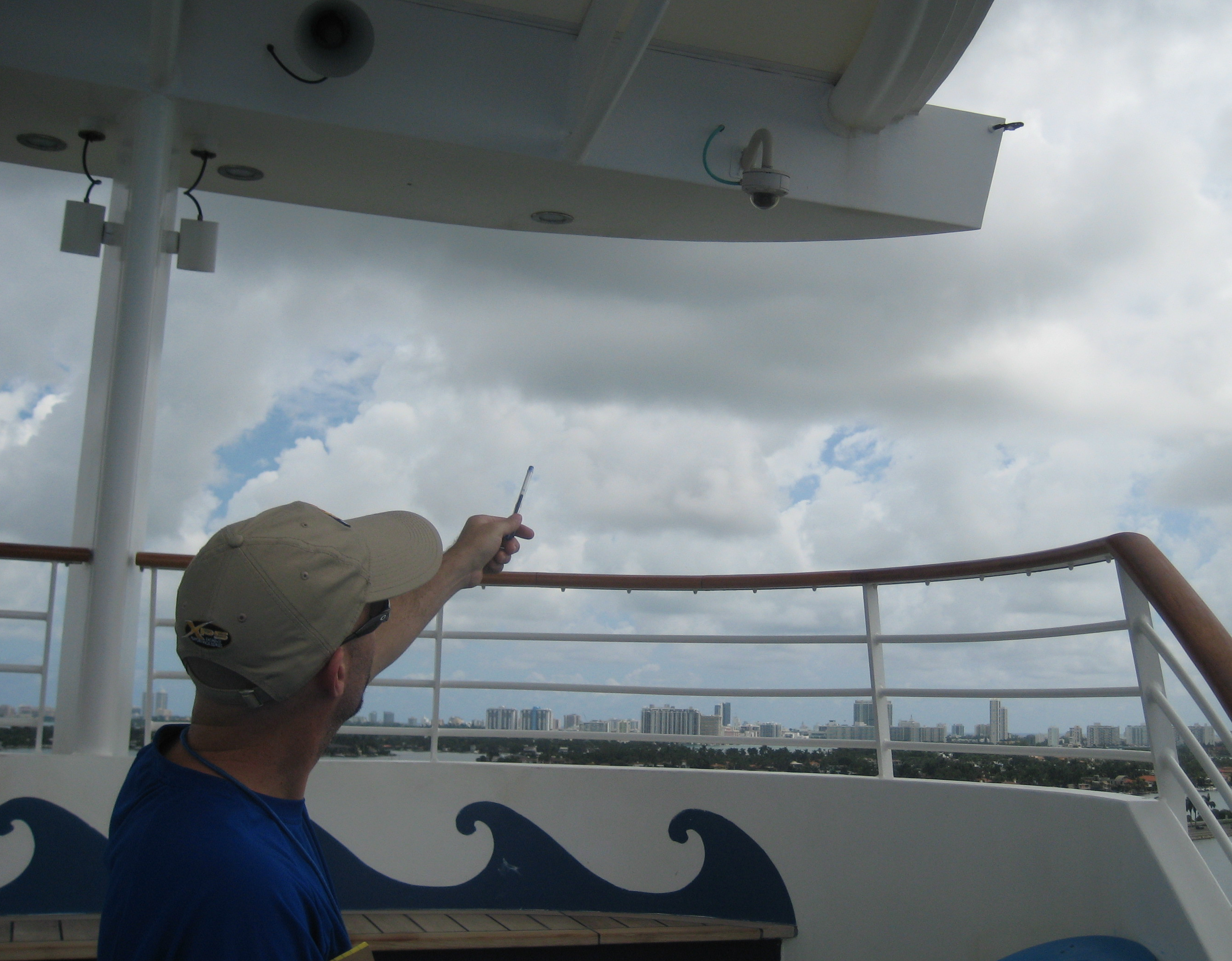
CCTV - Cruise Ship - Cameras - Surveillance - Destructionof Evidence?Nearly four years after passage of a comprehensive cruise safety law, the U.S. Coast Guard is getting ready to propose a rule for three of the trickiest provisions in the legislation.

The proposed rule, expected out in June, will outline how cruise lines can comply with a requirement in the Cruise Vessel Safety and Security Act that they deploy technology for “capturing images of passengers or detecting passengers who have fallen overboard.”

Also addressed in the rule will be how a cruise ship’s video surveillance system should be operated to document crimes on the ship and assist in their later prosecution.

Advocates of the law say the provisions will make passengers feel more secure about taking a cruise.

But the cruise industry has raised red flags about the cost and practicality of applying the law. In one instance, a cruise line told auditors at the Government Accountability Office (GAO) that just doubling the time it keeps video footage from 14 to 28 days would cost an extra $21.8 million.

Most of the 15 provisions in the 2010 act, such as peepholes in cabin doors and standard rail heights, had been translated into Coast Guard guidance by June 2011.

The remaining ones involved complex technologies and, in some cases, language in the law that didn’t set a clear benchmark for gauging compliance.

In the case of detecting when persons fall overboard, the law called for compliance “to the extent that such technology is available.”

The Coast Guard asked for input from cruise lines, CLIA and passenger advocacy groups to help formulate its rule.

A recent report by the Miami Herald found that at least 28 passengers went overboard on cruise ships between October 2010 and June 2013. Rapid detection of persons going overboard would clearly enhance safety, but cruise lines say the jury is still out on automated detection systems.

CLIA told the Coast Guard that the technology to capture images of overboard episodes exists, but not the ability to detect them in real time. CLIA said vessel movement, sun glare, salt spray encrustation and weather all make instruments unreliable.

If detectors either fail to report incidents, or report false incidents, that would raise the cost, liability and burden on passengers.

Still, several cruise lines are testing various technologies. One unidentified cruise executive told the GAO that if companies are required to go to the expense of installing detectors, they should not produce inaccurate results that would increase operating costs.

Video surveillance is another area where technology exists, but its application is open for debate. Victim advocacy groups say existing cameras should be monitored continuously for crime, and recorded images should be stored for up to 90 days.

CLIA recommended a risk-based approach that would take into account differences among vessels, cruise lines and itineraries and said video should be stored for a week, nearly matching the average cruise length of 7.2 days.

Coast Guard officials told GAO auditors that when the rule is issued in June, rather than being prescriptive it is likely to be performance-based — outlining what is to be achieved — to allow for some flexibility in implementation.