Court Upholds Bar Harbour’s Limit on Cruise Guests

Court Upholds Bar Harbour’s Limit on Cruise Guests

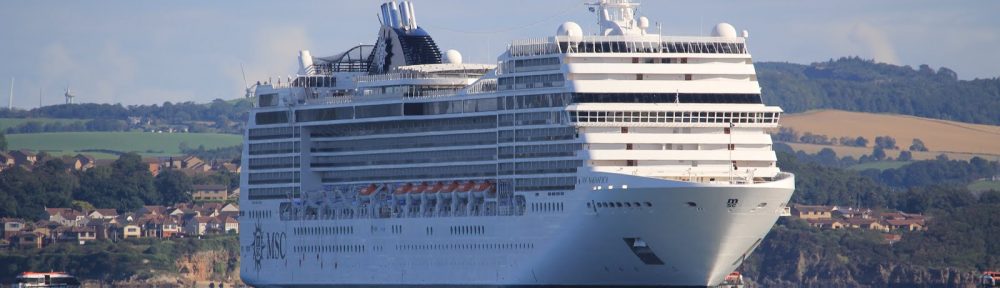
The 1st U.S. Circuit Court of Appeals upheld the U.S. District Court’s decision that confirmed that Bar Harbour, Maine, can limit the number of cruise guests arriving in the town daily.

According to local sources, the case has now been sent back to the lower court for further comments and additional review.

Three years ago, Bar Harbour residents voted to limit the number of cruise passengers who can disembark in the town to just 1,000 per day.

As reported by Cruise Industry News at the time, the measure was proposed at a referendum and was endorsed by 58 per cent of the voters.

Supporters said that the town felt “overrun” by cruise ship traffic during peak summer months, which caused congestion and excessive traffic.

According to the Portland Press Herald, Bar Harbour welcomed over 270,000 cruise guests before introducing the limit in 2022.

Citing court files, the local news source said that the town typically welcomed 150 cruise ship calls per year.

A group of local businesses subsequently filed a lawsuit alongside pier owners, touring companies and the local pilotage association.

The parties allege that the ordinance breaks federal laws, including those that regulate interstate commerce, while also interfering with requirements for entrance into the United States and denying seafarers access to shore.

In 2024, a federal judge in Bangor found in favour of the town, deciding that Bar Harbour has home rule authority granted by the state.

The 1st U.S. Circuit Court of Appeals now wants the District Court to determine whether the ordinance is “clearly excessive” when it comes to regulating interstate commerce, the Portland Press Herald added.

The newspaper said that the lower court was also asked to explore whether the ordinance meaningfully advances Bar Harbour’s interest in reducing congestion and whether these results could not be achieved through less burdensome means.

BVI Reopens to Visitors on Dec. 1

The British Virgin Islands has announced its borders will be opened to visitors on December 1, according to Premier and Minister of Finance, Honourable Andrew A. Fahie.

He said that the government is optimistic and is vigorously preparing for the re-opening of the territory to welcome back tourists among others.

Premier Fahie said: “The territory has two full months to prepare and we as a people must get it right and we must get it done by all working together, both the Government and private sector.”

The Premier said that the government intends to reopen the territory in the safest way possible using science and technology as a guide.

“This next phase also comes with a risk factor, where if a case of COVID-19 gets into our Territory, then it can go through the whole community very quickly. That is why we must use technology,” he said. “The concentration must be to use the technology through a simulation prior, to demonstrate that the technology will complement the science to greatly assist us in re-opening in the safest way, humanly possible.

“Please note that we who are in the Virgin Islands must also play our part and play it well to ensure that we adhere to all approved social distancing measures. This will also reduce or eliminate any possible spread of the virus.”

Home Office lays out quarantine rules

Chamber News

The Home Office and Department for Transport published the rules covering quarantine restrictions today.

The quarantine measures require arrivals to the UK to self-isolate for 14 days and will come into force on June 8.

The government insists they are “designed to prevent new cases [of coronavirus] being brought in from abroad and to prevent a second wave of the virus”.

All arrivals “bar a shortlist of exemptions” will be required to complete an online locator form, with contact and travel details and the address where they will self-isolate.

The UK’s Border Force will undertake checks and may refuse entry to any non-resident foreign nationals who refuse to comply.

The rules exclude travellers to and from Ireland, the Isle of Man and the Channel Islands.

They will be reviewed every three weeks, with the first review by June 29.

Home Secretary Priti Patel said: “Protecting the public’s health and avoiding a second peak that overwhelms the NHS will always be our top priority.

“As we get the virus under control here, we must manage the risk of cases being imported from abroad. We owe it to the thousands who’ve lost their lives.”

She insisted: “These measures are informed by science, backed by the public and will keep us safe.

“We will take a number of factors into account within the reviews to satisfy that the risk of imported cases is low.”

These factors will include:

The rate of infection and transmission internationally and “the credibility of the reporting measures international partners have put in place”;

Levels of imported cases in other countries where there are more relaxed border measures;

The degree to which antibody and other testing methodologies prove effective in minimising the health risk.

Patel said: “We will also continue to take account of the impact on the economy and industry.”

Transport Secretary Grant Shapps confirmed the government is examining “arrangements known as ‘air bridges’ or international travel corridors which would remove self-isolation measures and safely open up routes to and from countries with low transmission rates”.

These would require agreement with individual countries, he said, adding: “We are working with the transport industry to see how we can introduce agreements with other countries when safe to do so, so we can go abroad and tourists can come here.”