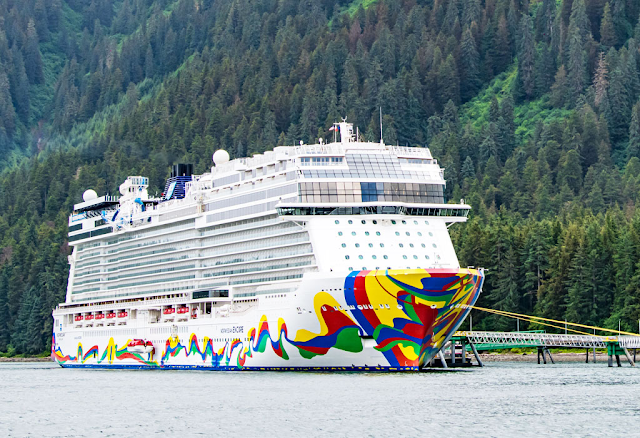
Onboard revenue is seen as a real-time now indicator of how guests are feeling about their financial situation right now and while onboard company ships, according to Frank Del Rio, president and CEO of Norwegian Cruise Line Holdings.
“Onboard revenue generation has continued to be impressive, even as we continue to ramp up occupancy carrying more guests across all ships and cabin classes. In the second quarter, onboard revenue per passenger cruise day was approximately 30 per cent higher than during the comparable 2019 period,” he said, on the company’s second-quarter earnings call.
Mark Kempa, CFO, added that the company had raised prices for “all of our offerings” onboard the ships.
“We’ve gotten smarter in the pre-marketing of our products, creating that sense of urgency before the consumer steps onboard,” he said. “Those consumers who have a stronger propensity for presales, they also spend more, about 30% or 40% more once they’re on board. So, it’s a combination of all those. But the numbers are strong. We’re seeing a strong consumer today, spending today’s dollars. And we feel that bodes well for ourselves and the industry.”
Del Rio said that pre-cruise revenue was up 50 per cent compared to 2019 levels.
“We continue to focus on enhancing our market-leading bundled offerings and increasing quality touch points with our guests starting from the time of booking to capture even more revenue pre-cruise, allowing guests to arrive on board with an ever fresher wallet, which ultimately results in higher overall spend. In fact, our pre-cruise revenue on a per passenger day basis for the second quarter of ’22 is up over 50% versus 2019 levels. At a high level, guests who make pre-cruise purchases tend to spend approximately double that of guests who do not pre-book onboard activities,” he said.
While secondhand sales dominated the cruise industry headlines over the past few months, the shipbuilding business has also been busy during the pandemic.
In addition to the vessels that were already set to be built in 2020, a total of 13 extra ships were also ordered in March 2020.
Here’s the complete list:
SH Diana Cruise Line: Swen Hellenic Order Date: October 2020 Shipyard: Helsinki Shipyard (Finland) Capacity: 192 guests Tonnage: 12,500 Expected Delivery: Q1 2023
Swan Hellenic was among the first cruise lines to order a cruise ship after the start of the COVID-19 pandemic.
According to its operator, the LNG-powered ship will feature private residences, in addition to features that include a microbrewery, a hydroponic garden and an art studio.
Emerald Cruises ordered a second cruise ship for its fleet in September 2021. The new Emerald Sakara is set to be delivered in 2023 and will have the capacity of 100 guests.
A sister to the 2021-built Emerald Azzurra, the super yacht is being built by the Halong shipyard in Vietnam.
The 152-guest vessel is set to enter service in 2025 and did not have its buyer revealed at the time of the order.
American Eagle and American Glory Cruise Line: American Cruise Lines Order Date: January 2022 Shipyard: Chesapeake (United States) Capacity: 109 guests each Tonnage: 3,000 each Expected Delivery: 2023
Named Project Blue, the class will include a total of 12 vessels – of which the first two are already in construction at the Chesapeake shipyard.
Ilma and Luminara Cruise Line: Ritz-Carlton Yacht Collection Order Date: March 2022 Shipyard: Chantiers de l’Atlantique (France) Capacity: 456 guests each Tonnage: 37,000 each Expected Delivery: 2024 and 2025
Ritz-Carlton Yacht Collection ordered two additional cruise ships in March 2022, the Ilma and the Luminara. Following the Evrima, which is set to enter service soon, the vessels will be built at the Chantiers de l’Atlantique shipyard in France.
Designed as mega yachts, the 37,000-ton ships are set to be delivered in 2024 and 2025, respectively.
Explora V and Explora IV Cruise Line: Explora Journeys Order Date: July 2022 Shipyard: Fincantieri (Italy) Capacity: 922 guests each Tonnage: 70,000 each Expected Delivery: 2027 and 2028
With the CDC dropping its COVID-19 Program for Cruise Ships, Cruise Industry News looks at the timeline that led to the decision.
Week of March 9, 2020: Despite efforts by the industry’s lobby group CLIA, cruise lines decide to voluntarily suspend operations in the United States. Most companies plan 30-day operation pauses, aiming for early April resumptions.
March 14, 2020: The CDC issues a No Sail Order, essentially banning cruise ship operations in U.S. ports for 30 days.
April 9, 2020: The No Sail Order is extended for the first time and is now valid for an additional 100 days. During the same announcement, the health agency defines additional parameters for the expiration of the ban, such as the official end of the COVID-19 public health emergency.
July 16, 2020: The CDC extends the No Sail Order again, this time setting a September 30 expiration date.
July 23, 2020: After extending the No Sail Order, the CDC asks for public input on new cruise protocols.
September 30, 2020: Previously set to expire on September 30, the No Sail Order is extended for another month.
October 30, 2020: The CDC finally drops the No Sail Order, replacing it with a new Conditional Sail Order. The 40-page regulation plan is said to allow cruise lines to start planning their return to service through a framework of phases and public health measures.
November 21, 2020: While cruise operators work to meet the Conditional Sail Order requirements, CDC raises its warning for cruise travel. The health agency now advises against cruising, with a Level 4 warning.
December 31, 2020: As the year ends, no operator has been granted permission to return to service in the U.S. under the original Conditional Sail Order guidance.
March 24, 2021: After Royal Caribbean’s then-CEO Richard Fain speaks out against CDC’s Framework for Conditional Sail Order, calling it “unworkable,” more pressure is put on the organization to relax its set of rules for cruising. Mentioning the advance of the COVID-19 vaccination across the country, CLIA asks the health agency to allow for a return of operations by the beginning of July.
April 2, 2021: The CDC issues the first new cruise guidance since October 2020, outlining a technical framework that would allow for the resumption of sailing.
April 3, 2021: Three U.S. Senators introduce an act to revoke the Conditional Sail Order. Called CRUISE Act, the bill requires the CDC to provide mitigation guidance for cruise lines to resume safe domestic operations.
April 5, 2021: Florida Governor Ron DeSantis announces a lawsuit against the Biden Administration, the CDC and the Department of Health and Human Services to allow cruises to restart in the United States.
April 25, 2021: The CRUISE Act is blocked from passing in the Senate and the Conditional Sail Order continues to be the way for the service return.
April 28, 2021: In a letter sent to cruise lines, the CDC says it is looking at a timeline that will allow restarting of the U.S. cruise industry by mid-July.
May 5, 2021: In yet another step for cruise resumption, the CDC publishes technical instructions for cruise ship operators preparing to conduct simulated voyages in advance of restricted passenger voyages under the COVID-19 Conditional Sail Certificate.
May 15, 2021: The CDC releases further updates to the Conditional Sail Order, paving the way for the restart of cruise operations in the United States. The changes add new rules for screening of embarking passengers, vaccination requirements and more.
May 18, 2021: The State of Florida’s lawsuit to reopen the cruise industry against the CDC and the U.S. Department of Health and Human Services heads to mediation.
May 25, 2021: Under the Conditional Sail Order, Royal Caribbean International becomes the first cruise line to receive the CDC’s approval for a simulated voyage with volunteers.
May 26, 2021: The CDC significantly relaxes cruise ship regulations for passengers and crew that have been vaccinated against COVID-19, allowing a quicker restart of the industry.
June 17, 2021: Seven months after raising it, the CDC lowers its warning against cruise travel from Level 4 to Level 3.
June 26, 2021: As more cruise lines get ready for test voyages, Celebrity Cruises becomes the first cruise major company to resume service in North America. Sailing from Port Everglades, the Celebrity Edge launches the first U.S.-based cruise in over 15 months.
First Week of July 2021: More operators resume service in the U.S., including Carnival Cruise Line and Royal Caribbean International.
August 21, 2021: The CDC issues updated guidance that says that people who are at high risk of severe complications from COVID-19 should avoid cruise ships.
October 25, 2021: With most of the U.S.-based cruise lines and various ships now in service, the Conditional Sail Order is extended by the CDC. The extension of the framework is valid through January 15, 2022.
December 30, 2021: The CDC once again raises its warning for Americans going on cruises, telling them to avoid cruise travel, regardless of vaccination status. After being lowered just a few months back, the warning returns to Level 4, the highest such level.
January 15, 2022: Despite pushbacks from some U.S. politicians, the CDC lets the Conditional Sail Order expire. To replace the guidance, the health agency prepares a new voluntary plan, which cruise lines will opt-in.
February 9, 2022: The CDC finally releases its new COVID-19 Program for Cruise Ships operating in U.S. waters. The program is recommended and includes the continuity of the agency’s colour status system for disease cases on ships.
February 19, 2022: Ten days after the revelation of the new CDC program, 18 cruise brands and 110 ships have officially enrolled in it.
March 15, 2022: After being initially lowered in February, the CDC’s warning for cruise travel goes down once again. For the first time since the start of the COVID-19 pandemic, the risk is classified with a Level 2 (moderate) warning.
March 30, 2022: The CDC finally drops its cruise health travel warning notice after two years.
July 18, 2022: The CDC ends its COVID-19 program for cruise ships. The health agency also reportedly stops tracking cases of the disease on cruise vessels.