MSC Cruises cancels first four Ocean Cay calls

T0114OCEANCAY3_HR

A rendering of beaches on Ocean Cay Marine Reserve.

MSC Cruises has cancelled the first four calls that had been scheduled for paying passengers at its MSC Ocean Cay Marine Reserve in the Bahamas.

It said the private island near Bimini is not ready for guests.

MSC cancelled calls planned for Nov. 9 on the MSC Meraviglia, Nov. 15 on the MSC Seaside, Nov. 16 on the Meraviglia and Nov. 17 on the MSC Armonia.

“While we fully anticipated that the island would be ready to receive guests this week, upon further evaluation with our onsite team and learning about last-minute operational issues that could impact the guest experience, we made the decision to cancel scheduled calls,” an MSC statement said.

Port calls elsewhere have been scheduled.

Guests on affected cruises will get a $100 onboard spending credit and a 20% future cruise credit.

Four years ago, MSC signed a 100-year lease on the island, a former industrial sand mining site, and announced plans to transform it into a private destination. Work on the 95-acre island has been ongoing for the past few years.

MSC and Hurtigruten detail their green initiatives

T1007ROALD1_HR

Hurtigruten’s Roald Amundsen is the world’s first hybrid-electric cruise ship.

FORT LAUDERDALE — Cruise lines are cutting carbon emissions, reducing single-use plastics and campaigning to restore endangered coral reefs around the world, an audience at Cruise World learned on Friday.

Two cruise lines with different solutions to environmental preservation led to a discussion of how they’re making progress.

Hurtigruten’s unique solution comes in the form of batteries, which on its newest ships store energy produced by the engines and cut greenhouse gas emissions by up to 20%.

Hurtigruten president of the Americas John Downey said the 630-passenger ships can sail for several hours at slow speeds by battery power alone, and for a little less than an hour at normal cruising speed.

That could be important as soon as 2026 when Norway has mandated that ships sailing in two of its most historic fjords be 100% emission-free. Few ships in the current cruise fleet could qualify, Downey said.

“We can do it today. If we go 100% batteries, we can sail in there emissions-free,” Downey said.

At MSC Cruises, executives just announced that it will become the first large cruise line to become carbon neutral by countering its engine emissions through purchased carbon offsets. By investing in companies that plant trees and purchase wetlands, the line will absorb carbon dioxide in the atmosphere equal to the greenhouse gasses it produces.

“This is super exciting for us,” said Bonnie Levengood, MSC Cruises USA’s senior vice president for marketing. “As we’re investing in new technology to be more eco-friendly, we’re also looking at what is our current carbon footprint and how can we reduce that now.”

MSC is also developing a coral education and restoration program on the new MSC Ocean Cay Marine Reserve, its private island near Bimini scheduled to open Dec. 5.

The line is working with universities and researchers to develop a strain of super coral that will be more resistant to coral bleaching, a byproduct of warmer water temperatures. If the research is fruitful, it could help not only the Bahamas but other areas with coral reefs.

“Coral is a big attraction for tourists all over the world,” Levengood said.

Both companies are reducing sulfur emissions from their exhaust as required by International Maritime Organization rules that have been phased in over the past decade, but they differ on methodology.

Hurtigruten switched to low-sulfur fuel 10 years ago for its fleet of small ships, which prevents the sulfur from getting into the exhaust, while MSC mainly uses exhaust stack “scrubbers” that use seawater to capture the sulfur before it leaves the funnel.

Downey said the captured sulfur must still be disposed of somehow. “Our approach is you start at the root cause instead of band-aiding,” he said, adding that MSC prefers scrubbers because low-sulfur fuel is expensive.

Levengood responded that every environmental technology has its positives and negatives. She pointed out, for example, that Hurtigurten’s batteries use metals that have to be mined, and that the mining process produces greenhouse gases, even if the end product may not.

Two cruise lines regroup after Caribbean setbacks

The Norwegian Sky in Havana in a 2017 photo.

Norwegian Sky outside Havana Port, Cuba.

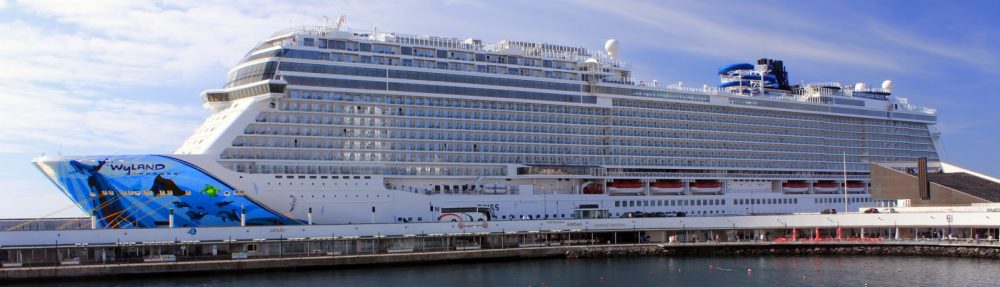
Two cruise companies affected by sudden upsets in the Caribbean and Bahamas region are slowly regaining their footing.

For Norwegian Cruise Line Holdings (NCLH), the big blow was the abrupt end to U.S. cruises to Cuba in June. NCLH had bet heavily on Cuba’s reopening, scheduling not only short cruises on its contemporary Norwegian Cruise Line brand but longer visits by its two premium brands, Oceania Cruises and Regent Seven Seas Cruises.

As detailed in a conference call with investors, the U.S. government decision to shutter Cuba with no advance warning hit NCLH third-quarter earnings big-time.

“Given the suddenness of the termination and the lack of lead time we had to make any meaningful fleet redeployment changes, the third quarter bears the largest negative earnings impact from the Cuba travel ban,” said Frank Del Rio, the company’s CEO.

The hit was more than $47 million.

Overnight, high yielding routes to Cuba for the Norwegian brand turned into low-yielding routes to the Bahamas. And several months later came Hurricane Dorian, which made its own dent in NCLH’s earnings through cancelled sailings and reworked itineraries.

Del Rio said Norwegian plans to redeploy half of its Bahamas capacity to higher-yielding areas such as Alaska, the eastern Mediterranean and Asia, and will slowly get out from under the Cuba aftermath.

Even more impacted by Dorian than Norwegian was Bahamas Paradise Cruise Line, whose only destination is the Bahamas.

It suspended its two-day sailings to Grand Bahama for most of September, filling in the time by providing much-need relief and evacuation services.

The silver lining, of sorts, is that Dorian forced Bahamas Paradise into a new market, Nassau, which was not much affected by the storm. It now runs one of its ships from West Palm Beach to Grand Bahama and the other to Nassau.

Bookings for Nassau started slow, said Francis Riley, senior vice president of sales and marketing, but are now on par with those to Grand Bahama. Part of the attraction is the Cruise & Stay program where guest can vacation for two or four nights at one of four Nassau hotels:  Atlantis, The Melia, the Comfort Suites Nassau or the SLS Baha Mar.

Bahamas Paradise has a similar program in place on Grand Bahama with the Lucayan, which has reopened, and the Viva Wyndham, which plans to reopen Dec. 10.

Unlike Norwegian, Bahamas Paradise doesn’t have plans to go elsewhere, and it is busy selling the Bahamas to Canadians and New Yorkers, who have just started getting the frosty temperatures they can look forward to until next spring.