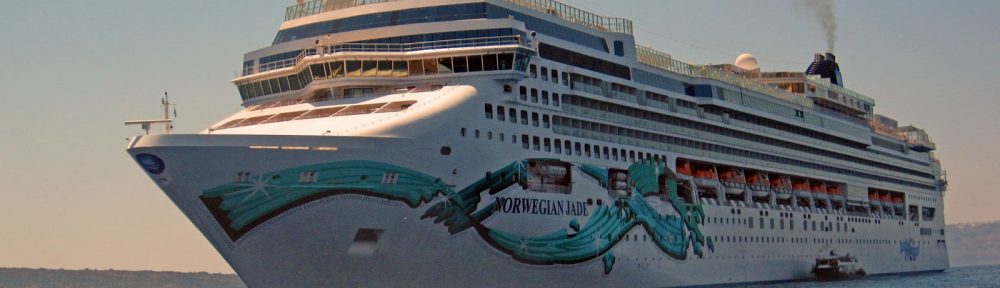
AIDAnova Keel Laid

Image result for aidanova cruise ship
AIDANova has had her Keel Laid at Meyer Werft Germany.

Carnival Corporation marked the official start of construction for a total of seven cruise ships that will be fully powered by liquefied natural gas (LNG) with today’s keel laying of the AIDAnova at Meyer Werft in Germany.

The ship will be delivered to AIDA in late 2018.

n the presence of AIDA President Felix Eichhorn, Bernard Meyer, CEO of Meyer Werft, and Tim Meyer, CEO of Meyer Werft, two trainees named Louisa Tröbner (AIDA Cruises) and Martin de Boer (Meyer Werft) placed the traditional lucky coin under the first of a total of 90 blocks.

AIDA President Felix Eichhorn said: “One of the main tasks AIDA Cruises sets itself is to make cruises sustainable. With AIDAnova and its sister ship, we are sticking to this course with our pioneering work. Thanks to our trailblazing green cruising design, the use of only LNG in the cruise industry will become a reality in 2018.”

Keel Laying

“We thank Carnival Corporation and AIDA Cruises very much for their trust and their pioneering decision to implement LNG technology on board. The corresponding infrastructure is now being developed at numerous ports. Carnival has made a decision benefiting the environment that is highly important for the cruise industry,” added Bernard Meyer, CEO of Meyer Werft.

Arnold Donald, president and CEO of Carnival Corporation, together with Bernard Meyer, CEO Meyer Werft, Michael Thamm, CEO Costa Group and Carnival Asia, David Dingle, Chairman Carnival UK (P&O Cruises UK), Neil Palomba, President of Costa Cruises, and Felix Eichhorn, President of AIDA Cruises, – gave the official “full steam ahead” signal, ringing in a new era of the commercial use of low-emission LNG in cruise travel. The seven LNG ships for cruise brands Carnival Cruise Lines, Costa Cruises, Carnival UK, and AIDA Cruises will be built by Meyer Werft in Papenburg (Germany) and Turku (Finland) and commissioned between 2018 and 2022.

In AIDAnova’s launch season, the ship will offer trips around the Canary islands.

starting in December 2018. Its twin ship with over 180,000 GT and 2,600 staterooms is set to be commissioned in the spring of 2021. Using LNG prevents almost completely

Five dead on Canary Islands cruise ship

Five dead on Canary Islands cruise ship

Footage of the accidentFootage shot from the cruise ship showed the lifeboat in the water

Five crew members have died after a lifeboat they were in fell from a cruise ship docked in the port of Santa Cruz de la Palma in the Canary Islands.

The accident happened on the Majesty, operated by UK-based Thomson Cruises, during a routine safety drill.

Those killed include three Indonesians, a Filipino and a Ghanaian. Three people were also hurt as the boat reportedly fell more than 20m into the sea.

The MS Thomson Majesty is believed to sail under a Maltese flag.

About 2,000 people were on board the cruise ship when the accident occurred around 12:00 GMT on Sunday, local media say.

Two of those injured are said to be Greek, and a third Filipino.

The UK Foreign Office said it was aware of the incident and was “urgently looking into it”.

No passengers were involved, local reports say.

Thomson Cruises said in a statement that it was “aware of an incident involving the ship’s crew on board Thomson Majesty, in La Palma, Canary Islands this afternoon”.

“We are working closely with the ship owners and managers, Louis Cruises, to determine exactly what has happened and provide assistance to those affected,” the statement added.

All of our thoughts and prays are with the crews family and loved ones, and the remaining crew who will be devastated by this accident. All Thomson’s  Cruise ships should be safety checked before any sailings, and the ship owners Louis Cruise need to step up to the plate and compensate the family of the crew members, and pay for some needed repairs and up-dates.

Tui claims to have outperformed the market in January

Tui claims to have outperformed the market in January

Tui Travel claims to have “significantly outperformed” the market in the peak January selling period for summer holidays.

Sales volumes are now ahead of the company’s 9% capacity reduction, and is 35% sold to date, described as in line with the previous year.

Capacity has been cut for North Africa and the Eastern Mediterranean, with some of this reduction offset by increased capacity in the Canary Islands.

“Turn of year trading has been ahead of expectations and we are particularly pleased with our online performance,” Tui said.

The average selling price is up 8%, reflecting cost base inflation of approximately 5% and the continued increase in differentiated content.

“We have continued to increase the proportion of holidays sold online with 42% booked online for summer 2012, up six percentage points versus the prior year.”

All inclusive bookings are up by seven percentage points to make up 55% of bookings to date for the first summer that First Choice becomes exclusively all inclusive.

The ‘all in’ holiday concept is proving attractive, particularly in the current economic environment.

“As we continue to expand our differentiated offering, which traditionally books earlier, these products have accounted for 64% of bookings to date, up seven percentage points on the prior year,” Tui said.

UK bookings for this winter have improved since early December, with volumes continuing to move towards a capacity reduction of 9% and there is less left to sell against this time last year.

The booked load factor is currently 71%, described as being broadly in line with last year.

“We are pleased with our price performance, with average selling prices up 5% in light of inflationary cost increases and increased differentiated sales,” Tui said.

“Demand for differentiated products continues to be strong with volumes up 15%. These products now account for 62% of our sales, up 12 percentage points on prior year.

“As anticipated, North Africa remains challenging with volumes down 23%. Across our programme strong demand in the lates booking period has resulted in improved load factors for November, December and January.”