Sticking to lockdown washing routines could cut Britain’s long-term carbon footprint

  • Changes to our daily routines as a result of lockdown could shrink the nation’s carbon footprint by reducing pressure on energy demand at peak times
  • EDF estimates that if a third of households continue to use their dishwasher and washing machines at non-peak times, annual CO2 emissions could reduce by half a million tonnes – equivalent to more than 750,000 cars switching to electric vehicles
  • 8 in 10 Brits keen to see lifestyle changes that have had a positive impact on the planet continue post-lockdown

Changes to our daily household routines could have a long-term positive impact on our carbon footprint – as data from EDF reveals households continuing to take care of chores throughout the day could reduce the need for fossil-fuelled generation at peak times once industries power up again.

Historically, households created additional demand for energy at peak times, typically between 4 and 7pm, as people returned home from work and started to tackle these day-to-day chores at the same time. However, since lockdown began, demand for energy throughout the day has smoothed.

The data, released as part of work by the low carbon electricity supplier to assess the impact of lockdown routines on energy efficiency, estimates that if just over a third of households continue to use their dishwasher and washing machines at non-peak times in the future, as they have been doing during the lockdown, annual CO2 emissions could reduce by half a million tonnes – the equivalent to more than 750,000 cars switching to electric vehicles (EVs)*.

The announcement comes as consumer research** undertaken by EDF reveals 8 in 10 of us are keen to see environmentally-friendly lifestyle changes continue after restrictions are lifted.

The study of 2,000 UK residents found that lockdown restrictions have caused the nation to reassess the impact of their daily habits on the environment, with 40% planning to take steps to reduce their carbon footprint post-lockdown, rising to 51% of those under the age of 34. The most popular steps were:

  • Walking more (67%)
  • Recycling more (52%)
  • Purchasing more locally produced products (47%)
  • Using the car less (46%)
  • Unplugging electronic devices when not in use (37%)

The reduced pollution levels resulting from dramatically fewer vehicles on the road have also sparked an increased interest in EVs, with 1 in 5 (19%) more likely to consider switching to a low emission EV in the future.

78% of people believe we can all do more to reduce our carbon footprint once restrictions are lifted. However, despite the potential impact on CO2 emissions, less than a third (31%) are aware that the time of day they do household chores, such as washing dishes and laundry, impacts their carbon footprint.

There is a strong demand for more advice on living greener, with nearly two thirds (62%) wanting information about how to reduce their carbon footprint.

Virgin Takes Delivery of Scarlet Lady and Goes Carbon Neutral

Scarlet Lady
Virgin Voyages Scarlet Lady.

Virgin Voyages announced today that the Scarlet Lady has officially reached completion as the new brand took delivery.

On the heels of this celebratory occasion, Virgin Voyages welcomes Scarlet Lady with an approach that takes immediate action to address climate change, according to a company statement.

Not only has the brand designed its fleet of ships to the latest energy-efficiency standards with state-of-the-art equipment, but Virgin Voyages is also offsetting its direct climate change emissions through the purchase of carbon offsets.

This commitment makes the brand the first cruise line to become carbon-neutral for its direct emissions footprint from its first day of commercial operation. The projects that will be supported by Scarlet Lady will meet high-quality, internationally-recognized verification standards, including The Gold Standard and the Verified Carbon Standard.

“It’s wonderful to welcome Scarlet Lady today,” says Virgin Group Founder Sir Richard Branson. “I’m so proud that as we start this exciting journey, we also bring to life Virgin Voyages’ commitment to preserving the ocean and the first of many steps towards a net-zero carbon future.”

“The ocean is our home, and we are on a mission to protect it. The single biggest threat facing our ocean is climate change, and we want to be part of the solution,” said Tom McAlpin, CEO and President of Virgin Voyages. “We are committed to pioneering new technologies onboard and working with our industry peers to advance research and development for zero-carbon fuels.”

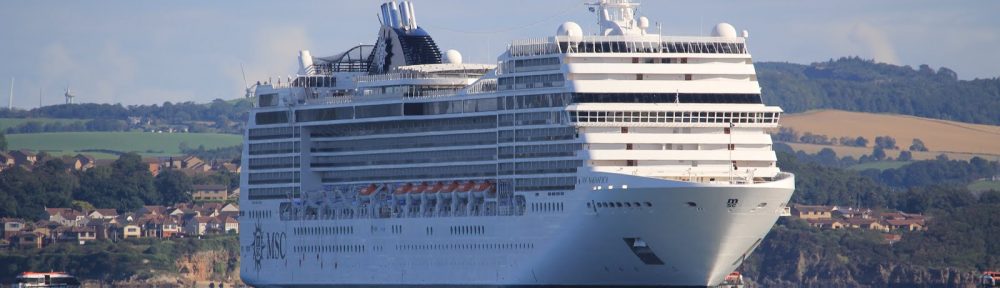
MSC Marine Ops Goes Carbon Neutral in Industry First

MSC Armonia

MSC Cruises today announced its commitment to become the world’s first fully carbon neutral major global cruise line, according to a press release.

MSC said it will offset all direct carbon dioxide (CO2) emissions from its fleet marine operations through a blend of carbon offset projects developed according to the highest standards by leading international entities that take immediate action on greenhouse gas emissions. All costs for the offsets as well as any other associated items will be covered directly and in full by MSC, the company said, in a prepared statement. 

Pierfrancesco Vago, MSC Cruises Executive Chairman said: “Our focus on innovation since we built our first cruise ships only in 2003, ensures that we have one of the most modern fleets at sea as well as one of the highest environmentally performing. And, thanks to our long-term planning, this will allow us to already achieve a fleet-wide 29 per cent reduction in carbon intensity (rate) by 2024 vs. 2008, on our way to meet the 40 per cent reduction target set for 2030.

“Additionally, last week we announced that the LNG-powered fuel cells PACBOAT project will be hosted onboard MSC Europa – the first of five LNG-powered cruise ships that are due to join our fleet. This is not only a world-first for a technology that promises to be most efficient for high-power maritime operations but also yet another concrete example of our firm commitment to partner and support the accelerated development of the next-generation technologies that will lead us and this industry to zero-emissions ship operations.”

“As we recognize that today’s even most advanced maritime environmental technology alone is insufficient to immediately reach carbon neutrality, the further commitment we make today ensures that our fleet makes no negative contribution to climate change, starting January 1, 2020.”

Vago added: “We will work with leading providers in carbon credits able to offset CO2 emissions with the highest level of integrity. Our vision is to also invest in projects that provide quantifiable community benefits, protect the environment and support the UN Sustainable Development Goals.”

In particular, MSC said it aims to develop a carbon offset portfolio that incorporates projects which protect and restore ocean and coastal habitats while also absorbing more CO2 than currently occurs. 

Vago concluded: “Blue carbon offsets will be a specific area of focus of our commitment to ensure carbon neutrality with immediate effect. We will put our people and our resources to work to also support the development of the specific type of projects, and the enabling certification processes, that can generate this innovative form of offsets which directly benefit the oceans and communities that live by the sea. As more of these become available, we will steadily increase our reliance on them as an additional area of focus within our overall long-term commitment to achieving zero-emissions operations.”