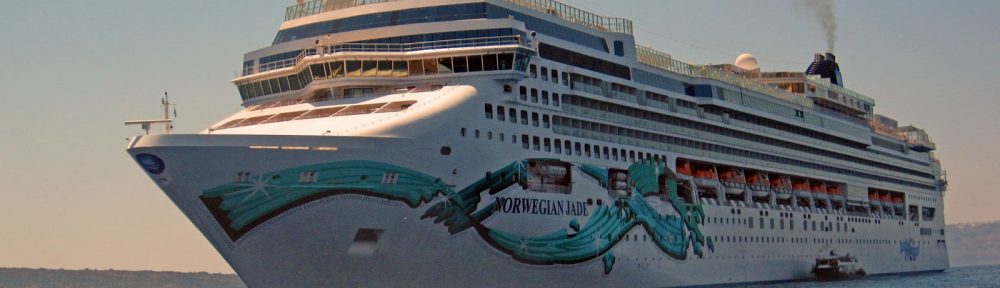
The Freedom of Cruise Ship Redeployment

The Freedom of Cruise Ship Redeployment
PHOTO: The wake behind Carnival Cruise Line’s Carnival Vista. (photo by Mark Leppert)

When it was uncertain that Cuba would remain open to roundtrip cruises from the United States, it was never a worry that the ships on the route would be incapable of redeployment.

Executives like Frank Del Rio, president and chief executive officer for Norwegian Cruise Line Holdings Ltd., repeat that in troubled times, cruise ships can go anywhere.

It’s true. A ship originally slated for the Caribbean can easily end up in Alaska or Europe seasonally, but often that’s the plan all along.

What may not be anticipated are geopolitical tensions or fears of terrorism that warrant ships go elsewhere. The latter has been the reason cruise lines have shied away from Turkey in the Mediterranean, for example.

More recently, cruise itineraries from China have stayed clear of South Korea due to heated relations between the two countries.

It was looking for awhile like the Trump administration would cease permissions for cruises to Cuba, but thankfully Norwegian Cruise Line and Royal Caribbean International were allowed to continue and Carnival Cruise Line has since been able to make its inaugural run as well.

If not, the Norwegian Sky, Empress of the Seas and Carnival Paradise, respectively, would just have had to cruise to lands beyond, likely still in the Caribbean.
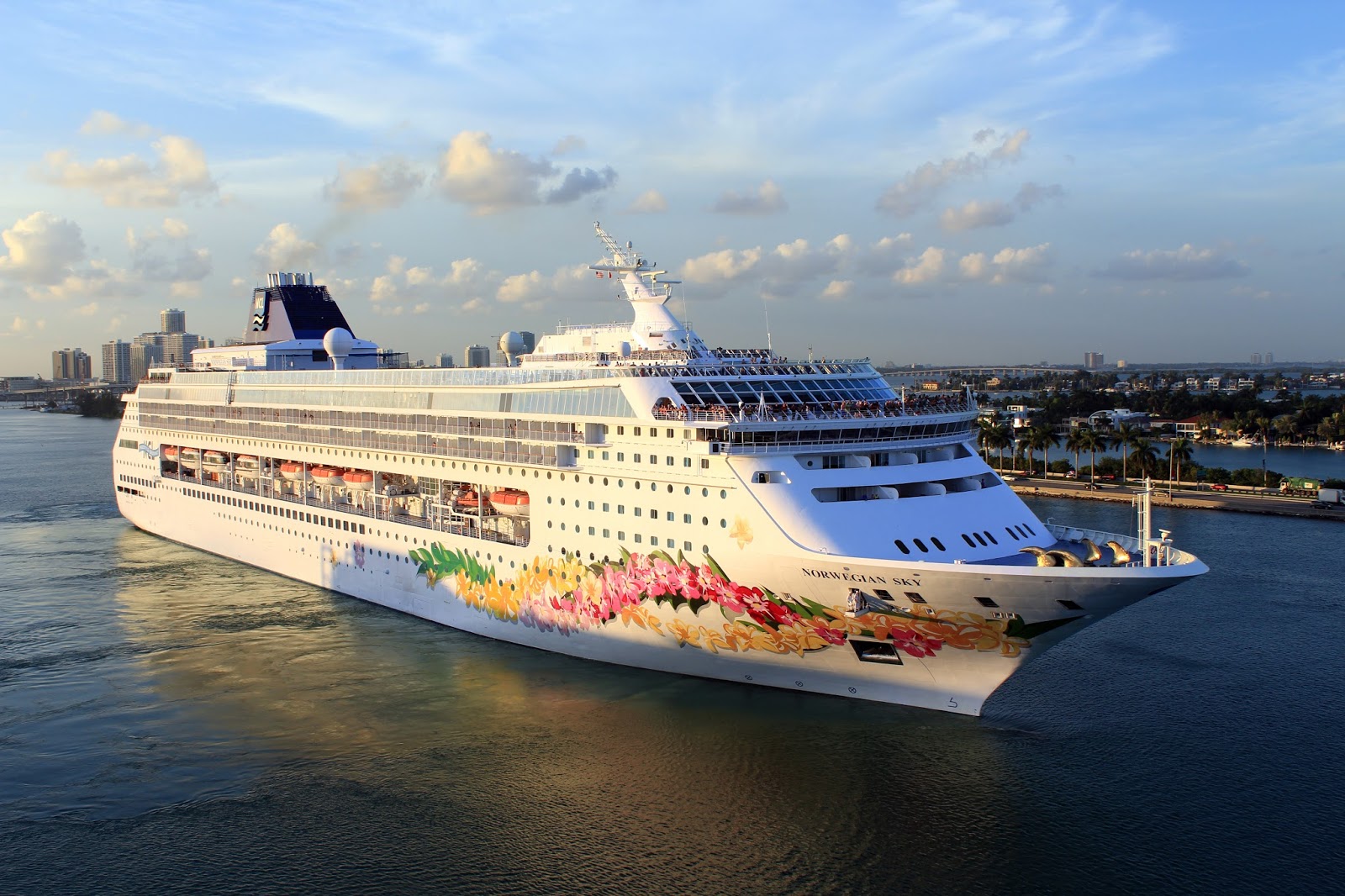

Photo Credit Dave Jones~Norwegian Sky leaving Miami

In the Caribbean and the Mediterranean, there are plenty of alternative ports to go to when some become off limits, but such is not always the case. For the Chinese cruise market, the loss of South Korea as a destination has limited where local ships can head, particularly on itineraries with short durations.

In those cases, Japan is an option, but port capacity saturation is then a concern.

Once a booming market, cruise lines may have to rethink their long-term Chinese potential. Princess Cruises’ Majestic Princess—partially for this reason, as well as consideration of other growth markets—has opted to no longer dedicate itself to China year-round as originally planned. It also now has intentions for Australia-based cruising in 2018 and 2019.

When a cruise ship is built generically for any market, it is easy to deploy anywhere in the world, but when it is purpose-built like the Majestic, it is more challenging to take away.

Whether or not the ship will see any sort of redesign prior to its Australian deployment is still to be determined.

Still, the vast majority of cruise ships are geared towards the American market and can go pretty much anywhere in the world, catering to our sensibilities just fine.

As ships have aged out of their original brands, they have often gone on to later service international clients for different companies. However, now foreign markets are demanding new-builds as much as the American one, leaving older ships somewhat in limbo.

It’s easiest for the most popular fleets to deploy wherever they need to and still have a following, but mature vessels have a harder time of either competing in high-traffic regions or being handed down to other markets.

That’s why it’s always crucial for the cruise industry to be developing new port and destination options for the wide variety of international vessels to service. As long as they exist, there are plenty of places to go around for them all.

Having movable assets is a freedom that most shoreside industries don’t have. Even with its occasional challenges, including tracking complex global conditions, the international cruise fleet has it good compared to, say, a fixed retail shop with poor sales in a failing regional neighborhood.

Safety board: Loose engine bolts led to Carnival Liberty fire

Image result for carnival liberty
Carnival Liberty

The National Transportation Safety Board issued a final report on the September 2015 fire aboard the Carnival Liberty, pinning the blame on engine bolts that had been insufficiently tightened.

The fire occurred while the Carnival Cruise Line ship was docked in Charlotte Amalie in the U.S. Virgin Islands on Sept. 7. It led to a precautionary evacuation of the ship.

In its report, the board said it found loose bolts on a flange that held a fuel intake line to one of the diesel generators, probably because of improper tightening during maintenance and pipe vibration over time. That triggered an uncontrolled fuel spray from the connection onto a hot part of the engine.

Because the ship was in port and many passengers were ashore, there was confusion in tracking how many people were evacuated.

The report recommends that Carnival better train the crew in the use of the water-based fire extinguishing gear in the engine room. It also said Carnival should establish or improve its procedures for accounting for persons aboard in a mass evacuation in port.

Carnival, Holland America will sail to Cuba as planned

Image result for Carnival cruise in cuba
Carnival Fathom in Havana

Carnival Corp. said it understands the policy changes on Cuba that President Trump will announce in Miami today do not include any changes for cruises.

In a statement, Carnival said it is “pleased” that its ships will continue to sail to Cuba.

Carnival Cruise Line plans sailings from Tampa to Cuba starting later this month and Holland America Line recently announced plans to visit Cuba in the fall.

Trump is expected to end the ability of travelers to “self-certify” that they comply with rules for traveling to Cuba, which became the practice last year under President Obama.

“We will review the extent of the tightening of the travel rules, but our guests have already been traveling under the 12 approved forms of travel to Cuba since we undertook our historic first cruise to Cuba more than a year ago,” a Carnival Corp. statement said.

The first cruise to Cuba from a U.S. port in decades was by Carnival’s Fathom brand, which has since returned its single ship to P&O Cruises.

“Our experience in Cuba this past year has been extremely positive,” Carnival Corp. said. It also said other Carnival Corp. brands have applied to travel to Cuba.

Costa included Cuba on some itineraries from 1995 to 1998, before it was purchased by Carnival Corp. from its Italian owners.

Other cruise lines chimed in after Trump finished giving his speech in Miami.

“Based on the information shared today, we are very pleased to learn the news that cruises to Cuba will continue under the new guidelines laid out by the administration,” a statement from Norwegian Cruise Line Holdings said.

NCLH operates Norwegian Cruise Line, Oceania Cruises and Regent Seven Seas Cruises, all of which sail to Cuba.

Royal Caribbean Cruises Ltd. also praised the new Cuba policy.

“Royal Caribbean is pleased there is no impact to any of our cruises to Cuba as announced in the new U.S. policy toward Cuba today,” said a statement from RCCL, whose Royal Caribbean International and Azamara Club Cruises brands make stops in Cuba.

Although cruise lines appear to have emerged unscathed from the Cuba policy review, the exact impact will depend on rule revisions forthcoming from the Treasury Department and other U.S. agencies.

“We will continue to review the full and exact scope of the policy changes and any updated regulations during the implementation period which may take several months,” RCCL said.

Both cruise companies emphasized that their shore excursion programs were already in compliance with Treasury regulations governing Cuba tourism.

Both also said that their cruises with Cuba in the itinerary are popular. NCLH said it has 70,000 bookings for future cruises that include Cuba. “We are delighted our guests will continue to have the opportunity to experience the wonderful culture and incredible history of Cuba.” the statement said.