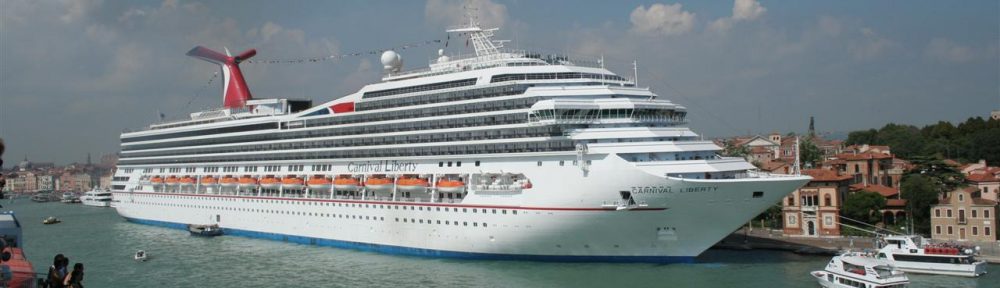
Canada announces year-long ban of most cruise ships (updated)

In a major blow to the Alaska and Canada/New England cruise markets, Canada announced a year-long ban on cruise ships.

This applies to ships carrying more than 100 people through Feb. 28, 2022, and means a stunning double-season hiatus in some of cruising’s key destinations following the cancellation of Alaska and Canada/New England cruising in 2020.

Great Lakes, St. Lawrence and Canadian Arctic expedition cruises are also impacted.

Doubts about a 2021 Alaska season had been growing but the duration of Canada’s extension still came as a shock to many. 

Minister of Transport Omar Alghabra issued the new guidance with the view to keeping Canadians and transportation workers safe and healthy as top priorities.

The risk to health care systems

The government said cruise vessels in Canadian waters pose a risk to health care systems, adding it will continue to evaluate the situation and make changes as necessary to ensure the health and safety of Canadians.

Orders could be rescinded if situation changes

Should the COVID-19 pandemic sufficiently improve to allow the resumption of these activities, the minister of transport has the ability to rescind the interim orders.

‘As Canadians continue to do their part to reduce the spread of COVID-19, our government continues to work hard to ensure Canada’s transportation system remains safe. Temporary prohibitions to cruise vessels and pleasure craft are essential to continue to protect the most vulnerable among our communities and avoid overwhelming our health care systems. This is the right and responsible thing to do,’ Alghabra said.

Advice against Canadians taking cruises

Canada also reiterated its advice to citizens and permanent residents to avoid all travel on cruise ships outside Canada until further notice.

Arctic coastal waters

In addition, adventure-seeking pleasure craft remains prohibited from entering Arctic waters, and passenger vessels carrying more than 12 people are still prohibited from entering Arctic coastal waters, including Nunatsiavut, Nunavik and the Labrador Coast.

There is no national ban for smaller cruise ships certified to carry 100 or fewer people. They must follow provincial, territorial, local and regional health authority protocols for timelines and processes around their operations.

Transport Canada said essential passenger vessels, such as ferries and water taxis, should continue to follow local public health guidance and protocols, and follow mitigation measures to reduce the spread of COVID-19 and prevent future outbreaks.

Carnival Corp. looking at options to preserve part of Alaska season

Carnival Corp. & plc expressed its disappointment, noting that if the extension is not amended as pandemic conditions improve, or through action by US authorities, the company’s brands will have to cancel their Alaska and Canada/New England seasons.

‘Given the unexpected length of the order, it will take us some time to assess whether there are any options to preserve a portion of the 2021 Alaska season,’ the company said in a statement. ‘We will be consulting authorities in both the US and Canada before we take any additional action.’

Carnival added the cruise industry has demonstrated its commitment to health and safety by developing extensive protocols in consultation with a panel of world-class medical experts, to be implemented when service resumes.

‘In addition, we recognize our importance to the economic health of many Alaskan communities and will continue to pursue any option which might permit safe operation of any portion of the season,’ the company continued.

Denali, Fairbanks, Kenai lodges will operate

Though Carnival Corp.’s cruise program is uncertain, the company committed to operating its Denali, Fairbanks and Kenai lodges this summer to support land vacations in Alaska’s interior and help fellow Alaska businesses and the thousands of people who rely on the tourism industry.

‘While this is beyond our control, we remain committed to operating any portion of our Alaska season and we are hopeful that positive progress relative to the pandemic accelerates to the point that the Canadian transport minister will rescind the interim order and allow cruise vacations to resume in 2021,’ Carnival said.

NCLH isn’t cancelling cruises visiting Canada yet

Meanwhile, Norwegian Cruise Line Holdings is ‘currently studying the order and its implications’ and has not cancelled cruises that visit Canadian ports.

‘We are currently exploring several initiatives that may allow such cruises to continue, especially for the important Alaska season,’ the company said. ‘Given the fluidity of the current environment, we will also continue to work with the Canadian government to amend their current suspension.’ 

Royal Caribbean Group

Royal Caribbean Group said only: ‘We understand and appreciate the Canadian government’s focus on combatting COVID-19. The health and safety of our guests, crew and communities we visit is our top priority. Royal Caribbean Group is ready to work with health and transportation officials on a path forward to address the impact on multiple sectors of the Canadian economy.

‘We will be reaching out to our guests and travel partners with more information on future plans.’

Great Lakes reaction

Reacting to the news, Stephen Burnett, executive director of The Great Lakes Cruise Association, said: ‘We respect this decision by Transport Canada on behalf of the federal government. The Great Lakes Cruise Association is working closely with the Association of Canadian Port Authorities’ Cruise Committee who have launched a historic initiative that brings together all ports and regional authorities, regional associations and other cruise ports from across Canada as one voice engaged in meaningful dialogue and to provide input into the government of Canada for the eventual resumption of cruise activity in Canada.

‘Together our industry is optimistic that, when the time is right and it is safe to do so, the cruise will be back.  At that point, we will look forward to welcoming cruise lines, their guests and crew back to our port cities and local communities.’

Vancouver and economic impact

The Port of Vancouver concurred, voicing its support for the direction of Transport Canada and the Public Health Agency of Canada while adding it will work together with other Canadian cruise ports through the Association of Canadian Port Authorities to develop ‘consistent national safety protocols for the resumption of cruising across Canada as soon as conditions allow.’

The port added that Vancouver’s cruise industry will be critical to the region’s recovery. Cruising stimulates $3.17m indirect economic activity for each ship that calls at Canada Place and $2.2bn of total economic impact.

How Cruise the Saint Lawrence will use the pause

During this pause, Cruise the Saint Lawrence said it will push forward with the development of a Health Safety Plan as well as a Sustainable Development Strategy to ensure that all sectoral players enjoy a safe, profitable and sustainable relaunch in 2022.

‘The outlook for the resumption of activities in 2022 appears positive,’ the association continued, ‘with 200 port bookings to date, representing an estimated 300,000 passenger-days for our member ports of call, significant economic benefits for the tourism industry as a whole and 100,000 overnight stays for hotels in Québec and Montréal.’

According to Tony Boemi, president of Cruise the Saint Lawrence, ‘This latest pause will enable us to continue work on innovative passenger and ship greeting initiatives. In this regard, the implementation of our Sustainable Development Strategy has begun. This strategy is designed to help us rethink how we do what we do, enhance our contribution to socioeconomic vitality in Québec and preserve local ecosystems.’
Rapid COVID-19 Testing Likely to Be Part of Resumption of Cruising

Can the cruise industry really recover from coronavirus?
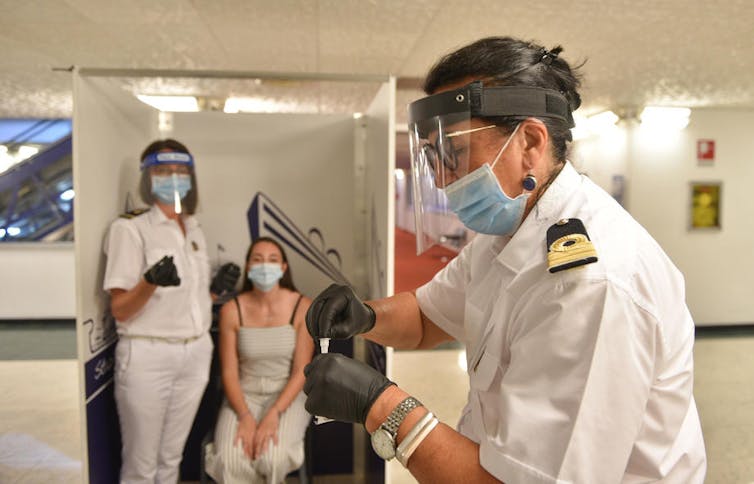
Swab test before boarding.
Rapid COVID-19 testing is emerging as a likely strategy, as lines look to tweak health and safety protocols in order to resume sailings.

Speaking to investors on its second-quarter earnings call, Royal Caribbean president and CEO Michael Bayley stated that rapid testing for COVID-19 is something the line is seriously considering for its brands, which include Azamara, Celebrity, Royal Caribbean, and ultra-luxury line Silversea.

“Particularly as it relates to the Caribbean…testing is very much at the front of how people are thinking of protocols for returning,” Bayley said.

A number of Caribbean nations already require travellers to obtain COVID-19 negative testing — either rapid, molecular or PCR — prior to arrival; measures that will make rapid testing almost a necessity for cruising to resume in the region. This includes countries like Barbados, Turks & Caicos, and Dominica.

Also included are overseas territories like the U.S. Virgin Islands, which

of a COVID-negative test for visitors residing in states that have higher than 10 per cent positivity rate

according to data supplied

by Johns Hopkins University. As of this writing, that includes the states of Alabama, Arizona, Arkansas, Florida, Georgia, Idaho, Kansas, Mississippi, Missouri, Nevada, South Carolina Texas, and Washington.

Rapid Testing ” Would Make a Huge Difference”

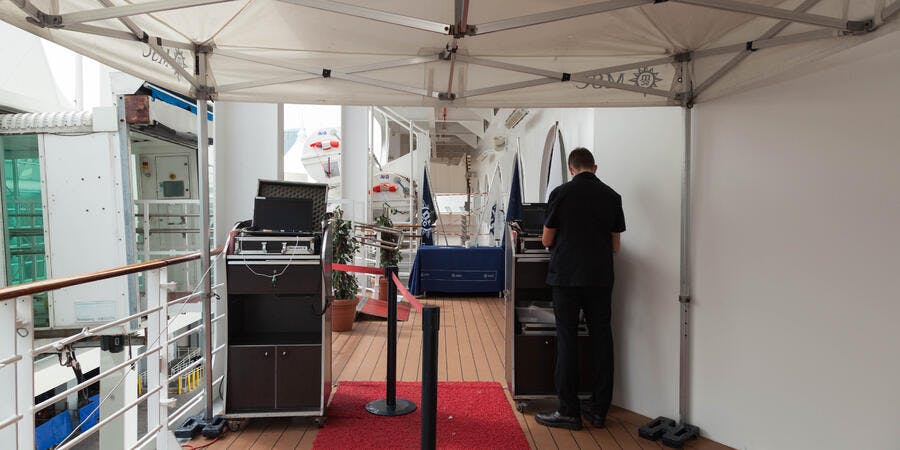
Boarding Area on MSC (Photo: Cruise Critic)

Other cruise lines also see rapid COVID testing as a way for the cruise industry to move forward.

In announcing its recent limited restart of cruising in the Mediterranean for Schengen Zone (European Union) residents, MSC Cruises stated that COVID-19 testing will be a mandatory part of the embarkation process. Under the new protocols, passengers will be given a temperature check, a health questionnaire and a COVID-19 swab test at embarkation.

Passengers who test positive from either the swab test or who or display symptoms will be denied boarding.

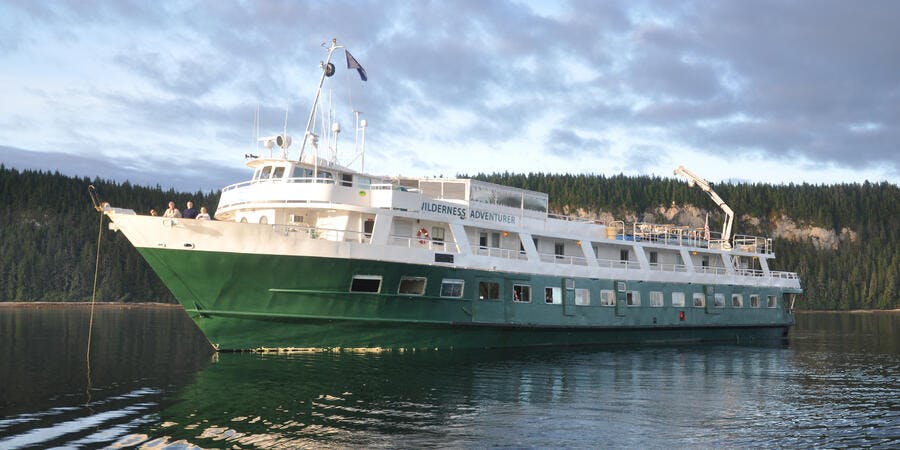
Rapid testing could have prevented the situation that UnCruise Adventures found itself in, as the small ship line attempted to restart cruising in Alaska.

In that instance, a passenger who initially tested negative for COVID-19 72 hours prior ended up testing positive when tested at Juneau Airport. Those results took two days to come back, by which time the passenger was already on board and at sea. The ship was forced to turn around, with other passengers quarantined.

On August 13, UnCruise revealed that there was no spread of COVID-19 aboard Wilderness Adventurer, with the passenger in question subsequently testing negative for the virus.

Wilderness Adventurer
“We know that rapid testing is out there but it’s not typically available for companies of our size,” UnCruise president and CEO Dan Blanchard media on a call during the afternoon of August 13. “I’m told the test kits are available, but the analyzers are not. It’s probably not too long before rapid testing is widely available, but of course, it has to be effective rapid testing.”

While noting that no test for COVID-19 is currently one hundred per cent accurate, Blanchard says the high degree of reliability of most rapid tests, combined with the relatively low wait time is crucial to restarting tourism and the economy and helping to slow the spread of the virus.

“Rapid testing, in my mind, would make a huge difference,” he added. “If we’d had a rapid tester at the Juneau airport and it had a four-hour return on it, that would make the difference between boarding that guest and not boarding that guest.”

For his part, Blanchard is adamant that the positive diagnosis obtained in Juneau for the passenger in question has to be taken seriously, regardless of the subsequent negative test.

“What we’re going forward with, as far as the rumour mill goes, we are letting that false-positive sit to the side because we believe we have to follow science and not public opinion,” he said. Blanchard noted that once news of the infection broke, “It just killed us.”

Earlier at the start of the global health crisis, Blanchard’s UnCruise and a handful of other local U.S. operators formed a coalition to advocate for the cruise industry within the United States. Blanchard says that focus is now directed at pressing government officials for better access to rapid testing equipment.

“We are in constant contact with our Senators in Alaska and congresspeople with Alaska and Washington, so they are aware of the situation,” said Blanchard.  “They are aware of the need for a nationwide rapid-testing program.”

What Is Rapid COVID-19 Testing?

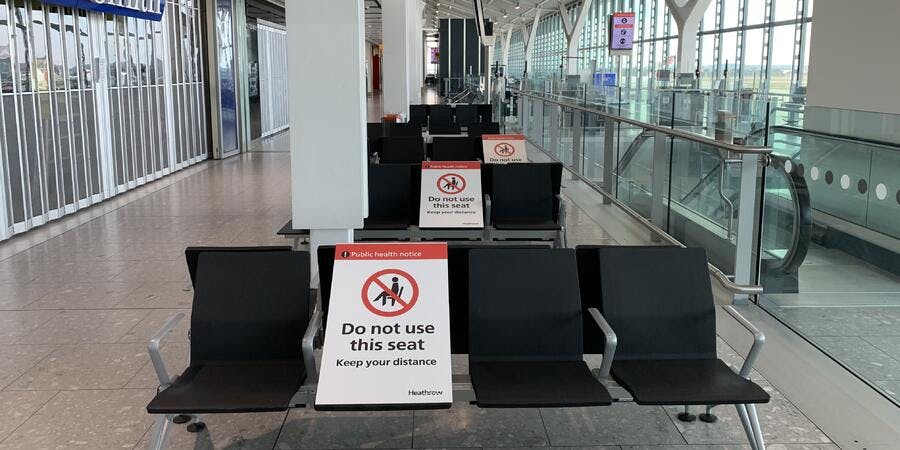
Public Health Notice in London's Heathrow Airport (Photo: Adam Coulter/Cruise Critic)

While rare at first (and still hard to get in some areas), COVID-19 testing is slowly becoming a fact of life in specific instances in the United States and around the world.

In the United States, some medical procedures require a COVID-19 test, while students returning to college are often being required to submit to frequent tests as a pre-requisite before living in dorms. Some essential workers, too, have taken regular COVID-19 tests throughout the pandemic, while some states with low virus rates, such as Massachusetts and Maine, require negative tests for entry.

But many of those tests still have lagging return times.

“There’s clearly a need for more good-quality molecular testing, especially rapid handheld diagnostics,” Sergio Carmona, chief access officer with Geneva’s Foundation for Innovative New Diagnostics (FIND),

told Chemical and Engineering News

this month.

The definition of a rapid point-of-care test, according to World Health Organization (WHO) guidelines issued on August 5, mandates that results should be delivered in under 40 minutes and must have a true negative rate of at least 97 per cent. A test should cost less than $20, and machines should be priced at under $3,000.

Several companies have already developed rapid testing machines with these exact specifications. San Diego-based Mesa Biotech’s Accula system provides test results in roughly half an hour, and the device only costs a few hundred dollars, with cartridges priced around $20. Nearly 2,000 of the devices are currently in use, with more on the way.

Because these are point-of-care tests, results are delivered on-location, with no need to send testing away to local laboratories.

There are numerous other manufacturers around the world that have either developed or are developing rapid testing devices. The implications of these reach far beyond cruising’s sphere; a mining company in Canada recently announced it would begin utilizing the devices to test workers, while the

UK government has revealed

it will roll out rapid COVID-19 testing throughout hospitals, care homes and labs beginning this month.

The devices selected by the UK can also detect other winter viruses like the flu and respiratory syncytial virus (RSV), and do not require a trained health professional to operate them.

As these rapid point-of-care tests increase in availability, the likelihood of them being used in airports, cruise ports, and other travel-related industries increases dramatically.

Cruise Critic Members Supportive

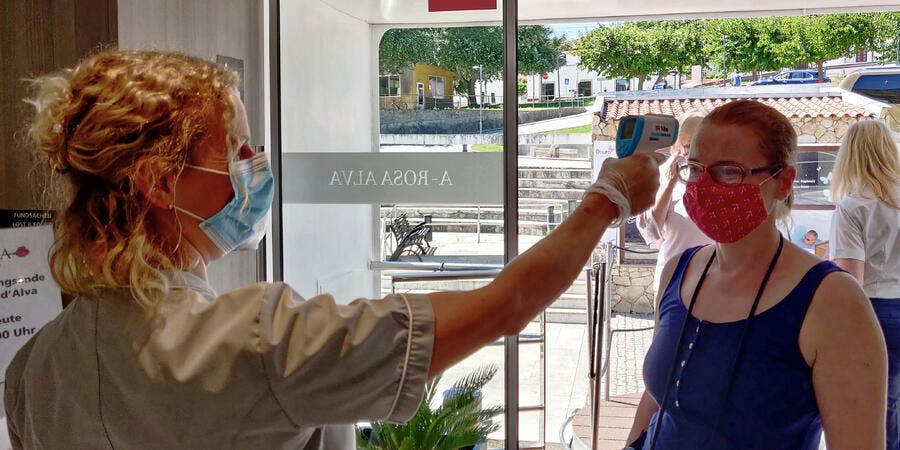
Temperature check on A-ROSA Alva (Photo: Franz Neumeier)

Cruise Critic members are overwhelmingly supportive of rapid-COVID 19 testings as a condition of embarkation.

In an informal poll started by member molly361 on the Royal Caribbean board, 84.4 per cent of the 141 respondents stated they would support taking a rapid COVID-19 test in order to cruise. A total of 10.64 per cent of respondents said they would not concede to a test, while 4.96 per cent were undecided.

“I really had not thought about COVID testing,” writes molly361. ” I was hung up on not wanting to wear a mask on vacation.”

“Why would anyone object to a COVID test,” writes compman9. “What possible harm can a check if you have a deadly disease be objectionable?”

“No problem taking a test, but I think other steps would also be necessary since the test is only one part of the story,” writes yogimax.

Rapid Testing Not Set In Stone

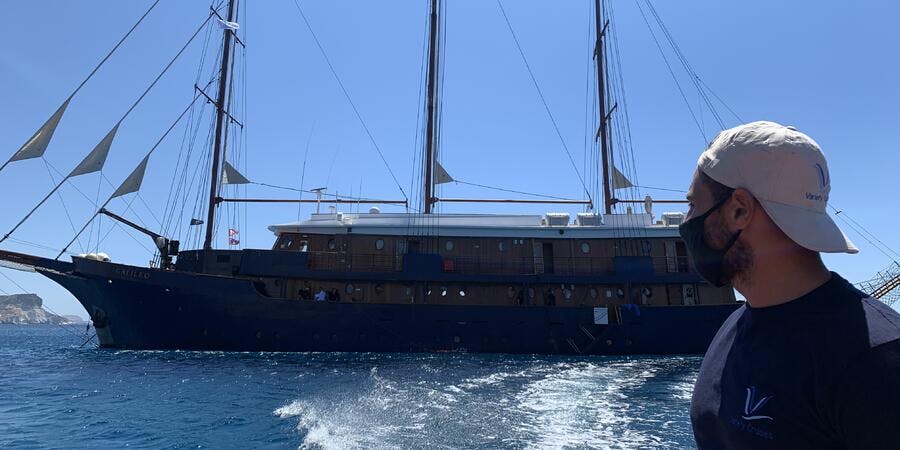
Variety Cruises' Galileo in Greece (Photo: Adam Coulter/Cruise Critic)

Royal Caribbean’s Bayley was quick to note that firm health and safety protocols requiring the use of rapid COVID-19 testing as a condition of sailing have not yet been set in stone but again reiterated that for certain destinations its usage would make sense.

“Testing is part of the thinking, but we have not yet reached a point in our protocols where we’re ready to publish and release for discussion,” concluded Bayley. “Discussions are underway. We have a degree of confidence in the Healthy Sail panel that we’ve formed and all of our protocols are under review with the panel.”

If implemented, rapid COVID-19 tests would still be used in conjunction with other health and safety measures, like masks and social distancing. Royal Caribbean Chairman and CEO Richard Fain have previously stated that masks will most likely play a role in cruising’s immediate return to service.

“One of the things the CDC (U.S. Centers for Disease Control and Prevention) has emphasized is the simple solution of people wearing masks would make a huge difference,” Fain said during a coffee chat for travel advisors with Vicki Freed, senior vice president of Sales, Trade Support and Service, on July 15. ” It’s remarkable how effective it (masks) can be. And it’s very simple. I now have to add, ‘Wear the Mask.'”

With long waits for new builds, current ships get new cabins

Image result for cruise ship renovations

MS Enchantment of the Seas refurbishment/lengthening in 2005

By Tom Stieghorst |Jul 30, 2018.

Ship renovations are big business and getting bigger as cruise lines face long waits at shipyards to build new vessels.

Celebrity Cruises recently announced it will spend $500 million, up from an original target of $400 million, to modernize its fleet and harmonize it with the new class of ships coming, beginning with the Celebrity Edge.

The Edge is coming in November. There are three more copies coming in 2020, 2021 and 2022. So there’s no lack of new capacity for Celebrity. But if it is interested in adding more, getting space at a shipyard is increasingly competitive: major slots already being booked into 2027.

Likewise, at sister-brand Royal Caribbean International, there are newbuilds lined up, starting with the Spectrum of the Seas in 2019. But like Celebrity, Royal is also on a renovation tear. It has budgeted $900 million to upgrade 10 ships over the next four years, but it wouldn’t be surprising if the end amount of its Royal Amplified program is closer to $1 billion.

The first of those ships, the Independence of the Seas, received a total of 107 new cabins in the process of its renovation, which ended up costing Royal $110 million. In addition to a big block of cabins added above the gym, Royal squeezed a few more cabins here and thereby converting areas from other users.

For example, Royal got rid of a cigar smoking venue, moved the library into the former cigar lounge and then carved four cabins from the old library space.

The Mariner of the Seas, the next ship to get amped up, got a $120 million makeover for the short cruise market out of Florida, raising its capacity from 3,114 to 3,344 at a drydock in The Bahamas.

By adding cabins during drydock, Royal Caribbean is swelling its overall fleet capacity in an under the radar way. It is also taking advantage of the availability of renovation shipyards around the world, which although busy, are not as busy as the European yards where ships get built from scratch.

Some of the new entrants that are clogging the shipyard order books, such as Viking Ocean Cruises and Virgin Voyages, are not much competition for drydock space because their ships are all either under construction or are too new to need much work.

So look for the established cruise lines to do more quiet capacity expansion as they upgrade their ships along the way.