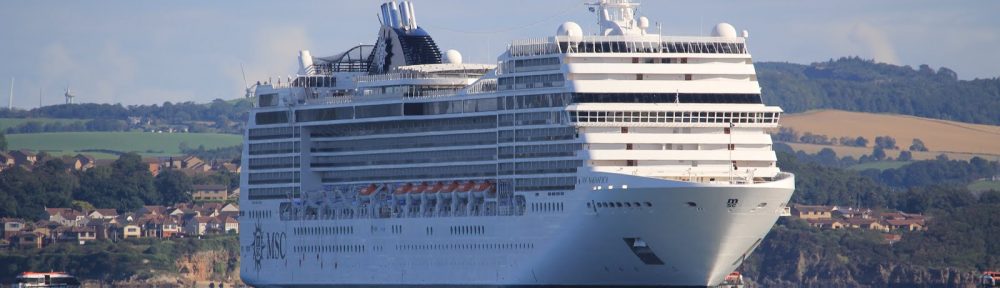
 SOUTHAMPTON, England — Quantum of the Seas is bound for the U.S., departing on a transatlantic trip to New York following a two-night preview cruise here.
About 2,700 travel agents, vendors, media and VIPs were treated to afirst look at the ship, fresh out of the Meyer Werft shipyard where it was under construction for 20 months.
Although Meyer Werft typically delivers early, according to Royal Caribbean Cruises Ltd. Chairman Richard Fain, with Quantum it was just on time. Numerous items are being installed or fine-tuned on the crossing, which is expected to conclude Nov. 10.
The ship’s headline features have been publicized, but the preview cruise group got to see some of the less heralded innovations, and learned a few obscure facts from Fain and other Royal executives.
For example:
• The oversized magenta bear on Quantum’s top deck has been named Felicia by the crew. At a travel agent forum, one agent said she doesn’t know how to explain it to clients and wondered why it was there. “Why not?” Fain replied. “The bear is a little bit ridiculous and certainly unexpected, but isn’t she great?”
 • More than 100 bottles of liquor are suspended from the ceiling over the two robotic bar tenders in the Bionic Bar. The robots reach skyward to access pours for the drinks they make. Bar managers believe they will have to restock only once a day. The two ’bots have been dubbed B1O and N1C by supervisors.
• Hand-washing basins have been installed at the entrances to the Windjammer buffet restaurant, and at several other restaurants around the ship. The basins are not an industry first — Princess Cruises’ Royal Princess and Regal Princess have them — but they are a first for Royal Caribbean. The idea is to keep passengers from spreading any illness, norovirus in particular.
• The poolside video screen was installed to the side after Fain concluded that its initial spot at the end of the pool was too obtrusive. One manager said Fain ordered the change. Fain says he doesn’t remember who suggested the move. “If you like it, I take credit for it,” he said.
• Two candelabras in the Wonderland restaurant feature lighted candles. Fain said Royal Caribbean banned open flames for more than 20 years but recently has made some limited exceptions approved by a panel of top executives. He said there is no Coast Guard rule on flames. “I think the candles add to the atmosphere,” he said.
• Metallic was the scent picked to add a sensory note to the North Star observation gondola. The smell is very subtle. North Star’s ascent to a position 300 feet above the ocean is smooth, gradual and silent, except for the whir of an air changer in the roof. The gondola is designed to automatically shut down and retract if sensors detect an unexpected motion.
 • The pool areas in the Solarium contain several feet of water, deeper than on other Royal ships. They form a series of tiers, leading to a level with hot tubs on either side. A sculpture by Spanish artist Jaume Plensa is a focal point for the cascading pools.
• Jamie’s Italian, the specialty restaurant by British culinary entrepreneur Jamie Oliver, is the first alternative restaurant on a Royal Caribbean ship to have an al fresco dining area. The glass-shielded deck space has five tables for two and six tables for four.
• The Windjammer on Quantum will be the first one fleet-wide to have a section open 24 hours a day. The decision was made in part to accommodate demand anticipated when Quantum moves to China next May.
• The Schooner Bar menu has a retro theme. It features throwback classics such as the Old Fashioned, Sidecar, Brandy Alexander and daiquiri. The printed menu includes vintage photos of memorabilia, such as a typewritten Passenger Landing Card from 1974 and a drinks list with Budweiser priced at $1.35.
• Four key cards malfunctioned. Quantum offers RFID wristbands as an alternative to key cards. “Normally, we would have hundreds of key cards with [magnetic] strips that had become de-magnetized,” Fain said.

 Nearly four years after passage of a comprehensive cruise safety law, the U.S. Coast Guard is getting ready to propose a rule for three of the trickiest provisions in the legislation.
 Wetravel2u's Weblog