DOT orders airlines to pay out refunds

DOT orders airlines to pay out refunds
Photo Credit: Oliver Le Moal/Shutterstock

The Transportation Department on Friday issued an enforcement notice, telling airlines that they remain obligated to pay out refunds for flights that they have cancelled.

The order was prompted by an increase in complaints from ticketed passengers who have been denied refunds, the DOT said. Airlines instead are often giving travel vouchers.

“The longstanding obligation of carriers to provide refunds for flights that carriers cancel or significantly delay does not cease when the flight disruptions are outside of the carrier’s control,” the DOT said in the order. “The focus is not on whether the flight disruptions are within or outside the carrier’s control, but rather on the fact that the cancellation is through no fault of the passenger.”

The unprecedented schedule cuts airlines have made in response to the Covid-19 crisis has left the airline industry with a $35 billion refund liability worldwide, according to a recent IATA estimate.

With airlines already struggling due to enormous losses in revenue, IATA has been lobbying governments to suspend refund requirements. Thus far Canada, Germany, the Netherlands and Colombia have issued favourable rulings for airlines.

Airlines have also acted individually to make refunds more challenging to obtain. Some have stopped processing them entirely while many others are making it difficult for customers to find information on applying for refunds. In the U.S., United recently altered its refund process so that international ticket holders will have to wait a year to get repaid for a flight cancelled by the airline.

In addition, 33 airlines (as of April 3) have unilaterally suspended refunds through the GDSs or ARC’s Interactive Agent Reporting system, forcing travel advisors to deal directly with the carrier.

Meanwhile, the sheer volume of refund transactions facing airlines that are still processing them in the GDS has compelled ARC to delay its weekly remittance schedule. ARC will now turn over refunds to agencies 10 days after the Sunday end of each business week, rather than five. That decision, said ARC’s managing director of airline services Chuck Fischer, was prompted by the fact that with current refund volumes, many airlines simply can’t go through their procedures fast enough to meet the five-day schedule.

Fischer said ARC doesn’t like that some airlines have cut off GDS refund processing, “but we can’t stop them from doing that.”

IATA, which oversees agent channel billing and settlement for most of the world other than the U.S., has no such reluctance. In an open letter to travel agents Thursday, IATA director general Alexandre de Juniac said that the best solution right now for airlines and agents alike is for governments to suspend refund requirements.

“This would remove the pressure that is currently on agents to issue cash refunds at a time when airlines are making decisions based on their own need to preserve cash,” he wrote.

The DOT’s enforcement notice pushes back against such airline efforts. The department stated that it considers any contract of carriage provision by an airline that denies refunds for cancellations or significant schedule changes to be a regulatory violation. (The DOT does not specifically define “significant schedule change.” A DOT spokesperson said it is determined on a case-by-case basis.) The notice applies to both U.S. and foreign carriers that operate in the U.S.

The department said that for now, it will hold off on enforcement action against airlines that have provided travel vouchers in lieu of refunds to travellers with cancelled flights, but only if they meet three conditions:

• Carriers must contact passengers to tell them they have an option for a refund.

• They must update contacts of carriage to make refund rights clear.

• They must brief all relevant personnel on the circumstances in which refunds should be made.
Australia launches criminal investigation into Ruby Princess

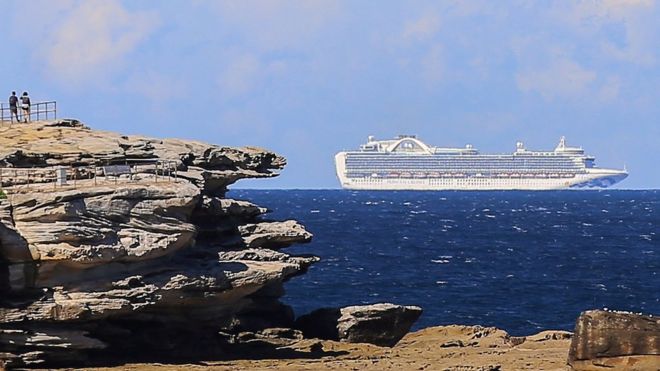
The Ruby Princess cruise ship sails off the coast of Sydney, Australia, 04 April 2020
The Ruby Princess remains off the coast of Sydney with 200 crew members showing symptoms of the virus

A criminal investigation has been launched in Australia into how cruise ship passengers were allowed to disembark in Sydney despite some exhibiting flu-like symptoms.

More than 600 people on board the Ruby Princess later tested positive for coronavirus and 10 have since died.

The ship remains off the coast with nearly 200 sick crew members on board.

Police in New South Wales said they would look into whether national biosecurity laws had been broken.

Australia has so far reported 5,548 coronavirus cases and 30 deaths.

Those sickened on cruise ships account for nearly a tenth of all cases in Australia.

The country has imposed strict social distancing measures and clubs, cafes, parks and gyms have been closed in a bid to contain the outbreak

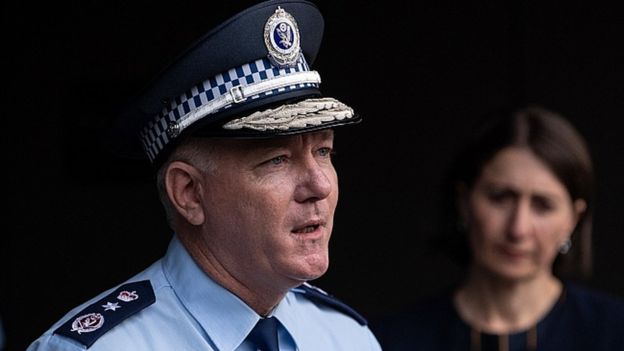
At a news conference, New South Wales Police Commissioner Mick Fuller said there were “many unanswered questions” about the incident.

He said that, by law, vessels were only allowed to dock and disembark passengers if the captain could assure the local authorities that their ship was free from contagious disease.

Mr Fuller said there were “discrepancies” involving the information provided by the ship’s owners, Carnival Australia, and the requirements of the law.

“The only way I can get to the bottom of whether our national biosecurity laws and our state laws were broken is through a criminal investigation,” he told reporters.

Mr Fuller said that the day before passengers disembarked in Sydney a worker made an emergency call about two people who needed medical assistance. He said police were assured by the operating company that the coronavirus was not an issue on the ship.

“From that perspective, there are many unanswered questions,” he added.

New South Wales Police Commissioner Mick Fuller. 27 March 2020

The New South Wales government has faced mounting criticism for allowing people off the ship but has insisted that the decision was based on expert advice.

Mr Fuller added that Carnival Australia had said it would fully co-operate with the inquiry. The company has not yet commented publicly on the criminal investigation.

The Ruby Princess with about 2,700 people on board arrived in Sydney last month after an 11-day cruise.

According to NSW Health, about a dozen passengers had reported feeling unwell and had swabs taken for Covid-19. One was taken by ambulance to the hospital.

But other passengers on board weren’t told of this. Instead, they streamed off the boat at Circular Quay – some of them coughing and spluttering, according to witnesses. The busy area leads directly into the city centre, with transit links to the airport and outer suburbs.

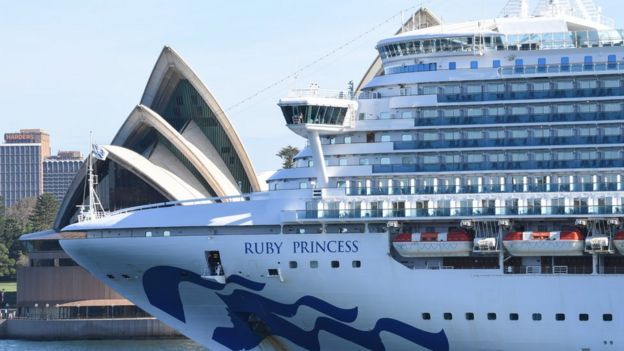
An empty Ruby Princess cruise ship heading past Sydney Opera House and out of Sydney Harbour on 19 March.

Elisa McCafferty, an Australian woman who flew home to London with her husband immediately after disembarking, told the BBC: “Nothing was said at any time about anyone being sick onboard. It was a distinct lack of information coming through from Princess [Princess Cruises which is owned by Carnival] the entire time.”

A day after the ship docked, officials revealed cases of Covid-19 had been confirmed in three people who had been on board, prompting a scramble to track down everyone who had been on the ship.

Ms McCafferty said she only learned of the danger when she checked her phone at Heathrow Airport.

“I was just absolutely petrified. We had just been on two full flights – what if we had infected someone?”

Two Holland America Cruise Ships Dock in Florida

Cruise ships Zaandam (R) and Rotterdam of the Holland America Line, carrying patients affected by coronavirus disease (COVID-19), arrive at Port Everglades in Fort Lauderdale, Florida, U.S. April 2, 2020. REUTER/Joe Skipper

MIAMI, April 2 (Reuters) – An ocean liner forced by a deadly onboard coronavirus outbreak to languish at sea since mid-March pulled into a South Florida port on Thursday, after authorities settled plans for the vessel and its sister ship to dock and most passengers to come ashore.

The Holland America Line cruise ship MS Zaandam and its twin, the MS Rotterdam, docked late in the afternoon at Port Everglades in Fort Lauderdale, Florida, where medical personnel immediately began off-loading 13 severely ill passengers and one crew member for transport to area hospitals.

The arrival of the ships capped a nearly three-week ordeal during which about 100 passengers and dozens of crew aboard the Zaandam reported influenza-like illness and four passengers died as numerous Latin-American ports along its route refused the vessel’s entry.

Nearly two-thirds of the Zaandam’s original passengers – those who cleared a medical screening – were transferred to the Rotterdam before the ships were granted passage through the Panama Canal on Sunday.

U.S. President Donald Trump intervened on Tuesday to urge Florida officials to accept the stricken cruise ship after Governor Ron DeSantis, a fellow Republican, had declared the Zaandam unwelcome, saying he did not want its sick passengers “dumped” in his state.

The governor relented once a “unified command” consisting of federal, state and local authorities reached agreement days later on a plan for repatriating the Zaandam, which departed Buenos Aires, Argentina, on March 7 for what was to have been a 20-day voyage to Chile. A second leg of the cruise had been due to end in Fort Lauderdale on April 7.

The Broward County Commission gave final approval to the plan, which is to be paid for by the cruise line, early Thursday.

‘CONTROLLED EXIT’

“These two ships have U.S. citizens on board. I think the Zaandam has 40, 50 Floridians, so I think we have an interest in making sure these folks come safely,” DeSantis told a news conference on Thursday before the vessels arrived.

He said the arrival plan provides for a “controlled exit.”

At least 26 passengers known to still be symptomatic but not requiring hospitalization will remain aboard the ships in port until they are well and declared fit for travel under federal health guidelines, according to details of the agreement.

Holland America said its medical staff would care for them.

Most of the remaining 1,200 some passengers, assuming they pass a medical screening, were expected to begin disembarking on Friday and be transferred straight to chartered flights home.

“Out of an abundance of caution, these guests will be transported in coaches that will be sanitized, with limited person-to-person contact and while wearing masks,” the cruise line said.

Until Thursday, none of the Zaandam’s passengers had been off the ship since March 14, with all confined to their cabins for the past 10 days, according to the company.

Holland America said 311 passengers are U.S. citizens, 52 of the residents of Florida. Those living near the port will drive home, the cruise line said.

None of the 1,180-plus crew members from the two ships will be allowed off in Fort Lauderdale, though it was not clear when the vessels will leave and how their personnel will be repatriated.

Initial objections to the Zaandam’s arrival had drawn a rebuke from Dr Anthony Fauci, one of Trump’s chief advisers on the pandemic, who urged Florida welcome the ships to port.

“You have to take care of the people who are ill. You just have an obligation to do that. And as quickly as possible. You’ve got to get the people who are not sick, who are not infected, off the ship,” Fauci, who heads the National Institute of Allergy and Infectious Diseases, told CBS “This Morning” just before the deal was reported.

Keith Kobler, a passenger along with his wife, Doris, told NBC they were aware the country had undergone a major shift over the past month as the coronavirus spread nationwide.

“It’s probably going to be strange for us,” he said. (Reporting by Susan Heavey and Doina Chiacu in Washington and Maria Caspani in New York; Writing and additional reporting by Steve Gorman in Los Angeles; Editing by Bernadette Baum, Jonathan Oatis, Nick Macfie and Simon Cameron-Moore)