
When all-inclusive drinks packages were introduced two years ago, cruise lines hoped to earn some extra revenue, figuring some people wouldn’t drink as much as they expected to.
But the drinks packages are also being used as a kind of loss leader for several cruise lines. They’re dangled for free to help induce passengers to book a particular line or sailing.
Such promotions have reshaped cruise marketing in the past few years. Be it a reduced deposit, free gratuities or onboard spending credits, it’s a rare guest who sails today without something extra in his or her pocket.
For cruise lines, value-add items have been the ladder out of the deep-discount pit they fell into after the economy tanked in 2008. Prices on some seven-night cruises fell as low as $113 per person as financial gridlock made a cruise seem like an extravagance.
Prices have improved, in part because value-add has augmented discounting as a ship-filling strategy.
“We’re really working hard to create more promotions,” said Royal Caribbean Cruises Ltd. Chairman and CEO Richard Fain. “I think we can do a better job offering more for the same money rather than just discounting.”
 Discounts do more than harm revenue, said Adam Snitzer, president of Peak Revenue Performance, a Miami Beach consulting firm that specializes in revenue management.
“You see a cruise for $499, it creates this perception that, OK, a seven-day cruise is worth $499,” Snitzer said. “And then if you try to raise prices, there’s still that lingering reference price in consumers’ minds, that this is what one should pay for a seven-day cruise.”
When demand is not filling ships to the 100% level that the industry’s business model calls for, cruise lines have to do something to get balky consumers off the sidelines.
“So it’s very smart to go into the value-add position for a few reasons,” Snitzer said. “One is you offer a higher price, so you raise that reference price. And what you bundle in often has a higher perceived value in the customer’s mind than the cost for the cruise line.”
Cost vs. perception of value
Take the example of the drinks package. Snitzer said the profit margin at cruise ship bars can be up to 90% of the drink price. If a guest gets a $100 onboard credit and spends it at the bar, the value in the customer’s mind is $100, but it only costs the cruise line $10, he said.
Other promotions cost even less. The promise of a reduced deposit may ease the decision for prospective buyers, and it has immediate value in managing their budgets, but in the end it costs the cruise line nothing.
“They’re going to collect that money,” Snitzer said. “They’re just going to collect it later.”
 A two-category upgrade, a popular value-add in Carnival Cruise Lines promotions, has a perceived value of whatever the difference in brochure cost is between the two cabins.
“But if those cabins aren’t full, then there’s no lost revenue,” Snitzer said.
Some value-adds, such as onboard spending credit, can actually drive incremental revenue by making things affordable that might otherwise seem out of reach.
For example, a family that can’t afford the whole price of a swim-with-the-dolphins tour, one of the more expensive excursions in the Caribbean, might reconsider if they have a spending credit to soak up part of the cost.
For travel agents, the focus on promotions has several benefits.
First and most important, it buoys ticket prices, which keeps commissions higher than they might otherwise be.
“A price drop obviously affects our earnings potential,” said David Crooks, senior vice president of product and operations at World Travel Holdings. “A value-add has more impact on the cruise line’s economics than it does on the trade.”
Second, value-adds make shopping a little more challenging for the consumer. No longer can they simply type dates and locations into a search engine to find the best deal.
A $599 price at one line might not be as good as a $699 price at another if the second offer also includes a night in a specialty restaurant, or a reduced deposit or a money-back guarantee.
“It helps us keep the client rather than having them go direct,” Crooks said. “We can navigate them through the different offers, tell them what they mean.”
Stephanie Turner, president of Brentwood Travel, in St. Louis, agreed that value-add promotions can enhance the agent’s role as a knowledgeable adviser to clients.
“I’ve always said that if our suppliers make it complicated enough, we do become valuable,” Turner said.
 However, Crooks said it’s important that the offers not become too complex. He said promotions that are not combinable with other offers are especially frustrating to agents and consumers.
“There’s a perception of a bait-and-switch. Those that allow it to be combined with the best price tend to be most successful,” he said.
Another attribute of a good value-add promotion is that it be fairly broad. Joni Rein, Carnival Cruise Lines’ vice president of worldwide sales, cites the line’s Great Vacation Guarantee as one example.
Vicki Freed, Royal Caribbean International’s senior vice president of sales, trade support and service, said prepaid gratuities and shipboard credits are among the most popular value-adds with consumers.
“They tend to favor shipboard credits over things we pick,” Freed said. A free beverage package only appeals to a certain audience, she said: “If you’re not a big drinker, that beverage package isn’t a value to you.”
Some cruise lines have attacked that problem by offering a suite of value-adds from which to choose. Celebrity Cruises has its 123Go! and Pick Your Perk promotions, in which passengers can choose among free gratuities, a beverage package, a $300 onboard credit or airfare savings of up to $600, depending on which is most meaningful.
Other premium lines have followed suit. Princess Cruises has 3 for Free, and Holland America Line calls its version Explore 4.
Norwegian Cruise Line has even experimented with a kind of package of packages, which offers virtually every value-add item in its inventory.
 Called the All-Inclusive, the product bundles Norwegian’s Ultimate Dining and Ultimate Beverage packages with Internet minutes, plus a bevy of other items not included in the cruise fare.
The package, priced at $899 for a seven-night cruise, was offered in August and September for 2015 cruises.
MSC Cruises recently introduced its own take on packages and value called “Inclusive Experiences,” which essentially does away with cabin categories and instead offers consumers four amenity levels from which to choose.
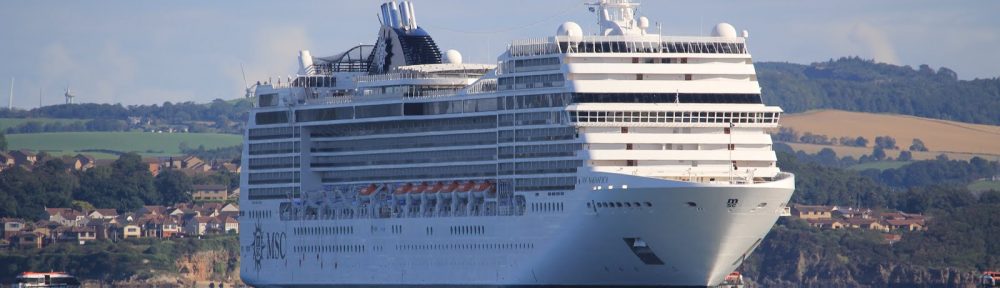
Although big globally, MSC has been a small player in North America until this year, when it positioned the 3,959-passenger MSC Divina in Miami. The Genoa-based line has historically offered value-adds such as a standard “kids sail free” policy that other lines have avoided.
In the new structure, the most price-conscious travelers can choose the entry-level “Bella” experience, in which most amenities are a la carte. The levels progress through “Fantastica,” which costs $30 to $60 more per person, and “Aurea,” which costs an extra $400 per person, to the top “Yacht Club” experience, MSC’s ship-within-a-ship enclave.
Ken Muskat, MSC’s executive vice president for sales, said the Bella experience satisfies MSC’s bargain customer who will give up choice of cabin location and dinner seating for a “bottom of the barrel” price.
He said the Fantastica level adds another $250 of hard value. “So it’s very easy for the travel agent to upsell you for another 50 bucks, give you a better location stateroom choice, give you a priority confirmation on dining room time preference, and you get $250 value in drink vouchers, the free room service, the 50% off fitness classes, etc.,” Muskat said.
“And then it goes up from there,” he said.
Breaking free of the discount trap
Of all cruise lines, none has a greater interest in shifting the conversation from price to value than MSC. The brand’s unfamiliarity to most North Americans has consigned it in some cases to filling ships with price.
But price is what most cruise lines had to resort to in the 2008-09 period when the financial panic, a foreclosure crisis and high unemployment left few people game to cruise without a discount fare.
One of the first cruise lines to break out of that trap was Regent Seven Seas Cruises, which in early 2009 introduced “ultra-inclusive” pricing. Regent was already hailed for including things like drinks and gratuities in the overall ticket price.
 To hold the line on rate, Regent added a selection of free shore excursions to prime the demand pump. Regent and sister line Oceania Cruises have continued to refine the model since then.
Snitzer said the two Prestige Cruise Holdings brands start with a “truly high” brochure price, then add back free air, free Internet, free gratuities and, in the case of Regent, free shore excursions.
The kicker is an offer of two-for-one fares, “the strongest offer that’s ever been invented,” Snitzer said. “They’ve added so much value, so many things to the cruise, that the price becomes impossible for anyone to understand, what is this really worth?”
Snitzer said a cynic or a sophisticated buyer would say that many of the free items are really built into the cruise price.
“But at the same time, a lot of consumers don’t go through that arithmetic,” he said. “That’s just not the way they approach things. They say, ‘It looks like a great deal, so I think I’ll do it.'”
Some cruise lines say that enhanced product is just as important as tactical promotions in transmitting value signals to consumers.
Several luxury lines such as Azamara Club Cruises and Crystal Cruises have recently added dedicated shore events as a value component. At Windstar Cruises, they are called Private Events.
Examples include a fire dancer performance and dinner in Tahiti or a two-day tour of Luxor in Egypt. Windstar also takes every opportunity to tout its small size, high service and intimate port lineup.
“The whole value discussion always starts with us explaining what a small-ship luxury experience on Windstar is all about,” said CEO Hans Birkholz.
Enhanced product value goes to the heart of each brand. At Royal Caribbean, it means innovation, Freed said.
“Nobody has the bells and whistles that we do,” Freed said, citing the AquaTheater on the Oasis of the Seas or atrium aerial shows on multiple ships as examples.
 At Carnival, upgrades such as Seuss at Sea or the Carnival Live concert series have added value that helped its business recovery from negative publicity surrounding the Carnival Triumph engine room fire in 2013, Rein said.
While the emphasis on value is enabling cruise lines to raise fares, cross currents have kept ticket prices from rising to the level that prevailed before the 2008-09 recession.
“What we’ve seen, as the economy has rebounded, cruise line net ticket revenue yields are still running probably 8% to 12% below where they were at peak,” Snitzer said. “That of course is a concern.”
Several safety and service incidents have contributed to that, starting with the Costa Concordia capsizing in 2012, and continuing with fire episodes on the Carnival Triumph and Grandeur of the Seas last year.
A second factor has been a glut of berths in the Caribbean starting last fall, which led to both price discounting and an avalanche of promotions.
“I think this year we’ve sort of undone some of the good, if you will, because we needed to,” Rein said. “I think consumers now are more inclined to look at the value-add and the price.
“We’ve seen the most creative promotional season I’ve ever seen since I’ve been in the business for 30 years,” she said. “It almost became the price couldn’t be low enough and the value-adds couldn’t be rich enough. Those two concepts collided this year.”
Rein said she hoped that will change in 2015 as some of the excess Caribbean capacity begins to clear.
“For 2015, we’re going to continue down that path of being creative and trying to maintain pricing, which I think we’re all very concerned about,” Rein said. “I think we’re open to being more creative because 2014 taught us that creativity is not necessarily bad.”