Can cruising go from Covid scapegoat to pandemic hero?

Coronavirus: Foreign Office tells Britons to stay on cruise ship ...
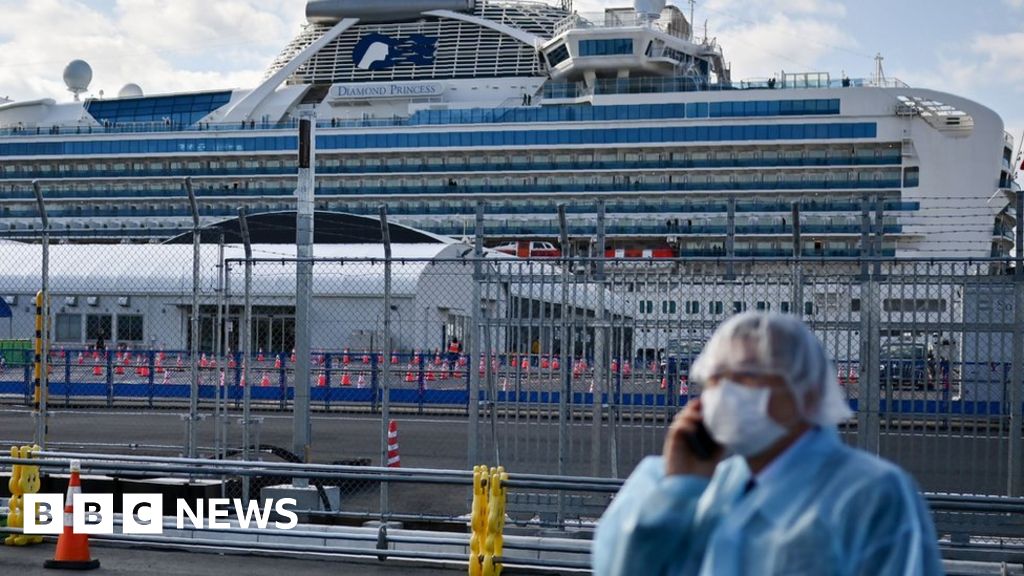
Diamond Princess in Japan

In terms of economic and reputational damage, travel was the first industrial sector to fall victim to the coronavirus and is expected to be the last to recover.

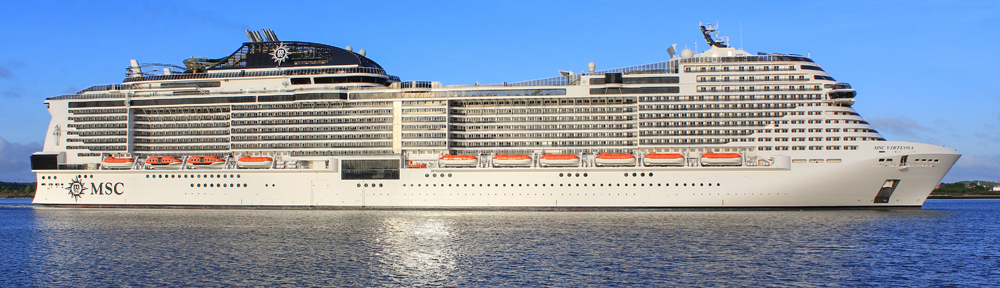
And among travel products, none has taken a harder reputational hit than cruising.

But recently, a path to reputation restoration has opened, and with it the possibility that cruising may even be credited with funding advances related to epidemiology.

Crises of the magnitude of Covid-19 spur a binary result for enterprises: innovation or collapse. And the high degree of risk posed to cruise lines is measurable, reflected in the cost of the loans and investments they arranged to ensure midterm liquidity.

But signs have emerged that cruising will not only survive but even offer a case study of exemplary crisis management. Such a narrative might go like this:

When the initial reports of the virus came out of Wuhan, China, they were frightening but distant, clouded by medical unknowns and shrouded by official silence and secrecy.

A clearer, though far from complete account emerged from the disease’s devastating impact on a cruise ship quarantined dockside in Japan. For more than two weeks, the attention of the world focused on a microcosm of an emerging pandemic. The setting — the Diamond Princess — became a metaphor for contagion and fear. Every new and morbid development was broadcast worldwide.

How does a product that has never been universally embraced — it has devoted followers, but still struggles against outdated stereotypes and a persistent chorus of critics — overcome the stinging characterization of being a “petri dish” of infection?

Even within the travel ecosystem, cruising’s situation seemed particularly dire. Aviation and hospitality had been struck devastating blows; individual brands are still endangered. But because these sectors never stopped operating, enhanced protocols for sanitation were formulated and deployed quickly.

Compared with cruising, these are relatively simple operations. Airline passengers occupy just a few cubic feet of space over a brief period of time. Service is minimal.

Hotels are more complex, but they don’t move around and are typically surrounded by a community of supportive services.

A portion of cruising mirrors hotel operations, and like aircraft, ships move through multiple regulatory jurisdictions. But cruise companies also run shore excursions, manage private islands and maintain myriad public spaces, restaurants and recreational opportunities. They house staffs as well as guests. Maritime engineering and architecture bring additional challenges. And ships must be self-contained, often isolated from support for days.

It’s the sheer number of issues cruising must address that may ultimately give it its halo. Travel Weekly news editor/acting cruise editor Johanna Jainchill and I interviewed former secretary of Health and Human Services (and three-time Utah governor) Mike Leavitt, former Food and Drug Administration commissioner Dr. Scott Gottlieb, Royal Caribbean Cruises Ltd. chairman Richard Fain and Norwegian Cruise Line Holdings CEO Frank Del Rio last week on a Zoom call to discuss a panel they assembled to develop health and sanitation protocols.

The panel comprises working groups. One, for example, will recommend how to operate a safe shore excursion, breaking it down to components in order to minimize the possibility of introducing the virus from a port onto a ship.

Fain and Del Rio expressed willingness to share what they discover with other cruise lines, and Gottlieb noted that, because the challenges of cruising are diverse, the work done by the panel may have applications in other industries.

If so, the petri dish metaphor could be replaced by the image of a ship as a bubble of protection, an environment, as Gottlieb put it, of “exquisite control” that poses less threat than a land vacation.

Should this vision be realized, the extended No Sail Order may ultimately be viewed as an unintended blessing. The lines not only have the time to get it right but to emerge from the crisis as innovators and responsible corporate citizens.

It’s not a far-fetched outcome. There’s a parallel in the oft-cited challenge Tylenol faced in 1982 when cyanide was put, seemingly randomly, into bottles of the pain reliever on shelves of Chicago-area stores. Seven people died, and the brand became associated with fear and death.

At a cost of $100 million, the company recalled and destroyed all existing bottles of the drug and developed the multilayered, tamper-proof seals that have become standard for the industry. But more than that, manufacturer Johnson & Johnson was credited with putting values over profit. Confidence in Tylenol was restored and, as importantly, trust in the entire company was enhanced.

As noted above, cruising is a complex product. There are still hurdles to overcome, and the recruitment of big names for a blue-ribbon panel is not enough to ensure success. But after speaking with Del Rio, Fain, Gottlieb and Leavitt, I’m encouraged that if they follow through on their commitments for passenger safety, the industry will not only recover but may receive due credit in the annals of health and crisis management.

A crucial part of the cruise restart: Lines and ports must agree on health protocols

Carnival Cruise Line ships in Cozumel, Mexico. As it works towards a restart, the cruise industry must work with port authorities and governments to agree on health protocols.

As cruising looks to resume operations after the coronavirus-induced industry halt, it faces challenges unique to an industry in which the majority of its ships touch multiple nations on each itinerary.

CLIA global chair Adam Goldstein said in a conversation with Travel Weekly editors that the association is aware that it will be paramount for travel advisors to have clarity about when cruising can resume and what protocols will accompany that resumption.

Among the challenges the cruise industry faces is that each country will have its own set of rules and regulations to comply with. But Goldstein said this is not new for cruising, and he said CLIA is supporting its member cruise lines to put together protocols that should “meet the test of any international national health authority.”

“There’s never been a perfect harmony across the 1,000 destinations that cruise ships visit, and somehow we managed to work out a fairly seamless vacation environment,” Goldstein said. “This presents new challenges across every dimension. And while our aspiration is for the most harmonized global approach possible, it’s a complex world. Regions are quite different from one another. It’s possible we won’t end up with a perfectly harmonized Covid-19 world to deal with. But I don’t think there’s anybody more experienced, clever or determined to succeed in a global environment than the cruise industry, and that’s been well demonstrated over a half-century.”

CLIA CEO Kelly Craighead said that regulatory agencies worldwide have approached the cruise industry in different ways.

“Some of the challenges in the U.S. are different from the challenges we’re having [elsewhere],” she said. “In Europe in particular, the industry is welcome to participate in dialogue about thoughtful resumption protocols. In the U.S., with the CDC, we’re having some challenges with having that kind of engagement and dialogue with them.”

Craighead added that in Europe, “there is an interest from governments to reopen tourism, and cruising is considered an important part of that.”

Given those complexities, Goldstein said it is premature to say where CLIA members might first relaunch.

“We can’t comment for the authorities,” he said. “They’re dealing with a billion different things. Travel and tourism is one piece, and cruise is a very small piece of that piece.”

He also said that it is likely there will be the sequencing of cruise resumption in different regions.

“I just can’t say which will go first, second, third,” he said. “We also expect [cruises may be shorter] toward the beginning, they could go to fewer ports at the beginning. It will take time, and there will be an evolution back towards what we were doing pre-pause.”

Above all, right now, Goldstein said it is important for the industry to be ready to engage with governments around the world at any time.

“What concerns us is: would we miss opportunities to engage at the time when governments are prepared to engage with us?” he said. “So the message to the member lines is, ‘let’s be as ready as we can be as an association.’ It’s an everyday challenge we work through.”

It’s not a great time to woo first-time cruisers

Cruise ships in Costa Maya, Mexico.
Cruise ships in Costa Maya, Mexico. Photo Credit: Byvalet/Shutterstock

In January, Jessica Fricchione and 10 of her family members booked what would have been her first cruise, a Bermuda sailing out of Baltimore leaving on May 31.

Due to the coronavirus crisis, the group’s sailing was cancelled — and they have no interest in taking a future cruise credit.

“No one in the family wants to book a cruise again,” she said, adding that they were looking into a stay at an all-inclusive resort instead. “I don’t ever, ever want to be stuck on a cruise ship.”

Justified or not, the cruise industry’s reputation took a hit from the high-profile Covid-19 outbreaks on a handful of ships in March and April.

Industry stakeholders acknowledge that media coverage of those ships being turned away from ports and, in some cases, of passengers being quarantined in their cabins for weeks on end is most likely to have an impact on the potential-cruiser set.

In a media call last month, Carnival Corp. CEO Arnold Donald said there was “no question” that the media attention would have an impact on that market segment.

“There have been people who may have been considering [a cruise] who would be having second thoughts at this point in time,” he said.

The first-time cruiser has always been considered critical to the growth of cruising. Despite CLIA lines’ global passenger growth of about 60% since 2009, to 30 million in 2019, cruising is still vastly underpenetrated compared with other vacations: 11.9 million Americans cruised in 2019, only about 3% of the population.

Travel advisors expect that the crisis will cause a decline in the new-to-cruise market.

“When you’re dealing with first-time cruisers, you typically have to overcome some fear of the unknown with cruising, such as seasickness, boredom, claustrophobia,” said Anthony Hamawy, President of Cruise.com. “The current negative press around cruising will add to those fears.”

Signature Travel Network CEO Alex Sharpe said that those who’ve never been on a cruise can’t draw upon personal experience to put into perspective what they are seeing and hearing from the media.

“If you’ve been watching the news and you’re not a cruiser and you can’t put what [ships with Covid-19 outbreaks] have been through in any context with your own family’s great times on a ship, it’s hard to reconcile that and say, ‘That’s my next vacation,’” Sharpe said. “I think new-to-cruise will take a hit in the short term. That will take some time.”

Some cruise lines have found that booked passengers who were new to cruise have been more likely to cancel cruises they had booked during the current operations pause.

Mark Conroy, Silversea Cruises’ managing director of the Americas, said that new cruisers have been more likely than past passengers to cancel and take a refund versus a future cruise credit because they are “more nervous.”

Loyalty program members “will come back first,” he said. “They’re the people that know us and love us and travel with us every year or every other year. They’re the ones that are eager to go.”

Repeat cruisers will lead the way

Many think that those who were once potential cruisers and are now on the fence can be swayed back once cruise lines are up and running.

Charles Sylvia, CLIA’s vice president of membership and trade relations, said that there will be “more challenges ahead with regard to the first-time cruisers” but that people returning from cruises with positive stories will put them at ease.

“Once they see the resumption of operations and once they see friends and family members and co-workers going on cruises and coming home with that same level of enthusiasm and satisfaction, then they will be back — the first-time cruisers will come to us,” Sylvia said.

Donald also said that returning cruise passengers, as well as travel advisors, will be the most important messengers in overcoming the additional concerns non-cruisers have. He added that this is something the industry is accustomed to dealing with.

“We were busy knocking down myths before, and we’ll have to return to that,” he said, adding that the two “most powerful ways” to do that is through travel advisors, “with their knowledge and experience and personal relations with their clients,” and the passengers, who will “provide the kind of testimonials and credibility with their friends and colleagues and relatives.”

And as has always been true for travel coming out of every crisis, for some people, the right price is a big persuader.

“I think, with time, this will be overcome because the vacation value will ultimately win out,” Hamawy said.