The race to build the world’s biggest cruise ship is over

Image result for symphony of the seas

Royal Caribbean’s Symphony of the Seas
Can we call it now?
The race to build the biggest cruise ship ever is over, I think.
And the winner is Royal Caribbean International.
Will anyone ever build a cruise ship bigger than Royal’s Oasis-class ships, the fourth of which was delivered last week? It might happen, but the evidence suggests that it won’t. The reason why I think not is that many cruise companies, including Royal itself, have had a chance to design something bigger since the Oasis of the Seas first took to the oceans in 2009.
No one has.
Of the 36 cruise ships over 120,000 gross tons delivered since 2009, none are bigger than the 228,081-ton Symphony of the Seas, which is on its way from the shipyard in France to Barcelona, Spain, where it will begin seven-day cruises on April 7.
Of the 43 cruise ships over 120,000 gross tons on order or about to be delivered, none are bigger than the Symphony.
Those orders include ships for nearly every major cruise operator besides Royal Caribbean Cruises Ltd., including Carnival Corp., Norwegian Cruise Line Holdings, Walt Disney Co., MSC Cruises and Genting Hong Kong.
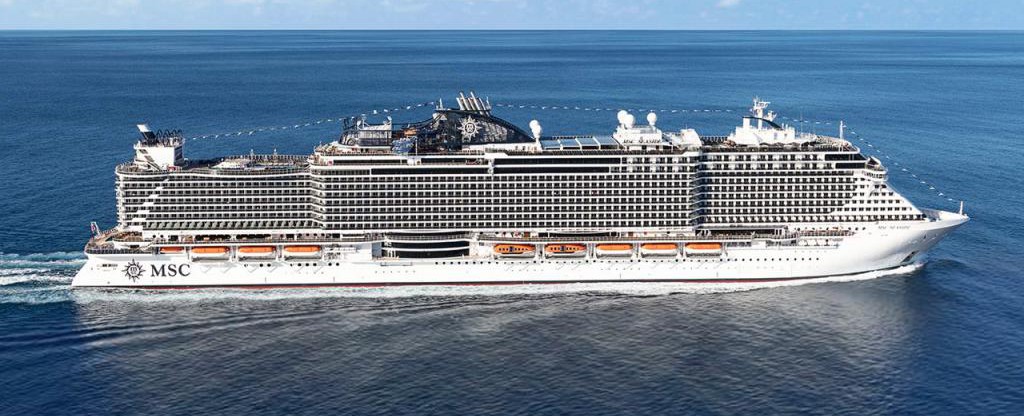
Image result for msc seaside
MSC Seaside.
Each had an opportunity to design the new biggest cruise ship in the world. The closest will be Dream Cruises, which is building a pair of 204,000 gross ton Global class ships for delivery in 2020 and 2021.
Royal Caribbean also has had two chances to top itself but has designed the smaller Quantum class at 168,666 gross tons and the upcoming Icon class at 200,000 gross tons. Royal is still cranking out Oasis-class ships the next is due in 2021. So perhaps when it is finished with that class, it will design something bigger.
For decades, the biggest cruise ship in the world was the 70,327 gross ton Queen Elizabeth 2, which reigned for 21 years from 1967 to 1988 when the 73,192 gross ton Sovereign of the Seas de-throned it.
Image result for rms queen elizabeth 2
RMS Queen Elizabeth 2nd
Thereafter, in the 20 years from 1988 to 2009, a series of newbuilds followed that each topped the last in size. Now there has been a nine-year lull. To match the QE2’s longevity as No. 1, the Symphony of the Seas would have to be the biggest until 2039.
Maybe that won’t happen. There’s always economies of scale to be reaped by building bigger, although the evidence seems to suggest that beyond 5,500 passengers, operators reach a point of diminishing returns.
But for now, long live the Symphony of the Seas.

Cunard announces Alaska return for first time in over 20 years

Image result for cunard queen victoria

A visit to Alaska has been added by Cunard in 2019 for the first time in more than 20 years.

Queen Victoria will operate the only full world cruise in 2019, leaving flagship Queen Mary 2 and Queen Elizabeth with “greater flexibility” to travel to a mixture of destinations and itineraries, the line said.

Queen Elizabeth will run its first Alaskan cruise, crossing the north Pacific and Gulf of Alaska en route to Vancouver.

This will be the first time that any of the line’s current fleet will have travelled to Alaska.

The largest US state is featured in a newly released January to May 2019 ‘Oceans of Discovery’ programme, which includes 21 maiden calls and new destinations including Boracay in the Philippines, Akita in Japan and Goa in India.

Queen Victoria, which will undergo a refit in June, is to run a 107-night world voyage in 2019 on a western circumnavigation via the Panama Canal.

Passengers can travel on sections of lone world cruise which sees the ship end up sailing the Indian Ocean to South Africa before returning to Southampton.

Queen Mary 2’s winter 2019 deployment features ex-UK departures through the Mediterranean, Arabian Gulf, Indian Ocean to Far East and back.

The journeys range from one to three weeks in duration but can be combined through to a full 94-day voyage.

Queen Elizabeth will run 41 cruise combinations ranging from two to 38 nights.

The line’s three ships will call at 49 countries and 109 destinations in the first five months of 2019.

Ten destinations being re-introduced include Beijing, Picton in New Zealand, Abu Dhabi and Chennai.

Sales vice president, Alex White, said: “It’s an exciting time for Cunard, with a 2019 programme that offers more choice, more variety and more destinations for our guests than ever before.

“Whether you want to fly and cruise, or depart from the UK, we have a blend of iconic, world-class cities and delightful destinations with cruises that cover two to 107 nights.

“Our itineraries have been designed to offer enriching days in port as well as plenty of time on board for our guests to relax and enjoy the luxury of time, space and all that our ships have to offer.”

Carnival Corp claims ‘medallions’ innovation puts it alongside Apple and Microsoft

Image result for carnival medallions

Carnival Corporation claims its new personalisation technology puts it on a par with global technology giants like Apple and Microsoft.

The world’s largest cruise operator, which owns brands including Princess Cruises, Cunard and P&O Cruises, unveiled its Ocean Medallion innovation today.

In what is believed to be a first for the travel sector, Carnival chief executive Arnold Donald is due to give a keynote at the prestigious CES consumer technology show in Las Vegas.

This is where all the major global technology brands go to showcase the new products they hope will take the world by storm.

Ocean Medallion has been devised by Carnival chief experience and innovation officer John Padgett, the man behind Disney’s MagicBands used in its Florida Disney world themepark.

MagicBands were touted as a game-changer for the themepark sector and much the same is being predicted for Ocean Medallion.

Padgett said: “It’s huge deal that Carnival is featuring at this [CES] tech show. This isn’t Carnival with Royal Caribbean and Norwegian.

“This is Carnival alongside the likes of Microsoft or Apple. So this isn’t about market share, it’s about us being in the vanguard to show how truly great the entire cruise industry is.”

Padgett said the technology will create an “experiential aura” around every guest that will trigger personalised information to be sent to them to enhance their holiday.

He said the technology is a step beyond MagicBands as it does not require the human wearer to do anything to make it work.

“Guests don’t need to swipe or tap the medallion. They just have to wear it as a pendant, bracelet or keyfob, and every single one will have a digital concierge looking out for them.

“It won’t stereotype or segment passengers; it will track what they engage in, in real-time, from the minute they book their holiday, and send them only information relevant to their interests and preferences,” he said.

“The more they engage, the better their experience will be.”

Padgett says it will change the cruise industry’s focus from the maximisation of on board revenue to the enhancement of a customer’s personalised holiday experience.

In doing so, he believes guests will, by default, spend more money, either on the ticket price due to the perceived greater value of a cruise holiday, or by spending more on board as hassle, distractions and friction are eliminated.

The Princess Cruises line will be the first brand to offer the new technology before a roll out across Carnival’s brands.

Princess Cruises’ Regal Princess will adopt the new ‘Ocean Medallions’ in November 2017, with Royal Princess and Caribbean Princess following next year.