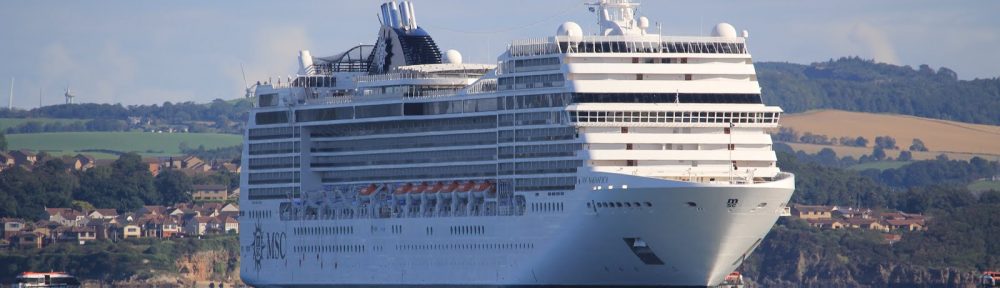
MSC cruise ship demonstrates fuel-cell technology

MSC Cruises’ latest ship, 

MSC World Europa, demonstrates the company’s strategy to decarbonise by cutting greenhouse gas emissions.

This ship was delivered from the Chantiers de l’Atlantique’s shipyard in Saint-Nazaire 24 October, with the latest power and propulsion technology on board.

MSC Cruise Management (UK) head of electrical engineering Steven Frey said this ship is powered by LNG and has a solid oxide fuel cell (SOFC) to run as a pilot project.

He told delegates at Riviera Maritime Media’s annual Maritime Hybrid, Electric & Hydrogen Fuel Cells Conference in Bergen, Norway, 27 October, the importance of testing and investing in technology to cut carbon emissions.

“We are working to get to zero emissions from multiple fronts, including digitalisation, workshops and partnerships, hybrid propulsion solutions, shore charging and new technologies, such as SOFC,” said Mr Frey. “We are starting a demonstration of a 500-kW SOFC on a ship, and we want to scale this technology up to 20 MW.”

Using power from shore during port stays is an important method for MSC to reduce ship emissions.

“All of our newbuilds are ready for shore power and we are retrofitting the existing fleet,” said Mr Frey. “Around 50% of our ships will be ready by 2023 and 65% by the end of next year. We have also signed a memorandum of understanding with Cruise Baltic to use shore power in 32 ports from 2024 when it is available.”

He said smaller cruise vessels need around 4.5 MW of power and MSC’s largest ships to need more than 10 MW from shore power to shut down engines.

Mr Frey said a combination of shore power and technology to reduce energy consumption and fuel usage is needed to cut cruise ship emissions.

“We are looking at ways to decarbonise by reducing energy consumption on the ships, by adding LED lighting and heat recovery, reducing hotel loads and using alternative fuels,” he said.

“We have a dedicated department dealing with energy efficiency and developing solutions for tracking data from our vessels, so we have a clear view of consumption,” Mr Frey added.

On the subject of fuels, MSC has already turned to LNG to cut pollutants and will consider other sources of energy.

“We are considering hydrogen as a fuel of the future and are using LNG now. MSC World Europa uses LNG fuel and has the SOFC pilot project. Other ships could run a fuel cell and LNG,” said Mr Frey.

World’s Largest Cruise Company Turns to Air Bubbles to Help Reduce Emissions

The world’s largest cruise shipping company has announced plans to install air lubrication technology on at least 20% of its fleet.

Carnival Corporation says the Air Lubrication Systems (ALS), which are already in use aboard four ships, will be added to five more ships this year with plans to install the technology on at least 10 more ships across a majority of its brands through 2027.

The hull drag-reducing technology is expected to reduce fuel consumption and carbon emissions by about 5% per ship, according to the company.

ALS technology, which first saw service within the Carnival Corporation fleet in 2016 with the introduction of AIDAprima, generates a cushion of air bubbles to lubricate the flat bottom of a ship’s hull, reducing friction between the ship and surrounding water, resulting in savings in energy and fuel consumption across a wide speed range.

Carnival Corporation is currently installing the Silverstream® System ALS on five more ships, including two ships in 2022 for its Princess Cruises and P&O Cruises (UK) brands. In addition, the company is planning at least 10 more installations for existing and newbuild ships across more than half of its cruise line brands, and it expects continued expansion of the ALS program. The expansion plans build on the success of four systems currently operating on ships from its AIDA Cruises and Princess Cruises brands.

“The installation of air lubrication technology is another example of our ongoing efforts to drive energy efficiency and reduce fuel consumption and emissions throughout our fleet,” said Bill Burke, chief maritime officer for Carnival Corporation. “We look forward to expanding the ALS program and furthering our long-term sustainability strategy to continually invest in a broad range of energy reduction initiatives, which has included over $350 million invested in energy efficiency improvements since 2016.”

Carnival Corporation has committed to reducing carbon emission intensity by 20% from its 2019 baseline by 2030 and has set an aspiration to achieve net carbon-neutral ship operations by 2050.

Carnival Corporation Driving Technical Innovation

“Where there are particularly large refits or complex ones, we provide project management resources to support the brands,” said Chris Millman, vice president of corporate marine technology at Carnival Corporation.

Perhaps the biggest project coming up for Carnival Corporation is a battery system retrofit for AIDA Cruises, as the German brand will get a 10MW battery installation with the goal to manoeuvre into port, hook up to shore power, and then sail out of port, all with zero emissions.

“The impact of that will be zero emissions for a port call, which is something we are looking at,” Millman said, adding that a fuel cell installation was also happening in the near future on an AIDA vessel.

Long-term planning is centred around fewer emissions with the eventual goal of finding the zero-emissions fuel of the future.

Varying Projects

Many of the ideas and project topics come from the brands themselves, noted Mike Kaczmarek, vice president of corporate shipbuilding.

Thus, those projects can turn into company-wide refit projects, energy-efficiency initiatives and help lend resources and support to prototype future technologies.

“We have been running a technical prototype initiative whereby we are assessing the impact of different technologies on the ships,” said Millman, pointing to variable speed pumps, fan controllers, different hull coatings and LED lights.          

“We’ve developed a recommended package for all our ships … it brings all the ships into line with technologies we’ve identified as being effective at improving energy efficiency and waste management,” he said.

After seeing the results of an air lubrication system on a pair of newbuilds, that technology has now been retrofitted to a handful of existing ships, where Carnival first equipped the ships with the fastest itineraries in the fleet that would benefit the most.

Hull Coating

““Following the pause period, and with ships returning to service, they needed hull cleaning and we needed to understand which ones needed it the most,” Millman explained.

New is a remote hull cleaning drone that also collects all the fouling of the hull, alleviating concerns from port authorities and letting Carnival evaluate what was on the hull.

With no shortage of hull coating options available, different water temperatures ship speeds and itinerary patterns, the company is constantly evaluating new hull paint.

Carnival ships are sailing globally with different hull coatings, and test patches of new coatings.

“In one case we coated a whole hull with completely new paint. It has proven to be very successful,” Millman said. “We haven’t seen it through to the end of five years yet but we are moving to do another couple of trials.”

Support

Supporting initiatives include a host of subject matter experts at the corporate level – whether it’s a hydrodynamics wizard, a waste heat genius or other top minds in specific fields.

“The background assistance is there for the brands,” said Millman.

Getting pitched all the time with the latest emissions-saving gadgets, the corporate technology team goes through potential projects, brings in subject matter help and then evaluates proposals.

“We would then prioritize what to trial depending on what we feel would bring the best ROI on improving energy efficiency,” Millman said. “Then run the trial and report back.”

Company-wide, a technical team gathers twice a year for two to three days, going through all the projects, providing updates and making decisions on where the future focus should go.

“The biggest (future) tech initiative will be on alternative fuels … that is a major way to decarbonization.”

Excerpt from Cruise Industry News Quarterly Magazine: Winter 2021-2022