SeaDream Yacht Club has equipped its entire fleet with shore power connectivity.
Both SeaDream vessels can now turn off their engines and reduce emissions to zero while in ports with shore power facilities, the company said in a statement.
“This is an important milestone and a significant step in our journey to more sustainable cruising,” said Andreas Brynestad of SeaDream Yacht Club.
The SeaDream II completed the upgrade last fall, while the SeaDream I underwent the upgrade recently at Naval Rocha Yard in Lisbon, Portugal.
During the summer of 2024, both yachts will explore the Mediterranean, including the Greek Isles and the French and Italian Rivieras, before heading to the Caribbean for the 2024-25 winter season.
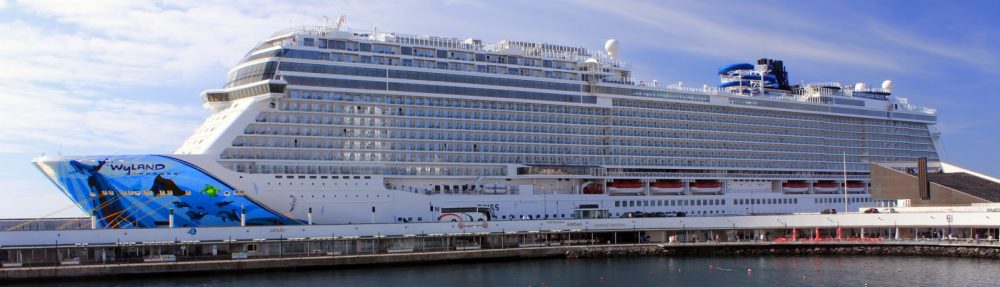
Norwegian Cruise Line Holdings launched an updated climate action strategy with short- and near-term greenhouse gas targets towards achieving net zero by 2050, according to a press release.
“We are proud to further refine and strengthen our climate action strategy and commitments including by setting milestone GHG intensity reduction targets which will guide us on our ambitious pursuit of net zero by 2050,” said Harry Sommer, president and chief executive officer-elect of Norwegian Cruise Line Holdings.
“Every aspect of our business from shoreside to shipboard is responsible for doing their part to design, deliver and demonstrate results for decarbonization and our Board of Directors has reinforced this expectation by establishing shared accountability and tying incentives for our entire management team to this critical effort. We also recently took an important step forward on our pursuit of net zero by announcing the modification of two of our future Prima Class newbuilds to accommodate the use of green methanol in the future.”
The key components of the new targets include reducing greenhouse gas emissions intensity by 10 per cent by 2026 and 25 per cent by 2030. These include emissions from the company’s fleet islands and facilities as well as fuel- and energy-related activities. The new targets serve to support NCLH’s existing strategy for achieving net zero by 2050.
“We are also activating and mobilizing our full network of team members, ports and destinations, suppliers and partners, and guests to act now and join us on this transformative journey, further amplifying the efforts we could achieve on our own,” added Sommer.
The updated climate action strategy is centred around efficiency, innovation and collaboration. The company continues to invest in systems and technologies aimed at optimizing efficiency, such as HVAC system upgrades and waste heat recovery systems. NCLH is also working on long-term solutions including technologies that help support the ability to operate using green fuels.
The company has already completed tests of biofuel on several ships, using a blend of about 30 per cent biofuel and 70 marine gas. Long term, NCLH is also planning on using green methanol which would result in a drastic reduction in emissions and up to 95 per cent reduction in CO2 and has announced Prima ships five and six will be methanol ready.
Achieving net zero will require collaboration across the company’s network of stakeholders.
“We are encouraged to see the significant progress and momentum across sectors to decarbonize, but fundamental challenges continue to exist for the cruise industry to fully decarbonize by 2050,” said Jessica John, vice president of ESG, Investor Relations and Corporate Communications of Norwegian Cruise Line Holdings Ltd.
“Rather than waiting for these challenges to dissolve, our strategy is about acting now to implement solutions for efficiency today, innovate for future solutions and collaborate with our stakeholders along the way. Underpinning this strategy is good governance and effective risk management as we work to advance our climate action efforts and build our Company’s resilience.”
“Where there are particularly large refits or complex ones, we provide project management resources to support the brands,” said Chris Millman, vice president of corporate marine technology at Carnival Corporation.
Perhaps the biggest project coming up for Carnival Corporation is a battery system retrofit for AIDA Cruises, as the German brand will get a 10MW battery installation with the goal to manoeuvre into port, hook up to shore power, and then sail out of port, all with zero emissions.
“The impact of that will be zero emissions for a port call, which is something we are looking at,” Millman said, adding that a fuel cell installation was also happening in the near future on an AIDA vessel.
Long-term planning is centred around fewer emissions with the eventual goal of finding the zero-emissions fuel of the future.
Varying Projects
Many of the ideas and project topics come from the brands themselves, noted Mike Kaczmarek, vice president of corporate shipbuilding.
Thus, those projects can turn into company-wide refit projects, energy-efficiency initiatives and help lend resources and support to prototype future technologies.
“We have been running a technical prototype initiative whereby we are assessing the impact of different technologies on the ships,” said Millman, pointing to variable speed pumps, fan controllers, different hull coatings and LED lights.
“We’ve developed a recommended package for all our ships … it brings all the ships into line with technologies we’ve identified as being effective at improving energy efficiency and waste management,” he said.
After seeing the results of an air lubrication system on a pair of newbuilds, that technology has now been retrofitted to a handful of existing ships, where Carnival first equipped the ships with the fastest itineraries in the fleet that would benefit the most.
Hull Coating
““Following the pause period, and with ships returning to service, they needed hull cleaning and we needed to understand which ones needed it the most,” Millman explained.
New is a remote hull cleaning drone that also collects all the fouling of the hull, alleviating concerns from port authorities and letting Carnival evaluate what was on the hull.
With no shortage of hull coating options available, different water temperatures ship speeds and itinerary patterns, the company is constantly evaluating new hull paint.
Carnival ships are sailing globally with different hull coatings, and test patches of new coatings.
“In one case we coated a whole hull with completely new paint. It has proven to be very successful,” Millman said. “We haven’t seen it through to the end of five years yet but we are moving to do another couple of trials.”
Support
Supporting initiatives include a host of subject matter experts at the corporate level – whether it’s a hydrodynamics wizard, a waste heat genius or other top minds in specific fields.
“The background assistance is there for the brands,” said Millman.
Getting pitched all the time with the latest emissions-saving gadgets, the corporate technology team goes through potential projects, brings in subject matter help and then evaluates proposals.
“We would then prioritize what to trial depending on what we feel would bring the best ROI on improving energy efficiency,” Millman said. “Then run the trial and report back.”
Company-wide, a technical team gathers twice a year for two to three days, going through all the projects, providing updates and making decisions on where the future focus should go.
“The biggest (future) tech initiative will be on alternative fuels … that is a major way to decarbonization.”


 Wetravel2u's Weblog