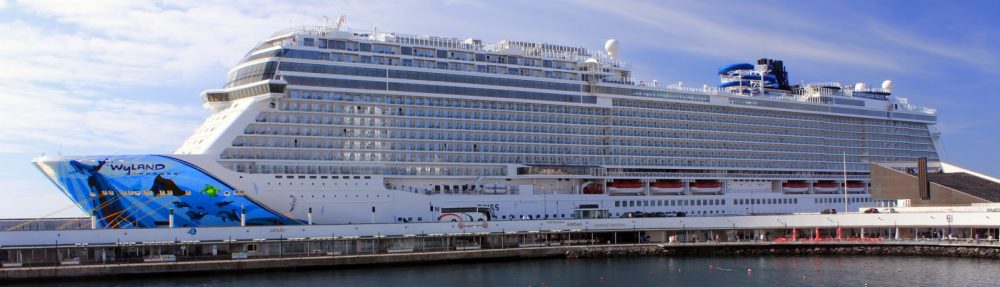
The World to Undergo Major Refit During Six-Week Drydock

The company announced in a press release that the World Residences at Sea is set to undergo a major upgrade.

The refurbishment will take place during a six-week drydock at the Navantia Shipyard in Cadiz, Spain.

According to the ship’s operator, the project aims to bring an array of transformative enhancements to the vessel, including environmental, technical and hotel upgrades.

“This extraordinary 40-day, $30+ million outlay in the ship demonstrates residents’ commitment to keeping The World at the forefront of luxury living and represents the next chapter in that journey,” said Jessica Hoppe, president and CEO of The World.

The ship was also recently awarded a “Statement of Extended Life” from Det Norske Veritas (DNV).

“Our resident owners continue to invest in the ship, ensuring that it not only evolves with their needs but also stays ahead of global innovations. Our recent Statement of Extended Life from DNV is a testament to the exceedingly high standards that we set, how hard our deck and engine teams work to meet those standards, and the support that we receive from the resident community,” she added.

As part of its regular schedule, The World is said to enter a planned drydock every three years to conduct routine technology and maintenance upgrades, as well as updates to public spaces based on current design and lifestyle trends.

The DNV statement is a result of the company’s commitment to maintenance.

After the completion of a comprehensive study and extensive evaluation, DNV recognized its commitment to maximizing the sustainable lifespan of the vessel.

“Most notably, The World’s physical condition is that of a ship that is just 5.6 years old, far younger than her chronological age—providing confidence in her long-term quality, efficiency, and environmental responsibility,” the company stated.

The 2025 drydock will focus on energy efficiency and sustainability, ensuring that the World continues to meet and exceed global climate targets.

Among the updates is the installation of shore power, also known as cold ironing, a High Voltage Shore Connection (HVSC) system.

The ship’s bulbous bow will be replaced as part of a decarbonization project.

Originally optimized for a speed of 19 knots, the new design will reduce hull resistance by up to 10 percent and significantly cut greenhouse gas emissions.

The World will also debut a reimagined pool deck, a refreshed spa and more.

Norwegian Sets New Targets Towards Zero Emissions

Norwegian Cruise Line Holdings launched an updated climate action strategy with short- and near-term greenhouse gas targets towards achieving net zero by 2050, according to a press release.

“We are proud to further refine and strengthen our climate action strategy and commitments including by setting milestone GHG intensity reduction targets which will guide us on our ambitious pursuit of net zero by 2050,” said Harry Sommer, president and chief executive officer-elect of Norwegian Cruise Line Holdings.

“Every aspect of our business from shoreside to shipboard is responsible for doing their part to design, deliver and demonstrate results for decarbonization and our Board of Directors has reinforced this expectation by establishing shared accountability and tying incentives for our entire management team to this critical effort. We also recently took an important step forward on our pursuit of net zero by announcing the modification of two of our future Prima Class newbuilds to accommodate the use of green methanol in the future.”

The key components of the new targets include reducing greenhouse gas emissions intensity by 10 per cent by 2026 and 25 per cent by 2030. These include emissions from the company’s fleet islands and facilities as well as fuel- and energy-related activities. The new targets serve to support NCLH’s existing strategy for achieving net zero by 2050. 

“We are also activating and mobilizing our full network of team members, ports and destinations, suppliers and partners, and guests to act now and join us on this transformative journey, further amplifying the efforts we could achieve on our own,” added Sommer.

The updated climate action strategy is centred around efficiency, innovation and collaboration. The company continues to invest in systems and technologies aimed at optimizing efficiency, such as HVAC system upgrades and waste heat recovery systems. NCLH is also working on long-term solutions including technologies that help support the ability to operate using green fuels.

The company has already completed tests of biofuel on several ships, using a blend of about 30 per cent biofuel and 70 marine gas. Long term, NCLH is also planning on using green methanol which would result in a drastic reduction in emissions and up to 95 per cent reduction in CO2 and has announced Prima ships five and six will be methanol ready.

Achieving net zero will require collaboration across the company’s network of stakeholders.

“We are encouraged to see the significant progress and momentum across sectors to decarbonize, but fundamental challenges continue to exist for the cruise industry to fully decarbonize by 2050,” said Jessica John, vice president of ESG, Investor Relations and Corporate Communications of Norwegian Cruise Line Holdings Ltd.

“Rather than waiting for these challenges to dissolve, our strategy is about acting now to implement solutions for efficiency today, innovate for future solutions and collaborate with our stakeholders along the way. Underpinning this strategy is good governance and effective risk management as we work to advance our climate action efforts and build our Company’s resilience.”

AIDA Reaches Milestone in Decarbonization Efforts

AIDA Cruises has expanded the use of shore power in its fleet, reaching a significant milestone in its decarbonization efforts, according to a press release.

The AIDAsol was recently connected to shore power in nearly all ports during its recent voyage from April 16 to 21, 2023.

The ship was supplied with green energy from shore in Rostock-Warnemünde, Aarhus (Denmark), Kristiansand (Norway), and Hamburg.

The growing shore power infrastructure in Northern Europe has made it possible for AIDA Cruises to achieve this milestone.

AIDA President Felix Eichhorn stated that the company’s goal is to use shore power in all ports where port infrastructure is available. He added that the company’s investments in clean technology are actively supporting the goals of the EU’s “Fit for 55” program to build a corresponding infrastructure in all major EU ports by 2030.

During its recent voyage, AIDAsol made history by being the first cruise ship to conduct shore-side and shipboard integration tests on a newly built facility in Aarhus, Denmark. The official opening of Denmark’s first shore power plant for cruise ships is scheduled for later this year.

The AIDAsol was also supplied with energy from shore during its stop in Kristiansand, Norway, which it already did in 2022.

AIDA Cruises has been investing in sustainable cruising for many years, with a goal to achieve carbon-neutral ship operation for its fleet by 2050.

The company has been considering the use of environmentally friendly technology since 2004, and more than ten years have passed since it was able to start the usage of shore power in regular operation with an AIDA ship in Hamburg Altona in 2017. The company signed a memorandum of understanding in April 2022 with Cruise Baltic, a network of 31 ports and destinations, to use shore power in the ports of the Baltic Sea region.

AIDAsol’s arrival in Hamburg, its home port for this year’s summer season, marked another significant moment in AIDA Cruises’ decarbonization efforts. The ship was connected to Europe’s first shore power plant for cruise ships and switched off its main engines shortly after docking at the Cruise Center Altona.

The expansion of the use of shore power is part of AIDA Cruises’ efforts to use low-emission liquefied natural gas (LNG) and other alternative energy sources such as batteries and fuel cells. The company is working with various partners to find solutions for the use of regenerative and synthetic fuels.

“AIDA Cruises shows what can already be possible today,” said Eichhorn. “We can only achieve the energy transition together.”