Cruise industry defends record after a critical TV documentary

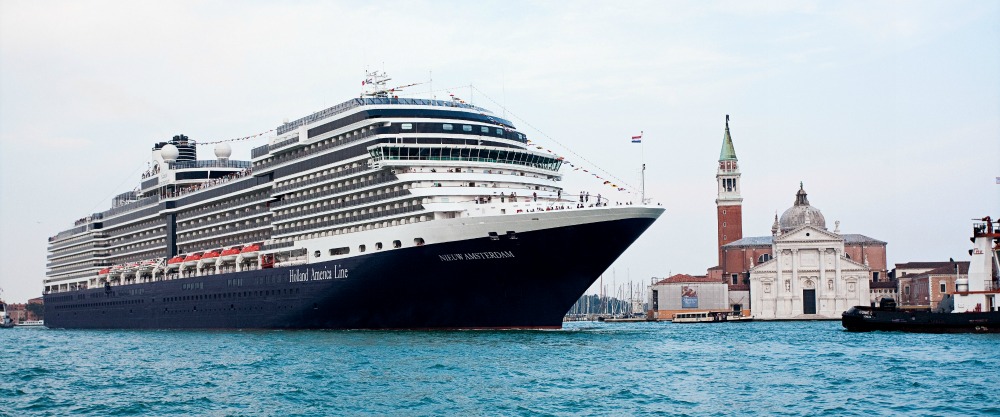
Zaandam Ship Stats & Information- Holland America Line Zaandam ...

The cruise industry has defended its record in tackling the coronavirus crisis in the wake of a critical ITV documentary screened on Thursday.

The hour-long ‘Billion Pound Cruises: All at Sea’ focused on the plight of various Princess Cruises ships and Holland America Line vessel Zaandam which were caught up in the pandemic.

It highlighted the impact on passengers and crew and detailed the number of deaths involved.

The documentary featured passenger footage taken onboard Diamond Princess, which was thrust into the spotlight as the virus became a pandemic due to an outbreak on the ship as it was docked in Japan which led to guests and crew being quarantined.

However, global cruise industry body Clia said: “While the tragic reality of the pandemic has meant that its impact has been felt across all walks of life, Clia believes that the industry’s rapid response is one reason why the number of cases linked to ships was a small fraction of the global total.”

The association stressed that health and safety are “integral” to the cruise industry, which is currently at standstill across most of the world due to government restrictions.

A Clia spokesperson said: “No other form of travel provides such high transparency in public health reporting, or requires such stringent cleaning and hygiene protocols.

“Within 48 hours of the WHO [World Health Organisation]  announcing an international emergency, Clia ocean cruise lines introduced enhanced screening protocols worldwide, including health and travel history checks prior to the embarkation of every passenger and crew member.

“Upon the declaration by the WHO of a pandemic, Clia ocean cruise lines voluntarily suspended operations worldwide, making the cruise industry one of the first to do so.

“Some ships had to travel thousands of miles to return to port, and repatriation was complicated by international air travel and border restrictions; Clia cruise lines have also successfully repatriated many thousands of crew members, and have been working non-stop with governments and health authorities to secure the safe return of crew members to their homes.”

Holland America Moves Passengers from Zaandam to Rotterdam

Rotterdam

Holland America Line has announced that 29 people moved from Zaandam to Rotterdam at Port Everglades.

There are now 53 total guests and contract service staff on Rotterdam waiting for flights (29 guests and 24 contract service staff).

“We are working on finalizing flights and logistics for travel home,” the company said.

Following the transfer, the Zaandam sailed from Port Everglades and will now undergo extensive sanitation measures and a 14-day self-quarantine plan in alignment with guidance by the U.S. CDC.

Holland America Line also is working on final details for all ships until operations resume.

“A select complement of our crew from navigation, engine and hotel departments will remain on board to maintain safe operations of the vessels during this lay-up period. We are working on arrangements to get the remaining crew members home as soon as possible. Crew members who cannot get home due to closed borders or lack of flights will stay on the ships until we are able to get them home,” the company stated.

Carnival Corp boss denies sector was slow to react to coronavirus

Carnival Corp boss denies sector was slow to react to coronavirus

Carnival Corporation boss Arnold Donald has refuted suggestions the cruise industry was “slow” to react to the outbreak of coronavirus.

He argued that cruise is actually one of the best-placed sectors of travel to cope with anticipated stricter health and safety protocols in the future.

The chief executive of the nine-brand cruising giant said: “The cruise industry put a pause on the cruise before anybody else did. Before hotels or restaurants and other places of social gathering.

“Cruise ships are not the cause. Neither are they the reason for the spread.”

Commenting on the outbreak onboard Diamond Princess which was held in quarantine off Yokohama by Japanese authorities, Donald said: “This was an evolving situation. There was very little knowledge early on, in February and early March.

“But we did exactly what we were told to do. We co-operated fully with the Japanese Ministry of Health. They decided to hold the ship and put a quarantine in place, so we complied with that and at the same time, we tried to make it as comfortable as possible for our passengers and crew.”

And he added: “If you listen to our guests on Diamond or Grand Princess, you’ll hear lots of plaudits for our crew and our corporation. Our guests feel strongly that we did our best.”

Asked if he blamed authorities of the destinations and ports that wouldn’t allow ships with confirmed cased of Covid-19 to disembark passengers, Donald said: “I won’t sit and judge anybody at the moment. We all need to focus on helping.

“There were certain situations where we had ships with people on board that needed medical attention – not even Covid-19 related – that couldn’t get it in a timely manner they would have normally. That was unfortunate. There’s no question that happened and we tried to give assistance where we could. But I will not judge.”

Donald concluded: “So people say we were slow, but we were first [to suspend operations] – before all the other social gathering venues.”

And he added that cruise was well-placed for the future when stricter health and safety protocols are expected to be introduced across the travel industry.

“I don’t think there’s anything unique to this that particularly ascribable to cruise alone. In fact, in many ways, a cruise is better set up to handle this than society in general,” said Donald.

“We already do isolation, deep cleaning, hold medical records, do temperature scanning, use hand sanitizers and promote regular hand-washing. We also document a lot of passenger information. So we’re uniquely suited in some ways.

“Airport terminals? Not so much. Subways? Not so much. Hotels? Restaurants? Not so much,” he said.

But he added: “Covid-19 has its own epidemiology. Whatever the medical experts deem is necessary to deal with it in the future, we will cooperate and implement.”