Mardi Gras delays not surprising but still costly for Carnival

A rendering of the Mardi Gras' top deck.
Carnivals Mardi Gras

When Carnival Corp. announced that it was delaying this year’s delivery of the Carnival Mardi Gras, it had a familiar ring.

The Mardi Gras, the first Carnival Cruise Line ship to be powered by liquefied natural gas (LNG), joins ships from two other Carnival Corp. brands that also feature LNG propulsion and weren’t delivered on time.

The shipyards involved have blamed the delays on design complexity, troubles with coordinating subcontractors and the size of the ships, which are each intended to carry more than 5,200 passengers.

In each case, the ships are the first in a new class of vessel for their respective lines. All are built on a common platform introduced by Carnival in 2015 and referred to as the Excellence class.

The platform was adapted for the individual needs of Carnival as well as for Carnival Corp.’s two European brands, Costa Cruises and Aida Cruises.

For North Americans, the Mardi Gras will be the first ship to feature the LNG engines, a big technological leap that promises environmental gains and cheaper operating costs, especially with new restrictions on heavy sulfur fuels that start this year.

But going first has never been a formula for smooth sailing in the cruise industry. New technologies frequently have unforeseen problems that need to be ironed out as they move from the drawing board to actual use.

Image result for lng bunkering vessel
World’s First Purpose-Built LNG Bunkering Vessel

Carnival Corp. CEO Arnold Donald alluded to that legacy when asked about the delay in a conference call in December.

“The situation is that historically we’ve had occasional delays with prototypes,” Donald said. “But we’re working with the yard and are in the process of negotiating what we need to do to ensure that future delivery is on time.”

That’s not much consolation for passengers on eight Mardi Gras sailings that were cancelled because of the delay.

Those sailings included a debut cruise in Europe, a transatlantic crossing, a New York preview cruise and the first four sailings from the Mardi Gras’ year-round homeport, Port Canaveral in Florida.

More than 40,000 guests have been notified that their plans have been changed. They will get a full refund and a 25% future cruise credit for their troubles as well as assistance with nonrefundable airline and hotel reservations already booked.

Travel agents who sold the cruises will still receive the commissions they earned, Carnival said.

The first sailing, which had been set for Aug. 31, has now been rescheduled for Nov. 14.

Ben Clement, Carnival’s senior vice president of newbuilds, said that despite working closely with shipyard executives to keep the giant ship on schedule, prudence dictated that it be delayed to get it right.

“While we deeply regret disappointing our guests, this change in the delivery date is required to make sure all of the ship’s systems, features and technology will be fully operational so that we can give our guests the vacation they expect,” Clement said.

Carnival will get some compensation from the shipyard, Donald said, but it will be reflected in the ship’s value on the balance sheet, not on the profit and loss statement, so the loss of the eight cruises in 2020 will likely impact earnings.

Clement didn’t go into detail about what issues are making the ship late. But in the previous cases involving Aida and Costa, the shipyards issued statements.

In October 2018, the Meyer Werft shipyard in Papenburg, Germany said that it would push back delivery of the AidaNova from Nov. 15 to Dec. 2. It was eventually delivered to Aida on Dec. 19.

AidaNova was the first cruise ship to be powered by LNG, and Meyer Werft said it “required more time for commissioning and testing of this prototype.”

Image result for costa smeralda ship
Costa Smeralda

Another LNG ship built to the Excellence platform is the Costa Smeralda, which was launched Dec. 20 after being delayed twice. The the shipyard, a Meyer Werft-owned facility in Turku, Finland, cited “the high complexity and the sheer size of the ship project” and noted that it was the the first ship in the class to be built at the Turku yard.

The Carnival Mardi Gras is also being built in Turku.

Using LNG for power instead of diesel requires special pressurized steel tanks to keep the gas in its liquid state. For safety reasons, the tanks must be surrounded by void space, requiring about twice as much room inside the ship as tanks for diesel fuel.

The Mardi Gras is being fitted with three steel LNG tanks and four Caterpillar engines. Carnival officials have said that integrating the tanks, piping and bunkering is the biggest challenge in designing LNG ships.

One reason Carnival and other lines are switching to LNG, despite its complexities, is that natural gas is cheaper than oil. Perhaps more importantly, burning it produces little or no sulfur dioxide and nitrous oxide, two health-damaging gases in petroleum exhaust.

By some estimates, natural gas also generates about 15% less carbon dioxide, the chief greenhouse gas implicated in climate change.

Of the first four LNG-powered ships ordered by Carnival, only the P&O Cruises ship Iona, due in May 2020, has not suffered a delivery delay.

In addition to its novel powertrain, the Mardi Gras has several other features not attempted before on Carnival ships.

Image result for p&o iona
P&O Iona

The most prominent is an electric roller coaster that loops around the funnel and most of the upper deck of the ship. Called the Bolt, it is being built by Munich-based Maurer Rides and will require extensive testing for issues of vibration, noise and safety, Carnival has said.

The Mardi Gras is also pioneering an atrium that looks out to see from the side of the ship through a glass wall that spans three stories; a report in the Wall Street Journal noted novel structural problems for supporting that area, which would typically be framed in steel.

The Top Cruise Stories of the Decade

Anthem of the Seas and Carnival Magic

During this past decade, the cruise ship orderbook grew from 27 ships on order in 2010 to more than 110 ships entering 2020. Not only is the current orderbook a record, but it also contains more different ships than ever before from 9,000 to 100 passengers, from contemporary and mass-market ships to ultra-luxury and expedition vessels.

Roald Amundsen

The expedition market has taken off in the last few years. Traditionally dominated by a handful of operators with older ships, new ships are taking over while also growing the market segment and attracting new players, including most of the major cruise companies.

Costa Venezia

China has been a roller coaster for the industry. When the market “discovered” cruising, too many operators put too many ships in there too fast which resulted in an adjustment period as the market and its sales model were overwhelmed. Having modified its sales model, the market now seems to be coming back, but operators are more cautious.

New Antennas

Better satellite service and more broadband have accelerated internet and phone services aboard the ships so passengers now essentially can enjoy the same connectivity they can at home. In addition, apps and services like Princess’ Ocean Medallion.

Shorepower Plug

Increasingly stricter environmental regulations have been introduced, requiring ships to operate on low-sulfur fuel or use scrubbers to clean the exhaust gases from heavy fuel oil. These restrictions also extend to ports which may also require low sulfur fuels or that ships turn off their engines and connect to shorepower.

New technologies have also been explored and introduced due not only the environmental regulations but also the cost of fuel, seeking to reduce fuel consumption which in turn also reduces emissions. These technologies include LNG as a new fuel, research into hybrid solutions including fuel cells and batteries, optimized hull and bow shapes, hull coatings, trim optimization, LED lighting, and more.

From the christening of the Celebrity Edge

Women have stepped up the plate and broken the so-called glass ceiling assuming top jobs as presidents and CEOs of cruise brands, as well as senior executives. Carnival Cruise Line, Celebrity Cruises and Princess Cruises have women at the helm. Also at sea, women have assumed roles as captains in addition to senior officer positions.

Viking Sea and MSC Meraviglia in Manhattan

The decade has also seen the dramatic growth of MSC Cruises sailing up to be the third-largest cruise company. In addition, newcomer Viking Ocean has established itself in the premium market and is now also reaching into the expedition segment. Also launched has been the new brand of Virgin Cruises, so far with four ships being built.

Star Breeze Cut in Half

Drydockings have evolved from being mainly class inspections, repairs and basic refurbishments to becoming major revitalization projects, including stretchings, sometimes transforming older ships into literally new ships, to the tune of as much as $200 million per project.

Costa Concorida

All was not positive during the decade, however, the grounding of the Costa Concordia with the resulting loss of life in addition to eventual scrapping of the ship, made a strong if temporary dent in the industry’s safety public perception. Incidents of violation of environmental regulations also took place, resulting in hefty fines.

MSC Marine Ops Goes Carbon Neutral in Industry First

MSC Armonia

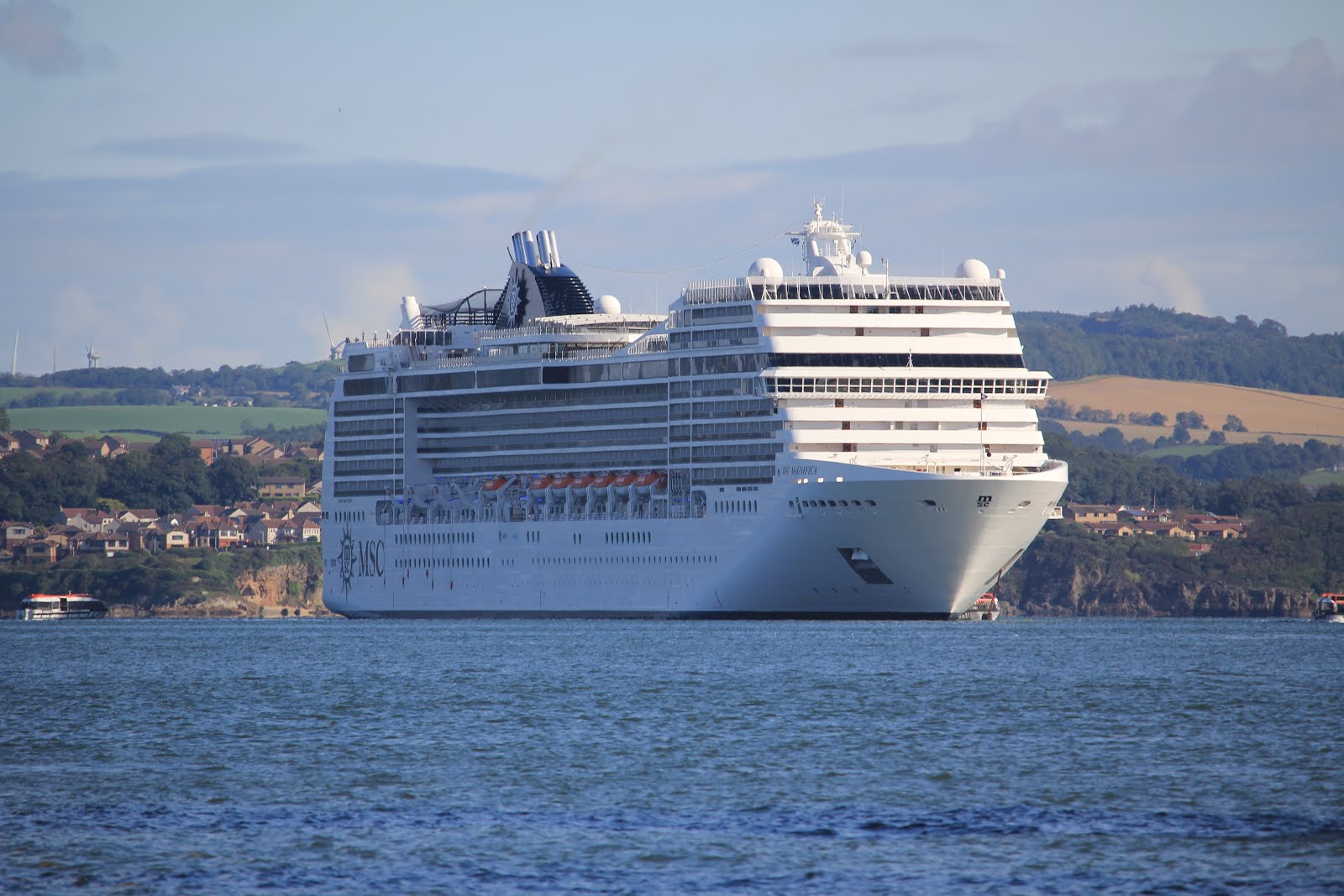
MSC Cruises today announced its commitment to become the world’s first fully carbon neutral major global cruise line, according to a press release.

MSC said it will offset all direct carbon dioxide (CO2) emissions from its fleet marine operations through a blend of carbon offset projects developed according to the highest standards by leading international entities that take immediate action on greenhouse gas emissions. All costs for the offsets as well as any other associated items will be covered directly and in full by MSC, the company said, in a prepared statement. 

Pierfrancesco Vago, MSC Cruises Executive Chairman said: “Our focus on innovation since we built our first cruise ships only in 2003, ensures that we have one of the most modern fleets at sea as well as one of the highest environmentally performing. And, thanks to our long-term planning, this will allow us to already achieve a fleet-wide 29 per cent reduction in carbon intensity (rate) by 2024 vs. 2008, on our way to meet the 40 per cent reduction target set for 2030.

“Additionally, last week we announced that the LNG-powered fuel cells PACBOAT project will be hosted onboard MSC Europa – the first of five LNG-powered cruise ships that are due to join our fleet. This is not only a world-first for a technology that promises to be most efficient for high-power maritime operations but also yet another concrete example of our firm commitment to partner and support the accelerated development of the next-generation technologies that will lead us and this industry to zero-emissions ship operations.”

“As we recognize that today’s even most advanced maritime environmental technology alone is insufficient to immediately reach carbon neutrality, the further commitment we make today ensures that our fleet makes no negative contribution to climate change, starting January 1, 2020.”

Vago added: “We will work with leading providers in carbon credits able to offset CO2 emissions with the highest level of integrity. Our vision is to also invest in projects that provide quantifiable community benefits, protect the environment and support the UN Sustainable Development Goals.”

In particular, MSC said it aims to develop a carbon offset portfolio that incorporates projects which protect and restore ocean and coastal habitats while also absorbing more CO2 than currently occurs. 

Vago concluded: “Blue carbon offsets will be a specific area of focus of our commitment to ensure carbon neutrality with immediate effect. We will put our people and our resources to work to also support the development of the specific type of projects, and the enabling certification processes, that can generate this innovative form of offsets which directly benefit the oceans and communities that live by the sea. As more of these become available, we will steadily increase our reliance on them as an additional area of focus within our overall long-term commitment to achieving zero-emissions operations.”