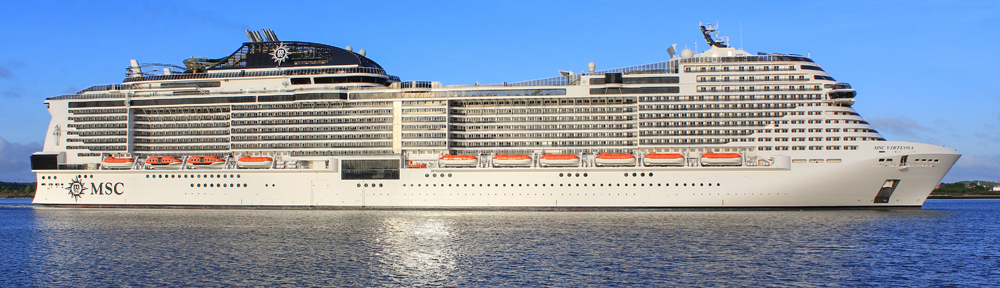
MSC Cruises to Reduce Fleetwide Emissions by Up to 15%

MSC Magnifica is anchored in the Firth of Forth just under the Forth Railway Bridge for more Images of Magnifica follow the link.https://flic.kr/s/aHsm7BUfg3

MSC Cruises is set to reduce fleetwide emissions by up to 15 per cent in 2026 by implementing a new itinerary planning optimization tool, OptiCruise, according to a press release.

Developed in collaboration with OPTIMeasy, the new mathematical model reportedly analyzes various factors influencing the planning of MSC Cruises’ itineraries. The goal is to achieve maximum efficiency while maintaining or enhancing guest satisfaction, the company stated.

The MSC Bellissima was selected to test the prototype technology over 12 months while sailing between 17 ports in the Mediterranean Sea.

Michele Francioni, chief energy transition officer at MSC Cruises, said: “We have identified and developed this new technology to optimize the decision-making process of itinerary planning to further reduce emissions across our fleet from 2026.  

 “The OPTIMeasy team calculates that the average fuel savings made, and emissions reduced by using OptiCruise are in the range of 10-15 per cent which is a significant step forward in our ambition to achieve our net zero greenhouse gas emissions target by 2050 for our marine operations.” 

According to the company, voyage planning in the global cruise industry has traditionally focused on the appeal of ship destinations to potential holidaymakers.

OptiCruise aims to expand this approach by incorporating a range of factors that affect itinerary efficiency. These include the sequencing of port calls, departure and arrival times, a ship’s speed, destination attractiveness, shore excursions and operational costs such as fuel, port charges and food provisions.

The tool’s algorithms analyze this data to identify optimized itineraries that maintain guest appeal while enhancing energy efficiency.

MSC Cruises’ strategy to reach net zero greenhouse gas (GHG) emissions by 2050 for its marine operations centres on three key areas: ship and engine technology, operational efficiency and renewable fuels. OptiCruise falls under the operational efficiency category, aiming to enhance energy consumption through increased digitalization.

OptiCruise was developed under the European Union’s Project CHEK, which explores low-carbon shipping technologies and innovative designs.

TUI Cruises’ Eighth Newbuild Named Mein Schiff Relax

The eighth ship in the Mein Schiff fleet, the first of the InTUItion class, will carry the name Mein Schiff Relax, according to a company statement.

“Communication on various platforms made it clear how important the name of this ship is for our guests. This ship is also something very special for us – it embodies the further development of everything that we have stood for almost ten years with the new ships in the Mein Schiff fleet,” said Wybcke Meier, CEO of TUI Cruises.

“That’s why we took our time and carefully considered the creation of the ship – along with all the great new opportunities for our guests. It is now clear to TUI Cruises that the new addition to the fleet can only have one name: Mein Schiff Relax. This is exactly what the first ship in the InTUItion class symbolizes – a completely new feel-good experience.”

The Mein Schiff Relax is set to offer the first cruises in the Mediterranean starting in March 2025.

Costa Cruises Simplifies COVID-19 Protocols

Costa Cruises is updating its COVID-19-related health protocols, making its vacations even more accessible, according to a press release.

Starting Oct. 8, new simple procedures will allow guests to enjoy onboard and shoreside activities without restrictions, the company said. 

The main changes concern the Mediterranean, the Caribbean and the United Arab Emirates, where fully vaccinated guests will no longer have to undergo pre-embarkation testing. In addition, in the Mediterranean and the Caribbean, unvaccinated guests with negative pre-embarkation antigen tests will also be able to embark.

In Mediterranean (excluding Greece) and the Caribbean cruises lasting less than 14 nights, guests who have completed the COVID-19 vaccination will be able to embark on the ships without having to undergo any more pre-embarkation tests.

Guests who have not been vaccinated or cured from COVID-19 will also be able to travel with Costa to these destinations, simply showing at the embarkation an official certification of the negative result of an antigenic swab (or also RT-PCR molecular swab, at the guest’s choice) performed within 48 hours of embarkation time.

All cruises calling in Greece will continue to be available only to fully vaccinated, partially vaccinated and recovered guests, and who have undergone antigen testing with a negative result within 48 hours of embarkation.

On cruises visiting Morocco, guests without full vaccination will be required to take an additional RT-PCR molecular test on board 48 hours prior to entry into the country. As for Caribbean cruises, shore leave of unvaccinated guests in Barbados, St. Vincent and St. Marteen is permitted only with a negative result of an antigen test performed 24 or 48 hours prior to the ship’s arrival. These tests, as well as those scheduled prior to entering Morocco, can be done onboard Costa ships at a special price.

Cruises in the UAE, Oman and Qatar are currently available only to fully vaccinated guests, but with no pre-embarkation testing required.

Around-the-World, transatlantic cruises, and generally all cruises longer than 14 nights, require guests to be fully vaccinated and take an antigen test with a negative result within 48 hours of embarkation time. In addition, mask use onboard will be mandatory in public areas during the first seven days of the cruise, while in other destinations (Mediterranean, Caribbean, UAE) mask use is simply recommended.