Norwegian Cruise Line is cancelling six additional cruises onboard the new Norwegian Viva, pushing the debut of the second Prima-Class vessel too late August.
“Given the global supply chain constraints impacting industries worldwide, including the maritime industry, we must cancel Norwegian Viva’s sailings from July 3, 2023, through and including August 17, 2023,” Norwegian said in a statement sent to booked guests.
The cancelled departures included itineraries in Northern Europe and the Mediterranean – where the Norwegian Viva is set to spend most of its maiden season.
According to the company, the impacted passengers are being offered two different options.
At a 20 per cent discount on the voyage fare originally paid, they are able to sail a comparable itinerary onboard the Norwegian Getaway.
The new reservations for the cruises onboard the 2014-built ship will include an equivalent stateroom category, keeping all of the guest’s previously selected promotions.
Those who opt to not transfer their cruise to the Getaway may also cancel the reservation and rebook at a later date, Norwegian said.
Guests choosing this option need to contact the cruise line, which will issue a full refund to the original form of payment.
Regardless of the option selected, all passengers are also receiving a 10 per cent discount on their next cruise.
According to the company, the offer can be combined with all available promotions at the time of the booking and must be used towards sailings from August 23, 2023, through December 3, 2024.
Second, in a series of six ships known as the Prima Class, the vessel will be a sister of the new Norwegian Prima – which is set to enter service in Iceland later this month.
The Diamond Princess and the Sapphire Princess are returning to the United States. After several years of sailing in Asia and the Pacific, the vessels are currently sailing to Los Angeles ahead of their service restarts in North America.
Out of service since early 2020, the Diamond Princess will be the first to arrive, on August 4.
The 2004-built cruise ship welcomes guests back on September 1 for a series of San Diego-based sailings.
The program includes cruises to the California Coast, the Baja Peninsula, the Sea of Cortez and Hawaii, marking the first time the vessel sails from a U.S. port since 2013.
In November, the Diamond is also offering a 20-night cruise to Central America that features visits to Mexico, Nicaragua, Costa Rica, Panama and Guatemala.
The Sapphire Princess, meanwhile, is set to arrive in Los Angeles on August 20. Completing the Princess Cruises restart, the ship is resuming service on September 24.
Also out of service since the start of the COVID-19 pandemic, the 2,600-guest ship is offering four- to 15-night cruises to Mexico, Hawaii and the California Coast from its Los Angeles homeport. The program marks the ship’s return to the U.S. after an eight-year gap.
In December, the Sapphire heads to South America for cruises to Patagonia, Antarctica and the Falklands.
After initially being laid up in Southeast Asia, both ships had been anchored off Cyprus since mid-2021.
With the Diamond and the Sapphire resuming service, the entire Princess Cruises fleet will sail with guests again.
Over the past months, 13 Princess cruise ships resumed service as well, bringing the company back to other areas such as Australia, the Mediterranean and the Caribbean.
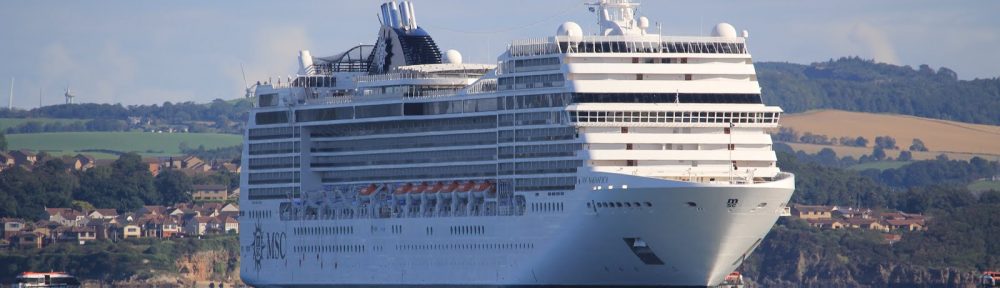
When the MSC Musica started sailing in early June, the entire MSC Cruises fleet was back in service. For the summer that means 11 ships in the Mediterranean, five ships in Northern Europe, two ships in the Caribbean and one ship in the Middle East, according to Gianni Onorato, president of MSC Cruises.
“We have all 19 ships operating and are looking forward to two more new ships coming in October and November, the Seascape and the World Europa,” he said.
The 205,700-ton, 5,400-passenger MSC World Europa will be the largest and also the greenest and most efficient ship in the fleet, with a dual-fuel powerplant able to operate on LNG, while also testing a fuel cell onboard for auxiliary power. The intention is to explore a potential hybrid propulsion solution for future implementation. The new ship will also be able to plug into shore power wherever that is available.
“The market is driven by capacity and demand,” Onorato continued. “But obviously the last two years have been different and difficult as we were not able to operate as we normally do. And then as we started to ramp up, there was omicron, then the war, and then the high inflation rate. But over the last couple of months, we have seen demand picking up as people have a strong need to go on cruises again. People want to go on holidays, and we are seeing strong booking trends.”
In terms of the other challenges the industry is facing, Onorato said: “As we started sailing again before anyone else, and because we spent less time in the layup, we were able to ensure continuity of employment, and we maintained our recruitment and training centres. The turnover rate may be a little higher than normal, but manageable.
“As for the supply chain, we share some of the same issues as others in the cruise industry but have an advantage as we are also in the logistics business.
“We have also maintained our organizations in China and Japan, and we are ready to resume service, which most likely will happen next year,” he added.
Operating in many markets, Onorato said that among the selling points differentiating MSC Cruises are its beautiful ships, which, he added, reflect the soul of the family-owned company and its commitment to quality and innovations, and most of all, its maritime heritage.
“The passion we put into building our ships is also a way of expressing how much we care about the sea. We are more and more a company that is focused on sustainability and a sustainable future,” he explained.
“Another feature that sets us apart, is that as a family-owned company we offer a different atmosphere onboard, a different ambience for our customers and crew alike.
“We are also the only true international company. As our Chairman Pierfrancesco Vago likes to say, we are local and global, or glocal.
“Wherever our ships are sailing, we also adapt our product to local tastes and preferences,” Onorato added. “I think we are the only company operating ships in Brazil for Brazilians, in Argentina for Argentinians and in South Africa for South Africans.
“Our ships in the Middle East also have a high ratio of local customers onboard, and in Northern Europe, most of our customers are from countries in that region. And in the Mediterranean, our main markets are Italy, France and Spain.
“Our cruises are always open to anyone. In the United States, for example, a large share of passengers is from outside the U.S. So, we offer a different experience; more sophisticated, more discovery, all in all a different experience than the other brands in that market.”
In the United States, MSC sails from Miami and Port Canaveral and will also have the Meraviglia year-round out of New York in April.
Meanwhile, the city will serve as the backdrop for the naming of the MSC Seascape in December. (She then sails to Miami where she will be deployed for a winter season in the Caribbean.)


 Wetravel2u's Weblog