MSC Cruises to Operate Palumbo Malta Shipyard in New Joint Venture

Antonio Palumbo and Pierfrancesco Vago

MSC Cruises and Palumbo Group today officially announced they have formed a joint venture to operate the Palumbo Malta Shipyard. The news was previously reported by Cruise Industry News earlier this year.

The new joint venture sees MSC Cruises take a 50 per cent stake in the shipyard and become an equal partner alongside the current owner Palumbo Shipyards. The yard has four drydocks of various sizes and will be available to other cruise operators, according to MSC.

The companies said they are planning a major update to the yard, which will become the yard of choice for MSC Cruises’ vessels as well as from MSC Group cargo ships and ferries while continuing to serve the shipyard’s existing clients.

Palumbo Malta Shipyard

Of note will be the potential introduction of cutting-edge technology to allow servicing and repair of the next generation of LNG powered cruise ships being built for the MSC Cruises’ fleet, according to a statement.

Pierfrancesco Vago, Executive Chairman, MSC Cruises said: “I am proud to be forming this joint venture with Mr Palumbo and his group today. This is a natural culmination of our already warm and close relationship that has developed from the professionality he has shown over the years. We look forward to the professional service and repairs our vessels will receive.”

Antonio Palumbo, the founder and Chairman of Palumbo Group, added: “I am happy with this joint venture with the Aponte family because, in addition to having a personal and consolidated friendship over the years, it unites us with common business philosophy. This agreement is not just a financial transaction but is aimed at strengthening our network and is part of a group corporate strategy.

“Today I am proud to expand our services, consolidated over the years thanks to far-reaching experiences, through this partnership with a world-class player. I am sure that the future will prove us right, leading this shipyard to consolidate itself as one of the most important multi-purpose structures in the markets of cruise, merchant and advanced-technology ships, providing refitting services, general maintenance and installation of Eco-Friendly systems where Palumbo Shipyards already holds a leading position. Not least, the whole Maltese community will benefit from a new economic boost.”

CLIA anticipates talks with CDC on return to the sea


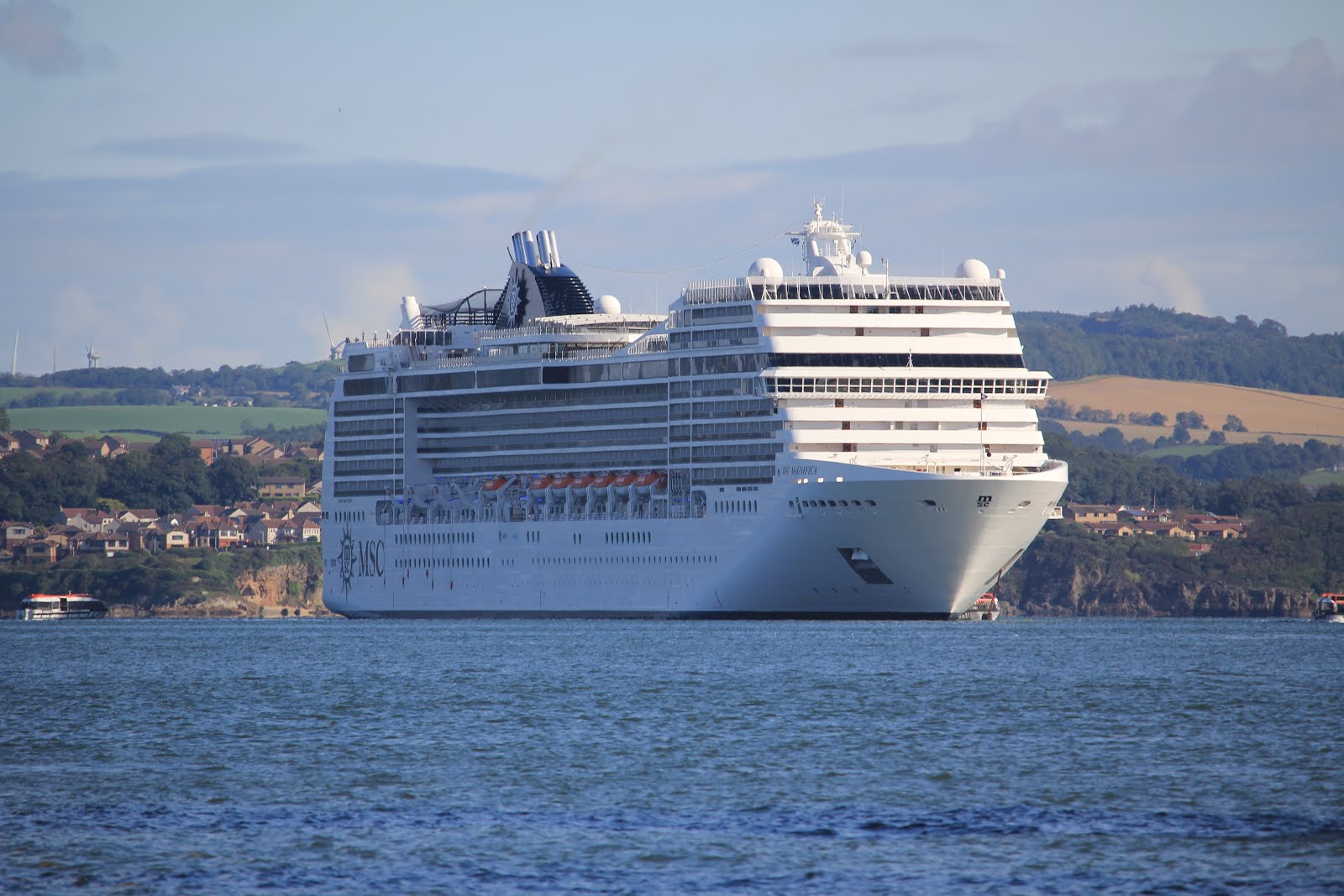
MSC Magnifica at anchor in Queensferry Edinburgh

Days after the Centers for Disease Control and Prevention (CDC) extended the No Sail Order for cruise ships from U.S. ports through September, CLIA expressed confidence that it was close to starting a meaningful dialogue with the agency about resuming sailings.

CLIA global chair Adam Goldstein said that so far, its engagement with the CDC has focused mostly on the health and repatriation of crew members who were still aboard ships in U.S. waters.

The CDC had not thus far engaged meaningfully with CLIA and the industry about resuming service, Goldstein said, but he was encouraged that would begin, citing commentary in the No Sail Order extension that indicated “a willingness for information exchange and development of approaches beyond what we had seen from them before.”

CLIA was also encouraged that its voluntary suspension through Sept. 15 closely aligned with the CDC’s No Sail Order extension to Sept. 30.

“The fact that we’re beginning to converge makes us more optimistic that the kind of engagement we’re looking for with the CDC as our regulator will begin in the near future and will allow their experts, our experts, our operations personnel, our leaders and their leaders to have the kind of dialogue that will result in the safe and successful resumption of service,” Goldstein said.

clia_logo_secondary_horizontal_cruisingblue – CLIA Asia

According to CLIA, being involved in such high-level talks with regulators in Europe has helped enable the resumption of limited cruise operations in Germany and Norway.

“The EU has engaged with us fairly intensively through multiple rounds of discussion to work toward an EU guidance permitting national regulators to adopt appropriate regulations, which, in combination with our protocols, we believe is what put Germany and Norway in a condition to restart under the limited conditions,” Goldstein said.

CLIA believes more European countries in the near term may also begin limited cruise operations.

“This is a reflection of one of the expectations we’ve had for a couple months now — that cruising would restart in kind of a sequential manner,” Goldstein said.

CLIA’s primary focus is still on its members’ primary source market, North America, and most popular destinations: the Caribbean, Alaska, Bermuda and Mexico. Goldstein said that CLIA and the Florida-Caribbean Cruise Association are in dialogue with destinations around North America “to work toward alignment” on how they can confidently open up to cruise ship visits.

Outbreak of Lung Injury Associated with the Use of E-Cigarette, or ...

“In order for the North American cruise market to regenerate, two things need to be true: The cruise industry needs approval from the CDC to resume operations in and out of the U.S., and the ports of call need to accept the ships,” Goldstein said. “This critical work will take time, but it is in everyone’s interest to come to a mutually agreeable approach.”

In what seemed to be a response to the CDC’s citing a lack of consensus among cruise lines and the need for additional industry-led efforts regarding safely resuming passenger operations, Goldstein said that over the next weeks and months, CLIA expects to emerge with one or more policies that members will eventually sign onto in response to the pandemic.

“Our goal remains to emerge with a unified approach policy-wise across the associations that all member lines will sign up for,” he said. “I can’t tell you when that will occur or the steps that will get us there.”

Can cruising go from Covid scapegoat to pandemic hero?

Coronavirus: Foreign Office tells Britons to stay on cruise ship ...
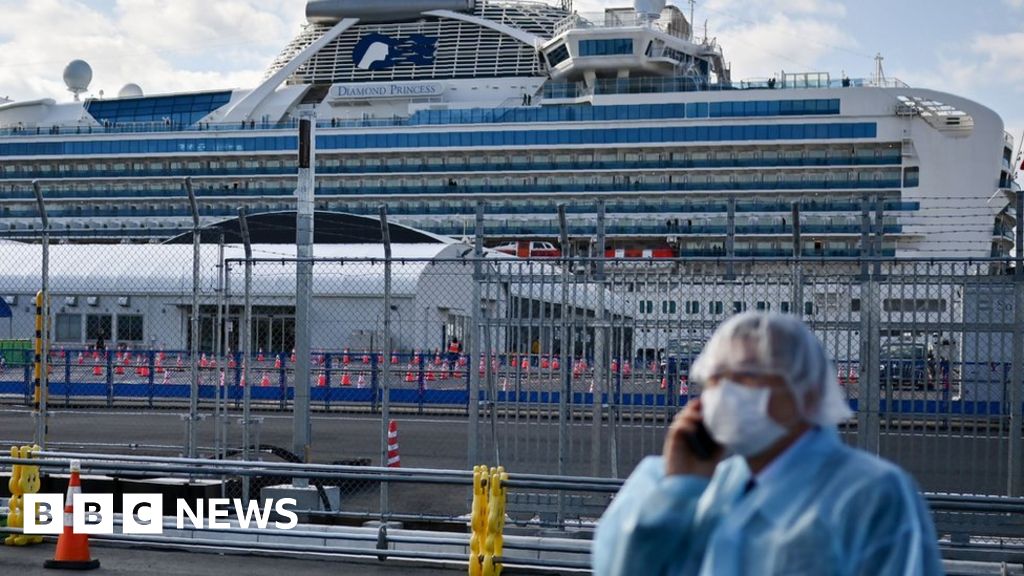
Diamond Princess in Japan

In terms of economic and reputational damage, travel was the first industrial sector to fall victim to the coronavirus and is expected to be the last to recover.

And among travel products, none has taken a harder reputational hit than cruising.

But recently, a path to reputation restoration has opened, and with it the possibility that cruising may even be credited with funding advances related to epidemiology.

Crises of the magnitude of Covid-19 spur a binary result for enterprises: innovation or collapse. And the high degree of risk posed to cruise lines is measurable, reflected in the cost of the loans and investments they arranged to ensure midterm liquidity.

But signs have emerged that cruising will not only survive but even offer a case study of exemplary crisis management. Such a narrative might go like this:

When the initial reports of the virus came out of Wuhan, China, they were frightening but distant, clouded by medical unknowns and shrouded by official silence and secrecy.

A clearer, though far from complete account emerged from the disease’s devastating impact on a cruise ship quarantined dockside in Japan. For more than two weeks, the attention of the world focused on a microcosm of an emerging pandemic. The setting — the Diamond Princess — became a metaphor for contagion and fear. Every new and morbid development was broadcast worldwide.

How does a product that has never been universally embraced — it has devoted followers, but still struggles against outdated stereotypes and a persistent chorus of critics — overcome the stinging characterization of being a “petri dish” of infection?

Even within the travel ecosystem, cruising’s situation seemed particularly dire. Aviation and hospitality had been struck devastating blows; individual brands are still endangered. But because these sectors never stopped operating, enhanced protocols for sanitation were formulated and deployed quickly.

Compared with cruising, these are relatively simple operations. Airline passengers occupy just a few cubic feet of space over a brief period of time. Service is minimal.

Hotels are more complex, but they don’t move around and are typically surrounded by a community of supportive services.

A portion of cruising mirrors hotel operations, and like aircraft, ships move through multiple regulatory jurisdictions. But cruise companies also run shore excursions, manage private islands and maintain myriad public spaces, restaurants and recreational opportunities. They house staffs as well as guests. Maritime engineering and architecture bring additional challenges. And ships must be self-contained, often isolated from support for days.

It’s the sheer number of issues cruising must address that may ultimately give it its halo. Travel Weekly news editor/acting cruise editor Johanna Jainchill and I interviewed former secretary of Health and Human Services (and three-time Utah governor) Mike Leavitt, former Food and Drug Administration commissioner Dr. Scott Gottlieb, Royal Caribbean Cruises Ltd. chairman Richard Fain and Norwegian Cruise Line Holdings CEO Frank Del Rio last week on a Zoom call to discuss a panel they assembled to develop health and sanitation protocols.

The panel comprises working groups. One, for example, will recommend how to operate a safe shore excursion, breaking it down to components in order to minimize the possibility of introducing the virus from a port onto a ship.

Fain and Del Rio expressed willingness to share what they discover with other cruise lines, and Gottlieb noted that, because the challenges of cruising are diverse, the work done by the panel may have applications in other industries.

If so, the petri dish metaphor could be replaced by the image of a ship as a bubble of protection, an environment, as Gottlieb put it, of “exquisite control” that poses less threat than a land vacation.

Should this vision be realized, the extended No Sail Order may ultimately be viewed as an unintended blessing. The lines not only have the time to get it right but to emerge from the crisis as innovators and responsible corporate citizens.

It’s not a far-fetched outcome. There’s a parallel in the oft-cited challenge Tylenol faced in 1982 when cyanide was put, seemingly randomly, into bottles of the pain reliever on shelves of Chicago-area stores. Seven people died, and the brand became associated with fear and death.

At a cost of $100 million, the company recalled and destroyed all existing bottles of the drug and developed the multilayered, tamper-proof seals that have become standard for the industry. But more than that, manufacturer Johnson & Johnson was credited with putting values over profit. Confidence in Tylenol was restored and, as importantly, trust in the entire company was enhanced.

As noted above, cruising is a complex product. There are still hurdles to overcome, and the recruitment of big names for a blue-ribbon panel is not enough to ensure success. But after speaking with Del Rio, Fain, Gottlieb and Leavitt, I’m encouraged that if they follow through on their commitments for passenger safety, the industry will not only recover but may receive due credit in the annals of health and crisis management.