BA’s 747 retirements ‘should bring forward aircraft scrappage scheme’

End of the BA jumbo jets: British Airways scraps ENTIRE FLEET of ...

The government must use British Airways’ retirement of its 747 fleets to bring forward aircraft scrappage scheme, says union Unite.

BA announced this morning that it is to retire its Boeing 31-strong 747 fleets as a result of the coronavirus pandemic. The move was brought forward from 2024.

Unite national officer Rhys McCarthy noted the nostalgia of the aircraft but called on the aviation industry to use the landmark to move towards cleaner aircraft.

“While the 747 jet is held in high regard, it is time for the ‘queen of the skies’ to relinquish her throne,” he said. “The entire aviation industry’s stock of older more polluting planes needs to be replaced with the next generation of cleaner and quieter aircraft built and maintained in the UK.

“Other European countries, including France, Germany, Spain and the Netherlands, have already committed to scrappage measures that will see their aviation industries invest in greener aircraft and help re-kickstart aerospace manufacturing so badly hit by the Covid-19 pandemic.

“It is now time for the UK government to do the same and put together a sector-based strategy for the long-term future of our world-leading aerospace industry, and the thousands of highly skilled jobs it supports.

“Investment in research and development is vital if zero and ultra-low emission planes are to be built. However, this must be accompanied with an immediate industry-wide scrappage scheme so that the newest planes, which emit 25 per cent less Co2, are 25 per cent more fuel-efficient and 50 per cent quieter, can replace more polluting aircraft as quickly as possible.”

This week Boris Johnson said he would ‘examine’ the idea of an aircraft scrappage scheme. Transport secretary Grant Shapps recently announced a Jet Zero Council to work towards carbon-neutral transatlantic flights.

McCarthy said: “British Airways’ retirement of the 747 should be the impetus he needs to put such a [scrappage] scheme into action.”

Alex Cruz, British Airways’ chairman and chief executive, said: “This is not how we wanted or expected to have to say goodbye to our incredible fleet of 747 aircraft. It is a heartbreaking decision to have to make. So many people, including many thousands of our colleagues past and present, have spent countless hours on and with these wonderful planes – they have been at the centre of so many memories, including my very first long-haul flight. They will always hold a special place in our hearts at British Airways.

“We have committed to making our fleet more environmentally friendly as we look to reduce the size of our business to reflect the impact of the Covid-19 pandemic on aviation.  As painful as it is, this is the most logical thing for us to propose. The retirement of the jumbo jet will be felt by many people across Britain, as well as by all of us at British Airways.  It is sadly another difficult but necessary step as we prepare for a very different future.”
Vestas wins new orders for wind turbines in the US, Canada, France, The Netherlands, Italy, Japan and Vietnam

V117-4.2 MW®

Vestas has received an order for 278 MW of V150-4.2 MW turbines for a 302 MW project in the US including previously purchased 4 MW components. The order includes supply and commissioning of the turbines as well as a 10-year Active Output Management 5000 (AOM 5000) service agreement, designed to ensure optimised performance for the lifetime of the project. Turbine delivery will begin the second quarter of 2021 with commissioning scheduled for the fourth quarter of 2021. The project and customer are undisclosed.

In Canada, Vestas has received a 151 MW order of V136-3.45 MW turbines delivered in 3.6 MW Power Optimised Mode from Capital Power for the 97 MW Whitla Wind 2 and 54 MW Whitla Wind 3 projects in Alberta, Canada. The order includes supply and commissioning of the turbines as well as a 10-year service agreement, designed to ensure optimised performance for the lifetime of the project. Turbine delivery and commissioning are scheduled for 2021.

Whitla Wind 2 and 3 expand on the 202 MW Whitla Wind 1 Project, installed in 2019 and featuring the same turbine type.  Whitla Wind 1 was selected as one of four projects by the Alberta Electric System Operator (AESO) in Alberta’s first renewable energy auction, a competition that attracted global participation.

Alberta plans to add up to 5,000 MW of renewable energy to the grid by 2030. The province is the third-largest wind market in Canada, which ranks 9th in the world for installed capacity. The wind has been the number one source of new electricity generation in Canada for more than a decade.

In France, international renewable energy developer Valeco has placed a 42 MW order for three wind projects, consisting of the supply and installation of eight V100-2.0 MW wind turbines delivered in 2.2 MW Power Optimised Mode and eight V117-3.45 MW wind turbines in 3.0 MW operating mode, as well as Active Output Management 5000 (AOM 5000) service agreements, designed to maximise energy production for the sites.

The name and location of the projects are undisclosed. Turbine delivery and commissioning are scheduled for the first half of 2021.

Vestas has over 5.1 GW capacity installed and over 2,300 wind turbines in France. These numbers place the company as the main contributor to the expansion of wind energy in France, where last year the company had a 40 per cent market share.

Also in France, Elicio has placed a 32 MW order for the Le Haut Plateau wind project, consisting of the supply and installation of nine V136-3.45 MW wind turbines delivered in 3.6 Power Optimised Mode, as well as an Active Output Management 5000 (AOM 5000) service agreement for at least the next 20 years.

Turbine delivery will begin in the third quarter of 2021, with commissioning scheduled for the fourth quarter of the same year.

Vestas to deliver 46MW Dutch delight - reNews - Renewable Energy News

In The Netherlands, Vestas has won a 36 MW repowering order with Vattenfall for the Jaap Rodenburg II project. The wind project will be installed in the Province Flevoland, near Almere and will feature ten V117-3.45 MW turbines with 91.5-metre towers delivered in 3.6 MW Power Optimised Mode to maximise energy production in the site’s medium to high wind conditions, while meeting the local tip height requirements. This repowering project will replace the 10 V66 turbines and will more than double the installed capacity at the location.

The project will feature a VestasOnline Business SCADA solution, lowering turbine downtime and thus optimising the energy output. The contract further includes supply, installation and commissioning of the wind turbines, as well as a 10-years Active Output Management 5000 (AOM 5000) service agreement.

Deliveries are expected to begin in the first quarter of 2021, while commissioning is planned for the second quarter of 2021.

In Italy, the company has received a 49 MW order for two projects located in the Campania region, consisting of six V110-2.0 MW wind turbines delivered in 2.2 MW Power Optimised Mode and ten V117-3.45 MW wind turbines in 3.6 MW operating mode.

The supply and installation contract also includes a 5-year Active Output Management 5000 (AOM 5000) service agreement.

Turbine delivery and commissioning are planned for the first half of 2021. The names of the wind parks are undisclosed as per customer request.

With a 70 per cent market share in 2019 and with over 4.3 GW total capacity installed, Vestas leads the market as the main contributor to the expansion of wind energy in Italy.

In Japan, Vestas is working with Tokyu Land Corporation and Japan Wind Development, having secured a 76 MW order for Chitose Wind Farm and Noheji Mutsuwan Wind Farm in the Aomori prefecture.

Due to the typhoon and earthquake-prone environment of the region, an extended collaboration between all project partners was required when designing a turbine solution to maximise wind capture in the sites’ challenging wind and weather conditions.

The order includes the supply and supervision of four V117-3.45 MW and six V105-3.45 MW turbines that are all delivered in 3.6 MW Power Optimised Mode at Chitose Wind Farm, as well as eleven V105-3.45 MW turbines in 3.6 MW Power Optimised Mode at Noheji Mutsuwan Wind Farm.

With a robust design for tough wind sites, the turbine variants are well-suited for the sites’ challenging climatic conditions and all turbines will feature customised 94m towers to accommodate seismic loads, high turbulence and extreme wind speeds.

Vestas will also provide multi-year Active Output Management 5000 (AOM 5000) service agreements for both wind farms. With an energy-based availability guarantee, the agreement will ensure optimised performance and long-term business certainty.

Delivery of Vestas’ turbines will begin in the first quarter of 2021 with commissioning scheduled for the fourth quarter of 2021.

MHI Vestas Secures Order in Japan for 139 MW Offshore Wind Projects

Vestas installed its first turbines in Japan in 1995 and has since then installed a total of 650 MW, making Vestas the leading wind energy provider in the Japanese market.

In Vietnam, Vestas has won an 84 MW order to supply, transport, install and commission a total of 20 V150-4.2 MW wind turbines, in which it worked closely with the customer to customise a solution featuring V150-4.2 MW turbines at a hub height of 145 metres to help optimise the wind energy production for the project.

The order takes Vestas’ firm order intake for the V150-4.2 MW in Vietnam to over 600 MW since its first order win in March of last year, underlining the turbine variant’s excellent fit to deliver high and efficient energy production in Vietnam’s low to medium wind speeds.

The project and customer are undisclosed, but the construction of the project is expected to be completed in the third quarter of 2021, ahead of the current wind feed-in tariff deadline in Vietnam.

Norwegian Bliss Conveyance Photos

Norwegian Bliss Conveyance

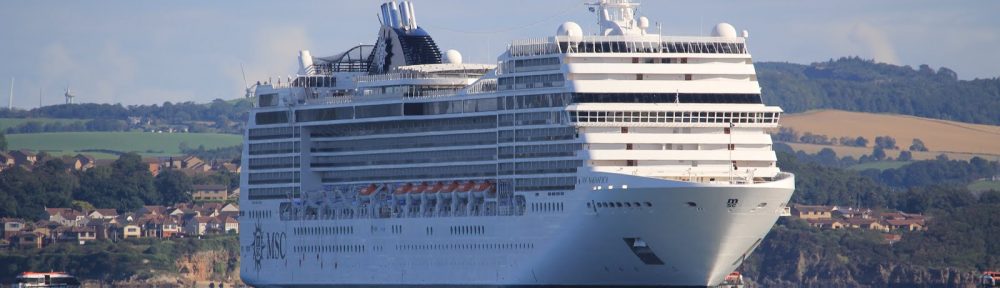
The Norwegian Bliss departed Meyer Werft in Papenburg, Germany, last night for her conveyance along the Ems River, and is arriving at Eemshaven, Netherlands, on Wednesday, according to Norwegian Cruise Line.

“Today marks another historical moment for Norwegian Bliss, the most highly anticipated ship of the Norwegian Breakaway Plus class, the most successful class of our company’s history,” said Andy Stuart, president and chief executive officer of Norwegian Cruise Line. “When she arrives into Seattle in June, guests will be excited to experience many new first-at-sea activities, including the largest two-level race track at sea, new dining experiences, such as Q Texas Smokehouse and Coco’s a chocolate and treat shop, the Tony Award-Winning Broadway Show Jersey Boys and much more for guests to explore.”

Norwegian Bliss Conveyance

Measuring 994 feet long, 136 feet wide, and at a gross registered tonnage of 168,028, she embarked on her journey down the Ems River and up to the North Sea in reverse, making the narrow passage through Meyer Werft’s sea lock, with less than four feet clearance.

This very careful manoeuvre took about two hours at a speed of only 0.2 knots, the company said.

Norwegian Bliss Conveyance

The navigation crew included a team of experienced Ems River pilots, navigation officers, the yard captain and the local German waterway authorities.

After passing through the sea lock, the Norwegian Bliss continued along the river stern first,.

Norwegian Bliss Conveyance

Her journey to Eemshaven included cruising through the narrow passages of the Friesenbrücke Bridge in Weener; Jann Berghaus Bridge in Leer; and Ems-Barrier in Gandersum.

When she arrives at Eemshaven, she will take on additional provisions and crew members, before heading toward the North Sea for technical and nautical sea trials. This will be one of the final phases, before Norwegian Cruise Line takes delivery on April 19, 2018, in Bremerhaven, Germany.