Norwegian Cruise Line Flags ‘Going Concern’ Over Ability to Stay Afloat

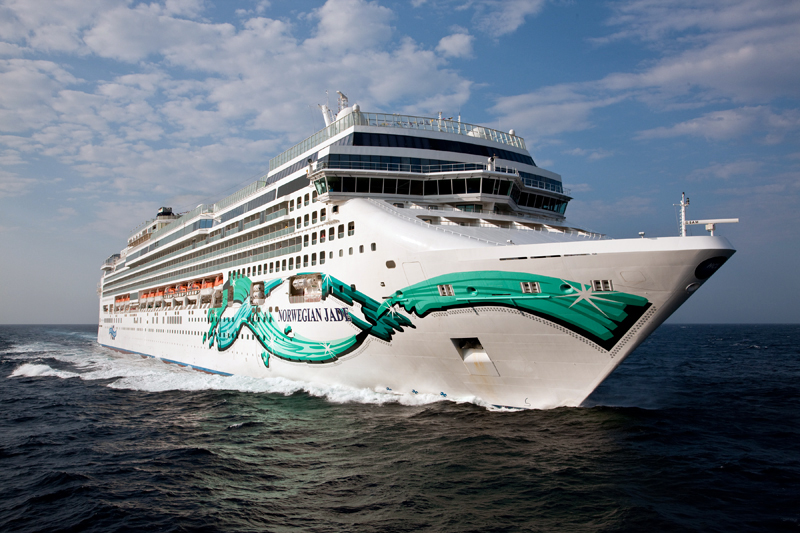
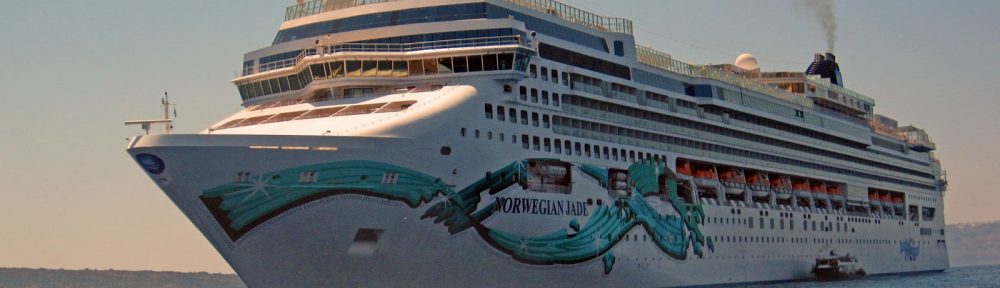
Norwegian Jade photo credit Dave Jones

Norwegian Cruise Line Holdings Ltd., the world’s third-largest cruise operator, raised doubts about its ability to keep running as a business on Tuesday, the first in the sector to signal it may succumb to the coronavirus crisis.

The company’s shares slumped about 20% as it also launched a $1.6 billion offering of shares and bonds in a scramble to raise money, and announced a $400 million investment in a subsidiary from a private equity firm.

Norwegian Cruise and rivals Carnival Corp and Royal Caribbean Cruises have been among the most high-profile victims of the pandemic after deadly outbreaks on some cruise ships led to extended port quarantines in Japan and California.

Norwegian, which has suspended its sailings through June 30, has not yet announced a relaunch date. On Monday Carnival said it plans to resume some cruises beginning Aug. 1, pending continued efforts to coordinate with government officials.

The cruise industry was left out of a $2.3 trillion U.S. stimulus package for troubled companies as the major players are all incorporated outside the United States.

“COVID-19 has had, and is expected to continue to have, a significant impact on our financial condition and operations, which adversely affects our ability to obtain acceptable financing,” Norwegian said, also flagging substantial doubt about its ability to continue as a “going concern.”

The company said that as of April 24, advanced bookings for the remainder of the year were “meaningfully lower than the prior year, with pricing down mid-single digits.” Norwegian’s shares have lost almost 80% of their market value this year.

The Miami-headquartered company faces class-action lawsuits alleging that it made false and misleading statements to the market and customers about COVID-19 and its impact on its business – allegations it says are without merit.

In March, the Florida Attorney General announced an investigation related to Norwegian’s marketing to customers during the coronavirus outbreak, based on allegations it downplayed the severity and highly contagious nature of the virus in an effort to sell cruises.

Other attorneys general and governmental agencies are conducting similar investigations, according to the company.

Norwegian said it does not have sufficient liquidity to meet its obligations over the next 12 months.

Since the start of the crisis, the company has borrowed $1.55 billion under credit facilities. At the end of last year, it had about $6 billion of total long-term debt obligations and cash and cash equivalents of $252.9 million.

A subsidiary of Norwegian Cruise got a $400 million investment from consumer-focused private equity firm L Catterton on Tuesday. It had been in talks with several private equity firms.

Shares of Carnival were down 4.3% and shares of Royal Caribbean were down 5.6% on Tuesday. (Reporting by Helen Coster in New York and Ankur Banerjee and Nivedita Balu in Bengaluru; Editing by Saumyadeb Chakrabarty, Sweta Singh and Tom Brown)

Norwegian Cruise Line Holdings: Virus depressing bookings globally

The Norwegian Spirit has been moved from Asia to Europe.

The coronavirus Covid-19 outbreak has caused a slowdown in new bookings and increased cancellations worldwide, Norwegian Cruise Line Holdings reported to investors today.

NCLH CEO Frank Del Rio said that the impact of the virus extends beyond Asia, threatening what in early January looked to be the start of a record year for the company.

“The resiliency of our business model will be tested once again by a noncontrollable external factor,” he said. “The effect of the coronavirus outbreak on our business has been swift and severe and the continuous global headline news coverage has been substantial and relentless.”

NCLH said in an earnings release that it has cancelled 40 cruises across its three brands due to the outbreak: 10 on Oceania, six on Regent Seven Seas, and 24 on Norwegian Cruise Line (21 were on the Norwegian Spirit, which was redeployed to the Eastern Mediterranean from Asia earlier this month.

NCLH CFO Mark Kempa called the outright cancellation of cruises on Oceania and Regent Seven Seas “a significant impact for us.”

Image result for regent seven seas asia cruises

“Those are very long lead-booking itineraries with very high per diems,” he said. “Those voyages were completely sold out.”

Despite the Spirit’s extremely condensed booking window, Del Rio said the relocation of the ship provides the best opportunity to maximize its earnings and revenue potential and “demonstrates our nimbleness and ability to redeploy our assets as necessary.”

Looking ahead, Del Rio said that “given the unknown duration and severity of the outbreak, there may additional impacts that are not yet quantifiable. It is affecting the broader consumer demand environment that extends to our global deployment outside of Asia, which cannot be quantified at this time.

“The cruise industry was at the forefront of headline news for reasons that we know and that has caused near panic in the travelling public,” he added. “So, we’ve seen a meaningful decrease in new bookings. A meaningful increase in cancellations. Not just for our Asia sailings but throughout the deployment.”

Del Rio said he’s heard from travel partners and business partners that they are seeing similar trends across their portfolios.

“Business is soft, people are scared to travel,” he said. “Until we see the levelling off of new cases and the cruise industry not being the poster child for the virus, this may continue for some time.”

But he also said that “nothing is permanent.”

“Consumers do have a relatively short memory, thank god. We have seen other major events affecting the cruise industry that were quickly overcome,” Del Rio said.

Silver linings 

Del Rio also pointed to “silver linings,” including what he called the “underlying resilience of our business and potential for a reasonably timed recovery.”

The strong booked position prior to the outbreak, he said, “demonstrates the strong demand fundamentals of our business.”

He also said that in the past five days, NCLH has seen an improvement in week-over-week booking volumes and a decrease in cancellations compared with the prior three weeks.

“I don’t want to call it a turnaround trend just yet, but it is at least one data point of a possible positive change,” he said.

“We are no longer seeing a week-over-week acceleration in the declines in bookings and increases in cancellations. We’re seeing a moderation.”

Del Rio said the bookings decrease is similar to what the company experienced during similar geopolitical events and the financial crisis a decade ago. The difference with this crisis, he said, is the increase in cancellations.

“As an industry and company, we have faced and overcome challenges similar to Covid-19,” Del Rio said.  “I am confident this challenge will not be different. It usually takes eight-plus weeks from the time the news cycle peaks to when we can expect a return to normal booking patterns. It’s not a question of if, but when.”