Norwegian Cruise Line Holdings CEO Frank Del Rio has been seeking permission for his U.S.-based cruise ships to dock in Cuba for over a year. On Dec. 7, the Cuban-born Del Rio was called to Havana to sign agreements that finally enable all three of the company’s brands to sail there next year. He spoke with senior editor Tom Stieghorst about the process.
Q: Were you aware when you were down there that the other cruise lines had also been approved?
Frank Del Rio
A: I was pulling into the terminal building where the signing ceremony was taking place, and as I was pulling up with my driver and my team, [Royal Caribbean Cruises Ltd. president and COO] Adam Goldstein was walking out with his team and we exchanged pleasantries as we always do, congratulated each other and had a good laugh about it.
Q: So you almost had a CLIA quorum?
A: Adam even mentioned that. He said, “Frank, I understand there’s a CLIA meeting today,” so that was one of the reasons we had a good laugh.
Q: What building were you in and who were your Cuban counterparts?
A: Oh, there’s too many to mention, and they may not want us to mention them, but the ceremony took place at the terminal building where the cruise ships actually tie up. It’s a very nice building. As I told the officials there, I think that terminal facility is as nice a facility as any in the world, certainly the premier one in the Caribbean basin and Central America that I’ve been to, at least.
Q: Do you plan to visit other ports besides Havana?
A: We do, but not in this first round that covered 10 sailings of the three brands through May 31. Q: Do you have any insight as to why the Cubans acted now?
A: I don’t. I think one could speculate. Is it because Fathom pulled out? Is it because of the rhetoric around president-elect Trump’s views on Cuba? It could hypothetically mean that after some time Cuban authorities felt comfortable with additional cruise lines. I didn’t ask. I don’t really care. I’m just happy as all can be that we’re finally in.
Q: Will this be too much at once? Is there anything that concerns you about the infrastructure arrangements?
A: No, on both counts. Because of the infrastructure limitations, the maximum number of vessels in Havana at any given point in time are two: a mid-size vessel like a Sky or a Marina, for example in our case, and one smaller ship, like an Oceania R ship or Regent Mariner. So the number of cruise guests who can be in Havana at any given time is in the 2,500 to 2,700 range. Havana’s a large city. Cuba handles over 3 million tourists a year. So I don’t see that as a burden whatsoever.
Q: Will your shore-excursion department plan the people-to-people program? Do you have someone in Cuba that can help?
A: Both. I don’t see the shore excursions that we would offer in Cuba to be significantly different than the ones we provide when we go to any major historical metropolitan area. Whether it’s Rome or Istanbul or St. Petersburg, Russia, our target customer, especially for the upscale brands, isn’t going to the beach when they go to the Greek islands; they aren’t necessarily going to the beach when they go to Hawaii. They’re looking for experiences, they’re looking for cultural exchanges, they’re looking to visit museums and things of that nature. That’s a lot of what Havana has to offer.
Norwegian Cruise Line president and CEO Andy Stuart, second from right, with passengers on a mid-1990s sailing in Hawaii.
Fifty years ago, a new name in travel was launched, along with a new concept for a vacation.
The first voyage of Norwegian Caribbean Line (now Norwegian Cruise Line) marked the birth of the regularly scheduled Caribbean leisure cruise.
It was impossible to anticipate the outlines of today’s cruise industry in that beginning.
A 1968 ad for the Sunward, with a seven-day price starting at $175.
The line’s first ship, the Sunward, was a converted ferry of 8,666 tons that carried 558 passengers and offered none of the modern amenities or luxuries associated with cruising.
But after that first voyage on Dec. 19, 1966, travelers would begin flocking to the Caribbean, and travel agents would find a new source of income.
“I don’t think we would be talking about cruising today like we are had they not had that idea to be in cruising in the Caribbean 50 years ago,” said Brad Anderson, co-owner of Avoya Travel.
To mark the line’s 50th anniversary, Travel Weekly asked some agents to recall memorable moments in Norwegian’s history, events that were significant or shaped the line that passengers know today.
Norwegian was a pioneer in many areas of developing the cruise product. It was the first to have a private island, in the Bahamas, the first to package cruises with included airfare and the first to create a department for corporate and incentive sales.
It daringly bought the liner France for use in the Caribbean in 1979 but floundered until its acquisition in 2000 by what was then Star Cruises, now Genting Hong Kong.
It was the acquisition by an Asian line that led to what travel agents said was the most significant development in Norwegian’s history: the advent of Freestyle Cruising on the Norwegian Sky in 2000.
“Freestyle Cruising really was a turning point for [Norwegian],” said Rich Skinner, president of Cruise Holidays of Woodinville, Wash.
Significant milestones in Norwegian Cruise Line history
1966: First voyage of Norwegian Caribbean Line from Miami on Dec. 19.
1979: The France bought and converted to the Norway at a cost of $100 million.
2000: Company acquired by Star Cruises; Freestyle Cruising developed.
2005: Interisland cruises in Hawaii launched by NCL America.
2013: The company, now called Norwegian Cruise Line, goes public.
2014: Regent Seven Seas Cruises and Oceania Cruises join Norwegian under Norwegian Cruise Line Holdings.
The decade preceding the sale had not been auspicious. Norwegian was weighed down by debt dating to the $80 million conversion of the France into the Norway.
It acquired Royal Viking Line and Royal Cruise Line to no great advantage. There were layoffs, a revolving door in the executive suite and a scattershot marketing message. Norwegian also faced two dynamic competitors in Carnival Corp. and Royal Caribbean Cruises Ltd.
After Star Cruises completed its purchase in February 2000, there were immediate discussions about how to differentiate the brand, said Andy Stuart, then Norwegian’s vice president of sales, now the line’s president and CEO.
Star Cruises chairman KT Lim, having sailed on Western-style cruises in the early 1990s, decided that the rigid, two-seating dining format wouldn’t work in Asia because his customers would not show up on schedule, Stuart said.
Star’s dining was flexible, and Norwegian studied it and then opted to adopt it as a point of difference for its line.
“The operations team believed they could execute it on the existing fleet,” Stuart said. “And then the opportunity was [that] we would have the ability to design ships for it on a go-forward basis.”
The idea almost sank at first on the Sky, Stuart said, because no one had prepared the guests.
The Norway, acquired in 1979, was advertised by Norwegian Cruise Line as a $100 million resort.
“It was all based on the existing marketing, which was about first- and second-seat dining and so forth,” he said.
After a near-riot on the first cruise, Stuart said, guests were given the option of either set dining times or showing up when they liked.
“People started to take advantage of the new freedom and flexibility,” he said. “While people I don’t think knew Freestyle Cruising was what they wanted, once they were presented with the option, with the right tone, they were thrilled. And so was born the new experience.”
Agents said Freestyle is clearly Norwegian’s identity now.
Regent Seven Seas to commemorate silver anniversary
When the company turns 25 next year, Randall Soy, executive vice president for sales and marketing, will be one of the few employees who has been with it since the beginning. Read More
Ross Spalding, president of Crown Cruise Vacations, Princeton, N.J., said, “The creation of Freestyle Cruising has not only changed the thought of cruising from ‘my grandparents’ vacation’ to one the entire family can enjoy but also to one that lets me spend my vacation as I would like to, with whom I’d like to, doing what I would like to.”
Spalding and Rob Clabbers, president of Q Cruises + Travel in Chicago, also cited the creation of the high-end Haven enclave on many Norwegian ships as another milestone.
“It is a popular option for people who want to have a more upscale experience while still enjoying the amenities of a big ship,” Clabbers said.
Norwegian’s cultivation of cruises in Hawaii, starting in 2005, also stands out to Clabbers.
“It brought us new clients who wanted to explore multiple Hawaiian islands from the convenience of a modern cruise ship,” Clabbers said.
While the initial three ships in Hawaii proved too ambitious, Norwegian remains the only major cruise line in the market with the Pride of America.
Alex Sharpe, president and CEO of Signature Travel Network, said that the 2011 introduction of the Partners First program, coupled with de-emphasizing direct sales, has been a key to Norwegian’s growing popularity with travel agents.
He cited the Breakaway class of ship as “a demonstrable jump up, and creative on many fronts.”
An ad from 1981 for Norwegian Caribbean Line’s four ships.
“Finally,” he said, “I think the appointment of Andy Stuart as president and now CEO was as applauded a move as any in the industry. A longtime veteran of [the company]gets his shot and has done a great job.”
Avoya’s Anderson said a largely forgotten milestone for Norwegian was its development of homeports outside of Miami, including Houston where it pioneered “Texaribbean” cruises in 1997, and Seattle, where it based a ship for Alaska cruises for the first time in 2000.
Anderson said his first personal memory of a Norwegian ship came touring the Skyward more than 30 years ago.
“I remember thinking, ‘This looks like a lot of fun, and I want to sell more of it,'” Anderson said. “The ship looked gorgeous. Today, obviously, she would look pretty tiny. But back then, 10,000 or 20,000 tons looked pretty big.”
The Monster zipline at Toro Verde adventure park, at 1.57 miles long, has been certified as the world’s longest by the Guinness Book of Records.
Blessed with a natural harbor, San Juan has been working on attracting more cruise traffic and is having success with new calls and turnaround operations scheduled from several lines.
One of the most awaited is a visit from Royal Caribbean’s Harmony of the Seas, the world’s largest cruise ship, in December.
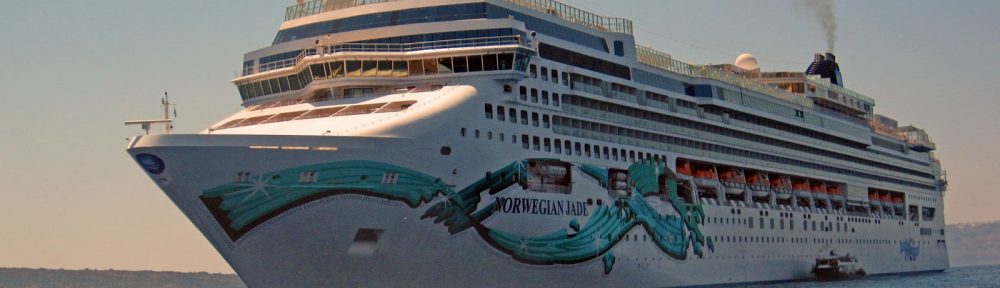
Norwegian Cruise Line has several week long cruises for the Norwegian Gem scheduled from San Juan in November and plans to return to seasonal home porting there from next November to early January 2018.
Windstar Cruises is in its second year of San Juan winter departures, after expanding its fleet in 2014.
And starting in October, Viking Cruises began regular calls in San Juan, sailing its 930-passenger Viking Star on 10- and 11-day southern Caribbean itineraries.
“We’re super-excited about that,” said Mari Jo Laborde, chief sales and marketing officer for the Puerto Rico Tourism Co. “It’s their first immersion into [Caribbean] sea cruises, and they’re doing it out of Puerto Rico.”
San Juan is a traditional gateway to the southern Caribbean because it is well positioned geographically and has the biggest airlift in the Caribbean. Carnival Cruise Line and Royal Caribbean International have long had seven-day ships in the market. Currently they are the Fascination for Carnival and the Adventure and the Jewel of the Seas for Royal.
In 2014-15, Puerto Rico hosted a record 1.5 million cruise visitors. “It’s looking like we’re going to break it again in two years, in 2017-18, at 1.6 million,” Laborde said, as 2017 visits from Norwegian, Viking and others are added up.
San Juan has been paving the way for new arrivals with improvements to its piers and facilities.
In 2014, Pier 3 was lengthened for use by Royal Caribbean’s Oasis-class ships, including the Harmony. During the recent Florida-Caribbean Cruise Conference, Puerto Rico Gov. Alejandro Garcia Padilla said that Duty Free Americas would be investing $8 million to add a two-story building at Pier 3 that will offer duty-free shopping, restaurants, galleries and entertainment for arriving passengers.
Four large ships can be docked simultaneously at Pier 3 and the adjacent Pier 4, which is mostly used by Carnival.
Piers 3 and 4 can accommodate up to four large ships at a time, such as Royal Caribbean’s Oasis-class vessels.
Once ashore, there are new things to do, Laborde said. An exciting new zipline called the Monster has been added at the Toro Verde adventure park, in Orocovis, about 90 minutes from San Juan by motor coach. The 1.57-mile cable has been certified as the world’s longest by the Guinness Book of World Records. The zipline ride costs $135, and the park draws 80% “excellent” reviews on TripAdvisor.
Another new attraction closer to town is the Vivo Beach Club, in San Juan’s Isla Verde neighborhood near the airport. “That’s been doing very, very well among cruise lines, because they offer packages for passengers to go and spend the day,” Laborde said.
A redevelopment of the former Tropimar Beach Club, it features a pool, a beach area, a restaurant and an event space for concerts as well as a microbrewery, Laborde said. She said prices vary by cruise line.
Another arrival in San Juan is the Mall of San Juan, which opened in 2015 and has a lineup of high-end retailers such as Nordstrom and Saks Fifth Avenue, putting it a step above the Plazas las Americas mall.
Also new in the Condado tourist area are several stands that offer bike rentals and stand-up paddleboard tours, Laborde said.
Close to the port is the Bahia Urbana, a redevelopment of some old piers into a park that opened in 2013. Bike rentals are offered by a shop in a condo across the street.
The pool at the Vivo Beach Club, a popular shore excursion in San Juan’s Isla Verde neighborhood.
There are also several new places to stay, mostly around the 10-year-old Puerto Rico Convention Center, the largest in the Caribbean. Additions in the last few years include a Hyatt Place and a Hyatt House, which complement a Sheraton that adjoins the convention center building.
“You basically walk to the convention center,” Laborde said. “It’s so much easier.”
The FCCA convention and trade show in September, held for the first time in five years in San Juan, attracted 1,000 delegates and resulted in between 2,500 and 2,700 room nights, with an estimated economic impact of $2 million, Laborde said.
The convention will go to Mexico next year and then return to San Juan from 2018 to 2022. That’s a departure for the organization that has previously rotated the event each year around the Caribbean.
“The FCCA is basically changing its strategy,” Laborde said.
San Juan’s facility affords the show the chance to grow, with an eventual target of 3,000 delegates, Laborde said. Just on hotel bookings alone, Puerto Rico could see an impact of up to $25 million during the four-year run, she said.
By the time the convention returns in 2018, San Juan will also be receiving calls from the 4,140-passenger MSC Seaside. Royal Caribbean also plans more regular visits with its Oasis-class ships, Laborde said.


 And starting in October, Viking Cruises began regular calls in San Juan, sailing its 930-passenger Viking Star on 10- and 11-day southern Caribbean itineraries.
 Wetravel2u's Weblog