
The Norwegian Sky in Havana.
Cruise lines are laying the groundwork for further expansion into Cuba now that the rules governing U.S. tourism to the island have been revised and clarified by the Trump administration.
CEOs from seven cruise companies met in Havana on Nov. 27 with Cuban government officials, along with representatives from CLIA and the Florida-Caribbean Cruise Association, to exchange viewpoints.
It was the first time so many cruise CEOs had gathered in Havana, according to Charles A. Robertson, who attended the meeting as chairman and CEO of Pearl Seas Cruises, which sails to Cuba from Fort Lauderdale.
“It was very positive,” he said. “The Cuban government did a great job. I think the whole relationship with the cruise industry is maturing very nicely.”
Cruise lines were left largely unscathed when the new rules for U.S. trade and travel to Cuba were announced a month ago. Hotels in Havana that are owned or operated by entities with ties to the Cuban military were made off limits, crimping land tourism. The Trump administration also blocked individual travel to Cuba, restricting visits to groups in itineraries designated as people-to-people exchanges.
MSC Cruises CEO Gianni Onorato, who also attended the Nov. 27 summit, said Cuban officials asked the group to back an easing of President Trump’s restrictions.
“We had sort of an official presentation of CLIA to the Cuban authorities, and the Cuban authorities were also asking for some sort of help or support to lift the ban,” Onorato said.
An effort to seek comment through Cuba’s Ministry of Tourism was unsuccessful.
As a practical matter, the cruise lines were unaffected by almost all the new U.S. restrictions.
“I would say it’s a minimal impact,” Robertson said. “It’s sort of a refining of the people-to-people rules under the general [travel] permit. There’s no significant change.”
So, for example, Robertson said that Pearl Seas passengers taking the line’s 10-day cruises circumnavigating Cuba can participate in organized group tours with guides and interpreters, but they also have time on their own.
“They do both,” Robertson said. “That’s true in all the cities we visit in Cuba.”
Cruise ships sailing from Florida have only been visiting Cuba since May 2016, when the now-defunct Carnival Corp. brand Fathom offered the first regular cruise to depart the U.S. for Havana in 50 years.
Since then, two Carnival Corp. brands, all three Norwegian Cruise Line Holdings brands and two Royal Caribbean Cruises Ltd. brands have made plans to visit the island from the U.S., along with Pearl Seas and Victory Cruise Line.
Cruise CEOs have said that pricing and demand for the cruises have been strong, stimulating plans to add new capacity. Norwegian Cruise Line has scheduled Cuba calls on a second ship in 2018, adding the Norwegian Sun from Port Canaveral to its Cuba cruises on the Norwegian Sky from Miami.
Cruises on both ships will include overnights in Havana.
A day after the summit in Miami, Royal Caribbean International announced that it, too, would add a second Cuba ship. Starting in April, its 2,350-passenger Majesty of the Seas will offer four- and five-day cruises from Tampa that include day trips and overnight stays in Havana. In October, it will do the same from Fort Lauderdale.
Royal’s 1,602-passenger Empress of the Seas, which had been sailing to Havana from Tampa, will move to Miami, where it will offer more varied itineraries. Along with five-day sailings to Havana and Key West, the Empress will offer seven-day trips that feature Nassau, Havana and Cienfuegos, which is a new Cuba destination for Royal.
The Empress will also debut an eight-day cruise that calls in Cienfuegos and Santiago de Cuba, another new port, along with Grand Cayman and Royal’s private destination in Labadee, Haiti.
Robertson said Pearl Seas, too, is planning to expand. In 2018 and 2019, it will offer more Cuba cruises on its 210-passenger Pearl Mist. By late 2019, Pearl Seas expects to take delivery of two more ships, at least one of which will likely be added to Cuba.
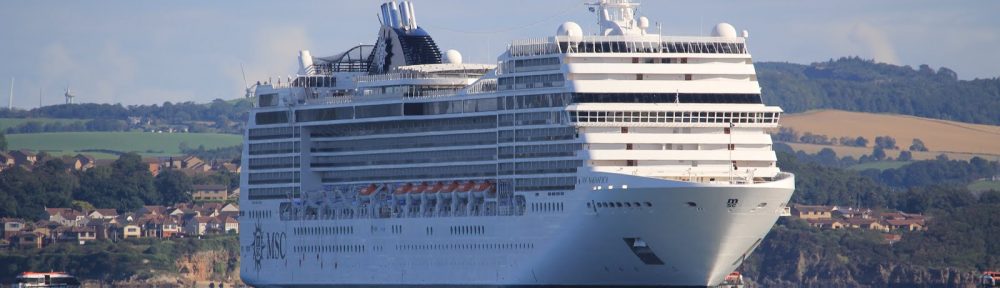
MSC Cruises is in a somewhat different position. Based in Geneva, it already has a well-developed business of taking European passengers to Havana. It has two ships, the MSC Armonia and the MSC Opera, that homeport in Havana year-round. In addition, it operates a ship seasonally from Martinique or Guadalupe that calls in Havana.
None of those cruises is sold in the U.S., so MSC doesn’t have to conform to U.S. regulations.
But MSC is also adding ships in North America, beginning with the MSC Seaside in Miami later this month, and Onorato said he is definitely interested in adding a Cuban port call for those ships in the future.
He said MSC has announced itineraries for its North American ships through 2020. “Until 2020, we don’t go,” he said. “We see the worst thing you can do in this business is to change itineraries because this creates uncertainty and disruptions among the customers.”
As things stand, it wouldn’t be feasible anyway for either the 3,502-passenger Divina or the 4,138-passenger Seaside to call in Cuba because the ships are too large for existing piers there.
Robertson said Cuban officials addressed the infrastructure obstacles at the summit.
“I think they’re working on it,” he said. “There were no specifics that I heard, but they are working on it, and I think we’re all going to see some improvements in the infrastructure coming along fairly soon.”
Another stumbling block was a U.S. State Department warning against travel to Cuba. Issued in late September, the warning was tied to mysterious health symptoms suffered by some U.S. and Canadian diplomats in Havana.
Robertson said the impact on bookings was short-lived.
“Demand remains strong,” he said. “When the travel warning came out, there was a dip for about 10 days. I would say it’s quite normal now, and it’s encouraging us to operate more to Cuba.”
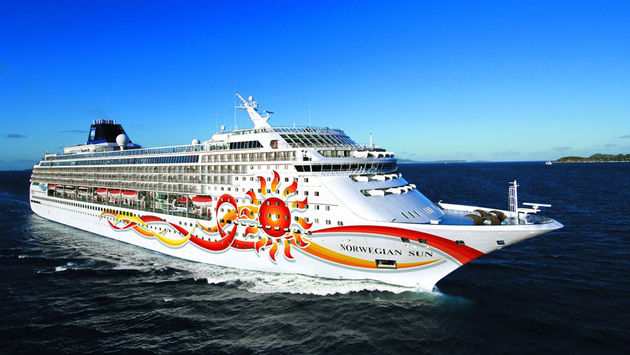 PHOTO: Norwegian Cruise Line’s Norwegian Sun. (photo courtesy of Norwegian Cruise Line)
 Wetravel2u's Weblog