EU Shore Power Regulations Fall Short of Potential

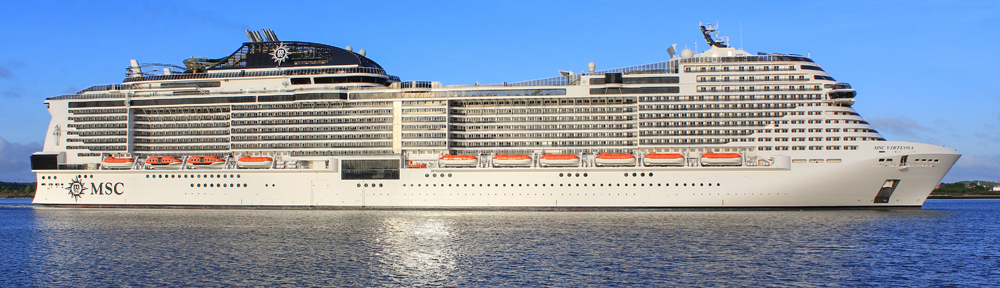
MSC Virtuosa connected to the Shoreside Power System  photo credit Spacejunkie2 (flickr)

The European Union (EU) is in a race to decarbonize the commercial shipping industry, and part of the strategy includes a requirement for ships to plug into shore power across the bloc’s ports. In line with the FuelEU Maritime Regulation and the Alternative Fuels Infrastructure Regulation, container and cruise ships over 5,000 GT must connect to shore power in the largest EU ports come January 2030.

The regulations have been hailed as critical measures in decarbonizing maritime transport, which accounts for three to four percent of total CO2 emissions in the EU. However, achieving shore power ambitions will be a herculean task. According to the International Council on Clean Transportation (ICCT), the bloc will only achieve a 24 percent reduction of at-berth CO2 emissions under the current setup.

The NGO contends that to achieve a 100 percent at-berth reduction in CO2 emissions, the forthcoming revision of both regulations should include a requirement for all ships greater than or equal to 400 GT to connect to shore power in EU ports. To achieve this, the EU will require nearly 1,929 MW of additional shore power installation to meet average at-berth annual energy demands, and 3,342MW for peak energy demand.

It also argues that boilers should also be retrofitted, electrified, or connected to shore power facilities, just like auxiliary engines, because they are responsible for 44 percent of all at-berth CO2 emissions. Boilers would require 36 percent of all needed shore power for ships berthing in EU ports.

The paper highlights that increasing the level of ambitions by including at-berth electricity demand for all ship types greater than or equal to 400 GT could reduce CO2 emissions by 42 percent. Adding more ports would help to avoid 58 percent of the total at-berth CO2 emissions.

Currently 51 ports in 15 EU member states are equipped with 340 shore power connectors, and Sweden, the Netherlands and Germany lead the pack. The current shore power network supplies around 309 MW, mostly for container, passenger and cruise ships.

Though cargo ships are the most common docking in EU ports, accounting for 43 to 46 percent, their energy demands are relatively low at 14 percent of the total. In contrast, despite their small absolute number in the fleet, the energy demand of cruise ships stands at 21-28 percent of the total. 

The largest additional shore power installations will be needed in Italy, Spain and France where energy demand cumulatively stands at 3,004 GWh, mainly due to high cruise ship traffic. Cruise ships alone in the three countries would account for 59 to 63 percent of shore power needed. 
Norwegian Upholding Cruise Industry’s Clean Air

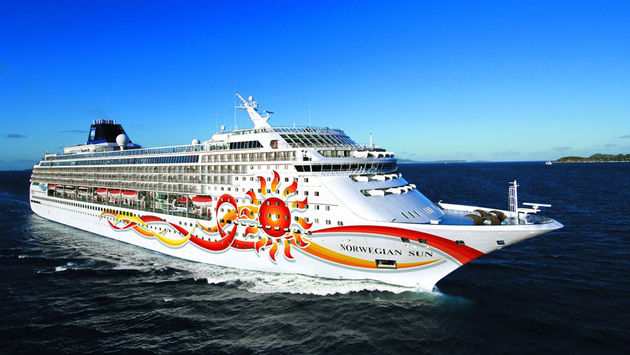
Norwegian Cruise Line, Norwegian SunPHOTO: Norwegian Cruise Line’s Norwegian Sun. (photo courtesy of Norwegian Cruise Line)
The cruise industry is collectively striving for cleaner air standards internationally, and Norwegian Cruise Line is doing its part by having environmentally enhanced its Norwegian Jade and Norwegian Sun.

“We have both a moral responsibility and business imperative to sustain the places we sail and the communities that support our industry,” said Cindy D’Aoust, president and CEO, Cruise Lines International Association (CLIA), in a press release.

“Through innovative and state-of-the-art air emissions programs, we make clean ocean air one of our top priorities.”

Norwegian specifically retrofitted the Jade and Sun with a new Exhaust Gas Cleaning system. Combined with the line’s Sail & Sustain environmental program, the technology will help to dramatically lower air emissions.

The exhaust scrubbers remove sulfur oxide and particulate matter prior to emissions exiting the ships’ smokestacks. Each vessel received five such scrubbers, one per engine. Together, they can reduce sulfur by up to 99 percent and 85 percent of particulates. Combined, the Jade and Sun will lessen the equivalent of around 3,000 tons of Sulfur Oxide, SOx, gas during the coming years.

As a whole, CLIA Cruise Line Members—Norwegian included—are always investing in new ship designs and innovative technologies. One objective is to reduce new marine vessel CO2 emissions by 30 percent come 2025. Other goals include lowering fuel consumption by 5 percent by applying hull paints with special non-toxic coatings and producing emissions-free energy via solar panel installations.

To such ends, the industry has collaborated with the likes of the International Maritime Organization (IMO) in order to regulate environmental standards. It has also gathered NGOs and maritime stakeholders to share air emission reduction concepts.

Port destinations additionally partner with cruise brands to better the environment as the Port of Seattle has. The facility has even awarded lines for their shared commitment towards green initiatives.

“We at the Port of Seattle observe year after year the cruise industry’s commitment to reducing emissions while in port by using shore power and exhaust gas cleaning systems,” said Port of Seattle Commissioner John Creighton, in the release.

“As part of our port community, cruise lines share our goals to reduce maritime-related emissions while maintaining a vibrant harbor. We look forward to our continued relationship with the industry and partnering on our mutual efforts to protect Seattle’s natural environment and air.”

Within the Norwegian fleet, the Jade and Sun represent two of what will soon be eight ships that have installed the scrubber technology. The Norwegian Escape, Norwegian Gem, Norwegian Joy, Norwegian Pearl and Pride of America already utilize the system, and the upcoming new Norwegian Bliss will launch with it in June 2018.

Norwegian is on its own way to achieve its MARPOL Annex VI compliance objective to lower its global sulfur cap from 3.5 percent to 0.5 percent by 2020.

Besides clean air goals, the line’s Safety and Environmental Protection Policy calls for lessening overall operational impact on the environment, disposing of waste according to domestic and global regulations, the recycling and reuse of materials, and targeting other means to improve the environment via management.

All of this is to say the cruise industry—although environmentally imperfect at times—is making concerted efforts to be the best it possibly can be. Provided brands like Norwegian Cruise Line continue to do their part and uphold the standards they themselves pioneer, the earth and travelers will thank them.

For more information on the industry’s environmental efforts, visit https://www.cruising.org/about-the-industry/research.