
Thousands of workers across Royal Caribbean Cruises brands are to share the equivalent of $80 million after the world’s second-largest cruise group hit long-term profit targets.
Each of the company’s 66,000 employees will receive equity awards equal to 5% of their 2017 salaries following a record year.
The individual salary bonuses in the form of equity grants over three years will go to staff working at sea and on land, full-time and part-time, domestic and overseas – but not corporate officers.
The parent company of Royal Caribbean International Celebrity Cruises and Azamara Club Cruises also pledged to contribute to a crew welfare fund for upgrades to crew living and recreational areas on board ships.
The windfall for staff came as Royal Caribbean announced that it had achieved a three-year goal of doubling earnings per share and recording a double-digit return on invested capital – a so-called ‘double-double’.
Chairman and chief executive Richard Fain said: “Exceptional results require exceptional effort.
“Reaching the double-double required remarkable focus and discipline from our employees, and they delivered.”
The “thank you bonus” had the added benefit of enabling employees to see the company as shareholders do, he added.
“Ours is a people business. We want to thank every one of our people for the hard work that got us to today’s announcement and give them a stake in our success going forward.
“We wanted to show our appreciation in a tangible way and we wanted it to reach every employee regardless of level in the organisation. It was our way of saying thanks a million; in fact, thanks 80 million.”
The group’s net income for 2017 rose to $1.63 billion from $1.28 billion the previous year.
This result was achieved despite what was described as an “unusually ferocious” hurricane season last September which hurt earnings by approximately $55 million.
Passenger carryings nudged up marginally year-on-year to 5.76 million from 5.74 million. Looking forward, bookings for 2018 is better than last year’s record high and at higher rates.
“North American and European consumers continue to drive strong demand for all of our main products,” the company said. “These trends, coupled with strong onboard spend and a positive outlook for our Asia Pacific products, are positioning the company for a ninth consecutive year of yield growth.”
The forecast came as the group prepares for the launch of Symphony of the Seas in April and Azamara Pursuit in August in Europe and the introduction of Celebrity Edge in Fort Lauderdale in November.
“These new ships will be important contributors to 2018 yield growth,” the company said.
Chief financial officer Jason Liberty said: “Our yields are increasing on top of an exceptional 6.4% net yield growth experienced in 2017.
“This is quite extraordinary and a testament to the strength in the demand for cruising and our brands.”
Reviewing last year’s performance, he said: “We started the year very well positioned to achieve our double-double goals, and 2017 ended up being exceptionally good, resulting in the company exceeding these goals.
“Strong demand trends for cruising coupled with disciplined cost management helped deliver another record year for the company.”
A combination of strong demand for North American and European cruises as well as onboard offerings drove growth.
Fain said: “Each of the brands performed excellently during the past year raising their guest satisfaction and employee engagement scores to new heights.”
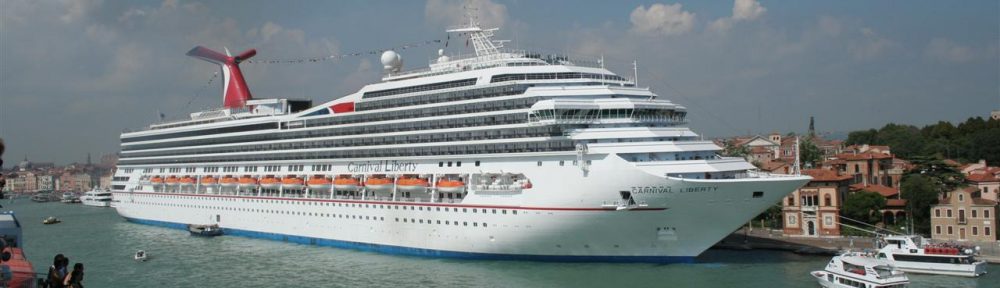
 The Carnival Sunshine is hosting a media group on its current Mediterranean voyage, and the top concern of the European reporters onboard is Carnival Cruise Lines’ decision to go without a ship in Europe in 2014.
 The reset on Europe comes as Carnival is withdrawing from several regional ports on the U.S. East Coast, such as Baltimore and Norfolk, Va. Tighter pollution rules mean higher costs for clean fuels at those ports, and Carnival has an aversion to higher costs. When low prices are such an important part of your strategy, anything that raises them means trouble.
 Wetravel2u's Weblog