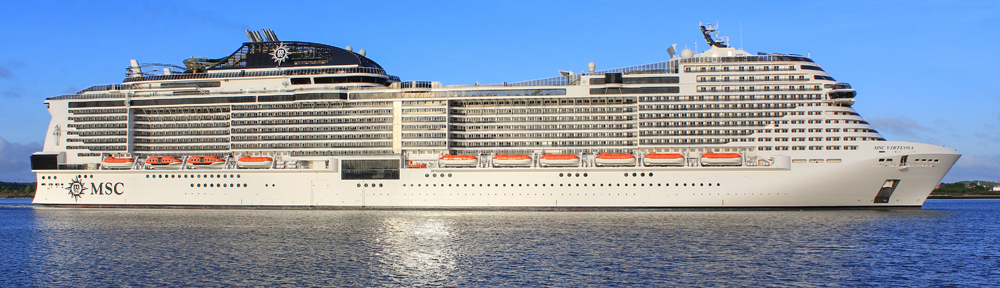
Rhapsody of the Seas Starts Homeporting Season in Colombia

The Rhapsody of the Seas is kicking off its homeporting season in Cartagena de Indias today.

Part of Royal Caribbean International’s return to Latin America after a seven-year gap, the operation includes 12 cruises departing from the Colombian port.

Through April, the vessel is set to offer a series of seven-night voyages to the Southern Caribbean that also feature visits to other destinations in the region, including Panama and Aruba.

While some of the itineraries also feature overnight calls at selected ports, Rhapsody’s regular itinerary sails to Willemstad, in Curaçao; Kralendijk, in Aruba; Oranjestad, in Bonaire; and Colón, in Panama.

The latter also serves as homeport for the operation, with passengers being able to embark on the cruise in both Cartagena and Colón.

Upon completing the winter program in mid-April, the Rhapsody sets sail on a repositioning cruise to Fort Lauderdale before returning to the Southern Caribbean.

Remaining in the region for the entire year, the Vision-Class ship is set to kick off a year-round program out of San Juan in late April.

The deployment includes seven-night cruises to additional destinations in the region, such as Barbados, St. Lucia, St. Croix, and Antigua.

Built at the Chantiers de l’Atlantique shipyard in France, the Rhapsody of the Seas originally entered service for Royal Caribbean International in 1996.

Extensively refurbished over the years, the 2,000-guest vessel offers several of the company’s signature features, including a rock climbing wall, an adults-only Solarium, and an array of specialty restaurants.

Among the dining venues available onboard is Chops Grille, an American-style steakhouse; Giovanni’s Table, a specialty restaurant that serves Italian food; and the self-service buffet Windjammer Café.
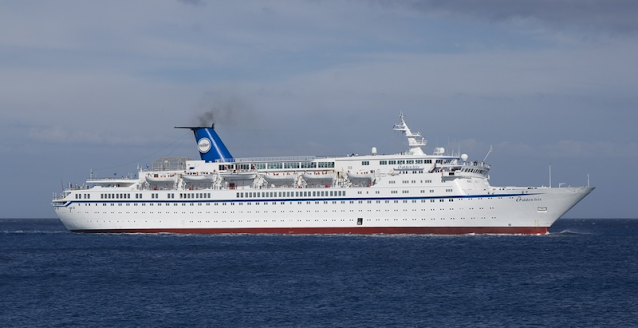
Former Cunard and MSC Ship to be Scrapped in Turkey

The former Golden Iris became the most recent cruise ship to arrive at the Turkish ship breakers. Last operated by Mano Cruises, the veteran vessel was in layup since 2018.

After being renamed Gold Club in 2021, the classic ship arrived at the Aliaga Ship Breaking Yard earlier this month. 

Wrapping up a five-decade career, the vessel will now be being dismantled, with its building materials, fixtures, systems and engines set to be repurposed or sold off.

Built in Denmark, the ship had an unusual run, being originally ordered for Overseas National Airways and designed in association with Hugh Hefner as a “floating Playboy resort.”

While still under construction, however, the 959-guest vessel was sold to Cunard Line along with a sister ship – who would later become the Cunard Countess.

Unlike the remainder of the British operator fleet, both ships had an informal concept, which was kept when they were fitted out at another shipyard in Italy.

After being christened in New York City by the Princess Grace Kelly of Monaco, it entered service for Cunard in 1977 as the Cunard Princess.

In another unusual move, the vessel was chartered to the United States Armed Forces in 1990.

During the Gulf War, the Cunard Princess was used as a recreational facility for troops while stationed in Bahrain.

After nearly 20 years of sailing for Cunard, the ship was finally sold to StarLauro Cruises in 1995.

The Italian company – who would later become MSC Cruises – named the ship Rhapsody for a series of cruises in the Mediterranean.

Kept in the fleet after the rebrand, the vessel sailed for MSC until 2009. In February of that year, it was sold to Mano Cruises.

Aiming at the local public, the Israel-based cruise line used the veteran ship in cruises departing from Haifa and Ashdod until 2018 – when it was replaced by the larger and more modern Crown Iris.

The construction of MSC Cruises

The construction of MSC Cruises

By Tom Stieghorst

TInsighthe retirement of MSC Melody underscores one of the most remarkable transformations in the cruise business.

Starting at the back of the field, MSC Cruises has become a competitive force by spending massively on new ships.

When the Melody began sailing for the line in 1995, it was state-of-the-art for MSC, even though it was already 13 years old.  The Melody’s main virtue was that it was newer than MSC’s other ships, the Rhapsody (1977) and the Monterey (1952).

With a small pool, no balconies and cramped public spaces, it arrived at Port Everglades about the time that Princess Cruises was designing the 3,100-passenger Caribbean Princess.TomStieghorst

MSC’s parent company, Mediterranean Shipping Co., is huge in the container shipping business but was just a tiny player in the cruise sector.  It recognized it would have to either commit in a big way to cruising or get out.

In 2003, it began planning for the $275 million Lyrica, and in 2004 it moved its U.S. headquarters from New Jersey to Fort Lauderdale to be closer to the pulse of the industry.

The 1,580-passenger Lyrica was MSC’s first new-out-of the-box ship. It wasn’t the biggest ship in the Caribbean, but it was big enough and, more importantly, new enough, to command a decent price.  At the same time, an 11-night cruise at $999 was enough of a bargain to fill easily.

From there, it went on to build the Opera, and to acquire the Armonia and Sinfonia from the now-defunct Festival Cruises. MSC now has 11 ships, with an average age of a little over five years, going from perhaps the oldest fleet in the industry to the youngest in two decades.

The 30-year-old Melody has reached the end of its useful life at MSC. In a few months MSC will take delivery of Preziosa, which at 139,400 gross tons is at the upper end of the size spectrum for any cruise company. The exit of one and the entrance of the other shows how far MSC has come.

It will be interesting to see what the next 20 years hold.