Portsmouth Port Makes the Switch to Solar Power

The installation of the cutting-edge solar and battery system at Portsmouth’s port has passed a final milestone and is now fully operational, according to a statement.

Managed by the in-house energy services and building services teams of Portsmouth City Council installed by Custom Solar and assisted by engineers at the port, the project began with installing roof-mounted solar panels across several buildings, large battery storage, and the first solar canopies at a UK port.

The last piece of the project was finalized in July 2023, where an upgraded connection to the national grid allowed the full potential of the 1.2-megawatt peak system to be realized.

This system, comprised of 2,660 solar panels, provides an impressive 35% of the site’s electricity. With this, the council-owned Portsmouth International Port is one step closer to becoming one of the UK’s first net carbon-neutral ports.

The solar system is complemented by an onsite battery with a capacity of 1.3 megawatt hours, which can power a typical home for four months. It captures renewable energy, which would otherwise be exported to the local electricity network, and redirects it to the port’s buildings when required.

The battery and new solar system work in conjunction with each other, providing balancing services to the national grid and storing power during periods of lower pricing.

Elly Howe, environmental and sustainability coordinator at Portsmouth International Port said: “This huge solar installation and battery storage facility will help the port reach our ambitious sustainability goals. Energy consumption at the port is already down 33% from last year so I’m excited to see what we can achieve in the future.

“Along with our project partners, I’d like also like to thank Brittany Ferries, the port’s biggest customer, for helping to accommodate the work throughout some of the busiest times of the year.”

New Royal Caribbean Galveston Cruise Terminal to Be Zero-Energy Facility

Royal Caribbean Group’s new Galveston terminal, which is opening on Nov. 9, will be the first cruise terminal to generate 100% of its needed energy through on-site solar panels. According to a press statement, this makes the terminal, which will be used by the company’s Royal Caribbean International brand, the first LEED Zero Energy facility in the world. 

We are focused on innovating across all aspects of our company, especially in our work to advance sustainability in the communities we visit,” said Jason Liberty, president and CEO, of Royal Caribbean Group. “We deeply value both the oceans we sail and the communities we visit and operate in, and the modern design and development features at our terminal in Galveston will work in service of both.”

The new cruise terminal at the Port of Galveston will be the first in Texas to achieve LEED Gold certification, an industry-leading certification expected to be received within the first two quarters of 2023.

The Galveston terminal marks the cruise company’s fourth LEED-certified facility and its first Gold certified. The previous projects include Terminal A at PortMiami; the Springfield, Oregon campus; and the Innovation Lab at Royal Caribbean Group’s corporate headquarters in Miami.

The $125 million, 161,334-square-foot Galveston Cruise Terminal significantly expands the company’s presence in the port, increasing the cruise line’s ability to accommodate up to 630,000 guests annually. The opening of the terminal will mark the first time Galveston welcomes Royal Caribbean International’s signature Oasis Class, the world’s largest cruise ship, with the arrival of Allure of the Seas and the first time the company is bringing its frictionless arrival and departure process to Texas.

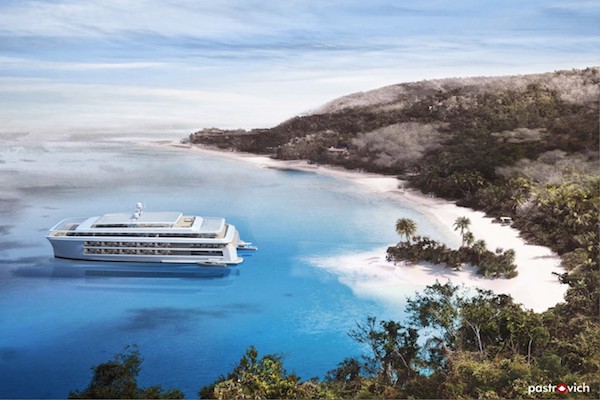
New hybrid superyacht design revealed

New hybrid superyacht design revealed

A new design of superyacht will see a combination of hybrid propulsion and solar panels for minimal environmental impact and high-energy efficiency.

The concept is built around a 60-metre long catamaran with capacity for up to 36 passengers.

The level of sustainability will enable the new generation vessel to access to harbours that would otherwise be closed to large motor yachts, according to the developer, smart technologies firm Wärtsilä and yacht designer Stefano Pastrovich.

The new generation “cost optimised” vessels will serve the charter and luxury hotel sectors.

Wärtsilä Italia senior sales manager Giammario Meloni said: “Efficiency and environmental performance are key pillars of Wärtsilä’s Smart Marine approach, which emphasises the need to collaborate with world-class partners.

“This project encompasses all these ambitions, and we look forward to co-developing with Stefano Pastrovich a totally integrated solution that combines energy efficiency, sustainability and onboard comfort.”

Pastrovich added: “Wärtsilä is the ideal partner for this project since we share a vision to be the very best at what we do. Bringing together our architectural and marine technology know-how will create a mega-yacht design on the leading edge of innovation.

“I’m convinced boutique cruise ships of this calibre could spark a turning point in the charter market, attracting a new customer base of millennials and cruise veterans.”