S&P Upgrades Norwegian Cruise Line Credit Rating

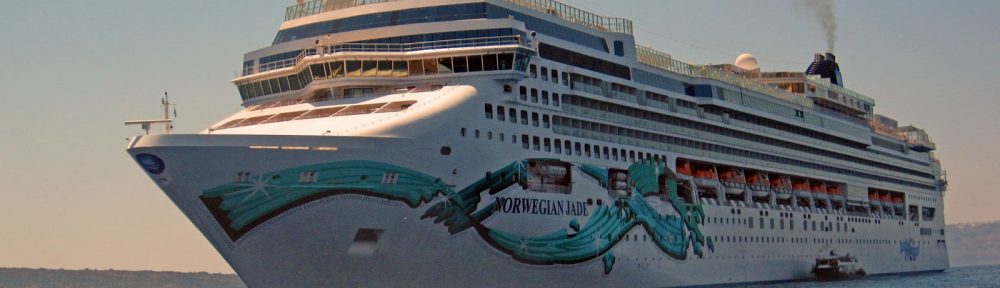
Norwegian Bliss in Ponta Delgarda, Azores photo credit Spacejunkie2 Flickr Account

Norwegian Cruise Line Holdings today announced that S&P Global Ratings (S&P) has recently upgraded NCLC’s (NCL Corporation, a subsidiary of Norwegian Cruise Line Holdings) issuer credit rating and issue-level ratings.

NCLC’s issuer credit rating has been upgraded to B+, marking a notable improvement in the company’s creditworthiness, according to a press release.

In addition, S&P has raised the issue-level ratings on NCLC’s existing secured and unsecured debt. The company’s senior secured debt ratings were raised to BB/BB- and its unsecured debt rating was upgraded two notches to B.

S&P highlighted several factors for the upgrade, including NCLC’s current forward-booked position, increased capacity, occupancy recovery, and higher pricing providing good revenue and cash flow visibility for 2024. In addition, S&P noted that the Company’s leverage will benefit from higher revenue, EBITDA, and cash as it generates a full year of operations from its 2023 ship deliveries, without incurring incremental ship delivery debt in 2024.

Further enhancing its financial position, on March 7, 2024, the company successfully completed the refinancing of its $650 million backstop commitment. This commitment has been refinanced from a secured to an unsecured commitment, and as part of this refinancing, the company has repaid its $250 million 9.75% senior secured notes due 2028, eliminating its highest interest rate debt.

“The upgraded ratings are an important recognition of the strength of our business and our ability to reduce leverage,” commented Mark A. Kempa, executive vice president and chief financial officer of Norwegian Cruise Line Holdings Ltd. He continued, “Our recent refinancing, which reduces interest costs while releasing the related collateral, is a clear demonstration of our commitment to de-levering and improving our balance sheet.”

Coronavirus Could Pose Threat to Cruise Ship Credit Ratings

The cruise ship Diamond Princess is docked at the port of Yokohama, south of Tokyo, in this photo taken by Kyodo February 7, 2020. Mandatory credit Kyodo/via REUTERS

The impact on cruise companies’ earnings from cancelled trips, steep discounts and ships quarantined over coronavirus concerns could pose credit risks, said rating agencies Moody’s Investors Service and S&P Global Ratings.

Carnival Corp and Royal Caribbean Cruises said last week that scrapped itineraries in Asia due to the outbreak would affect their earnings per share more than expected. Norwegian Cruise Line Holdings on Thursday forecast an impact of 75 cents per share on full-year adjusted earnings, citing virus-linked fallout.

“It reduces the flexibility that these companies have in their rating categories,” said Moody’s analyst Peter Trombetta. “It removes some of their cushions.”The earnings impact on both Carnival and Royal Caribbean were deemed “credit negative” by Moody’s although neither company’s credit ratings were immediately affected.

In a note published on Wednesday, S&P Global analysts wrote that the impact on Carnival’s cash flow from the coronavirus outbreak is expected to drive leverage above the 2.5 debt to EBITDA ratio is 2020, the threshold that would normally warrant a downgrade if breached. However, if the analysts believe the impact on Carnival to be temporary and that leverage could be lowered within a year or two, they do not expect to downgrade the rating.

Financially, “Carnival would be impacted the most. They also have the most capacity in China. So they would probably see the biggest hit to earnings,” said Trombetta.

In response to a request for comment, a Carnival spokesman said, “The primary impact on the cruise industry is focused mostly on China, which is an emerging market for the cruise industry, so the impact is relatively small.” Neither Royal Caribbean nor Norwegian responded to a request for comment.

While the outbreak casts a shadow on the cruise industry in the short-term, credit analysts said they did not expect the effect to be lasting.

“We have very short memories,” said Trombetta, citing disasters like the wreck of the Costa Concordia ship in 2012, which killed 32 people. “People want to go on cruises. Once some time passes, that demand – so far – seems to keep coming back.”

Fitch Ratings, the third of the three largest credit rating agencies do not publicly rate the cruise companies, but analyst Colin Mansfield, who covers the gaming, lodging and leisure sectors, said he expected the consequences of the epidemic to be temporary.

And yet, Norwegian Cruise Line Chief Executive Frank Del Rio noted on a call with investors on Thursday that the coronavirus in particular “has caused near panic in the travelling public.”

“The decrease in bookings is similar to what we see – we have seen in past similar events, whether they be geopolitical during the financial crisis, et cetera. What’s a little bit different about this one is the increase in cancellations.”

That bias could create longer-term problems for the industry. There is some potential for “a softer demand picture in general if cruise gets some bad PR from this that sticks in peoples’ minds for any period of time,” said Paul Golding, analyst at Macquarie Capital. (Reporting by Kate Duguid; Editing by Megan Davies, Steve Orlofsky and Daniel Wallis)(c) Copyright Thomson Reuters 2019.